

AL Circle analysis: Germany’s aluminium trade surplus, Novelis’ US expansion, Asia’s EV demand & India’s underutilised downstream capacity
Aluminium’s next growth phase is increasingly being shaped by downstream processing, supply-chain resilience and demand from specialised applications. Germany continues to generate a substantial trade surplus in flat-rolled products despite a shrinking primary aluminium base, while North America is investing in recycling and rolling. Across Asia, new manufacturing capabilities and growing demand from electric vehicles, railways and batteries are creating further opportunities. However, declining exports, underutilised capacity and uneven profitability show that investment alone does not guarantee success. For industry leaders, the challenge is to identify where demand is shifting, develop products that meet customer requirements and ensure that new investments translate into sustainable...
AL Circle Analysis: From Guinea to Gulf, how bauxite, tariffs and logistics redraw aluminium map
Aluminium markets in late 2026 are being shaped by more than the headline LME aluminium price. Bauxite security, alumina availability, geopolitical disruptions, tariff negotiations, logistics diversification and regional premiums are increasingly determining where metal moves and what buyers pay. From RUSAL reassessing Caribbean assets and Vedanta securing Odisha bauxite to Brazil extending mine life and EGA rebuilding its Guinea supply chain, producers are strengthening control over critical raw materials. At the same time, the US remains heavily dependent on imported bauxite and alumina, while Europe and Asia are experiencing sharply different premium dynamics. These developments point to a market where physical availability is becoming a regional factor even as aluminium itself remains...
Grow with
AL Circle

India: The next big Asian aluminium hub
As part of the series, “ The Rise of Global Aluminium Hubs Outside China ”, the first chapter explores India’s emergence as a key player in the global aluminium landscape. Co-authored by two industry experts, Dr. Subodh Das and Mr. Abhijit Pati, the article provides an in-depth assessment of the country’s current status, pressing challenges, and future growth prospects. India stands as the world’s second-largest producer of primary aluminium, contributing roughly 5.5% to 8% of global output, backed by an industrial framework of fully integrated domestic producers and specialised downstream manufacturers. The primary aluminium ecosystem is anchored by national champions NALCO, Hindalco, Vedanta, and BALCO, which command a combined primary smelting capacity of approximately 4.3 million...

Against the tariff odds, India’s aluminium exports to the US continue winning streak
Have the speculations of India’s staggering loss worth USD 4.56 billion from metal exports to the US post-tariffs come true? Statistics strongly disagree. In the January-March quarter (Q1) of 2026, India’s export value of primary aluminium to the United States surged by 43.64 per cent year-on-year to USD 154.66 million from USD 107.67 million. Is this upward streak likely to continue? Outlook strongly agrees. A striking improvement can be noticed in the cumulative export value of India’s primary aluminium shipments to the US, which climbed to USD 387 million in 2025 from USD 173.22 million recorded in 2024, marking a 123.6 per cent hike. Explore the relevance of red mud in the sustainable aluminium industry in A Comprehensive Analysis of Bauxite Residue (Red Mud): Sustainability, Resource...

India’s aluminium consumption in transportation grows 14% in five years, yet vehicles carry only 40-50kg vs 160-200kg globally – know why
Aluminium consumption in India's transportation sector increased from 0.70 million tonnes in 2020 to 1.35 million tonnes in 2025, nearly doubling in five years at a compound annual growth rate (CAGR) of about 14 per cent. The growth momentum is expected to continue, with consumption projected to reach 3.82 million tonnes by 2035. In comparison, global transportation-sector aluminium consumption rose from 22.57 million tonnes in 2020 to 27.1 million tonnes in 2025, reflecting a CAGR of 3.73 per cent. However, growth in overall consumption masks a structural gap. Despite producing more than 28 million vehicles in 2023-24 and recording strong growth in electric mobility and transport infrastructure, aluminium use per vehicle in India remains significantly lower than in major automotive...

Primary vs recycled AL: Which will dominate as Europe’s automotive sector heads toward yearly 4.2Mt of aluminium demand by 2030?
Europe exports roughly 1 million tonnes of aluminium scrap every year, enough material to potentially reduce the region's primary aluminium imports by nearly 24 per cent if retained and recycled domestically. Yet despite recycled aluminium production already catching up with primary output, the automotive industry continues to include a higher percentage of virgin metal. All at the same time, the region’s automotive industry is entering a period where aluminium procurement strategies are becoming as important as vehicle design itself. Driven by electrification, lightweighting requirements and increasingly stringent sustainability targets, automotive manufacturers are consuming more aluminium than ever before. The transition is, though, far from straightforward. While recycled aluminium...

Aluminium CBAM 2028 downstream expansion: Carbon-risk strategies exporters need for Europe
A plant manager running a highly efficient aluminium extrusion facility in Guangdong or an advanced die-casting hub outside Pune currently operates under a comfortable, yet highly precarious, illusion. They produce complex window frames, automotive structural castings, and precision-machined parts bound for the European market. Currently, they watch the headlines about the European Union Carbon Border Adjustment Mechanism and assume it is a problem exclusively for the primary smelters. They believe that the raw material giants will absorb the carbon taxes, enabling their finished goods to cross European borders without any scrutiny. This illusion will remain no longer on the 1st of January, 2028. The European Union launched the transitional phase of the Carbon Border Adjustment Mechanism...

Aluminium producers see fiscal gains as Middle East crisis and China’s capacity cap fuel price rally
A supply shock in West Asia is reshaping the global aluminium market. Disruptions to smelters, shipping routes and regional energy supplies have tightened aluminium availability and pushed London Metal Exchange prices to a four-year high, bringing the market closer to the USD 4,000-per-tonne threshold. The disruption comes at a time when the global aluminium market has averaged a supply deficit of less than 0.5 million tonnes over the past five years. Also, the 45 million tonne cap on China's primary aluminium output leaves limited room for the country to increase production and offset any shortfall from the Gulf Cooperation Council (GCC) region. While consumers grapple with higher costs and supply uncertainty, aluminium producers are benefiting from higher prices. Improved realised...

Europe's 36% BEV surge meets a 42% aluminium consumption share in Q1'26, as China's EV sales slide 21% and the US market shrinks 9%
More than 5.45 million electrified vehicles, including battery electric vehicles (BEVs), plug-in hybrid electric vehicles (PHEVs) and hybrids, were sold across Europe, China and the United States during the first quarter of 2026. While Europe delivered double-digit growth driven by stronger demand in its largest automotive markets, China and the United States recorded declines following changes to incentive programmes. Europe remained the strongest-performing region among the three major markets tracked in the latest EV sales review by PwC. Total EV sales across the European Union, the UK and EFTA countries reached 2.43 million units in Q1 2026, representing a year-on-year increase of 18 per cent. BEV sales rose 26 per cent to 724,000 units, PHEV sales increased 32 per cent to 354,000...

Guinea's 150Mt bauxite export cap may create a market deficit of 33Mt - Can the world make up the difference?
For the past few years, Guinea has been the driving force behind the global bauxite trade. Production expanded rapidly, exports climbed to record highs, finding their way to refineries across the world. But after years of pushing output higher, Guinea is now considering a different approach - a possible export cap of around 150 million tonnes. Such a move would mark a major shift for a country that exported nearly 183 million tonnes in 2025. If introduced, the cap could remove almost 33 million tonnes from the market, raising questions about where the industry would find replacement supply. The proposal comes at a time when market conditions have changed significantly. Bauxite prices have fallen, freight costs have risen and concerns over surplus have grown. For Guinea, which holds an...

MONTHLY: China's thermal coal market rallies sharply in May on summer restocking, supply concerns
The rally unfolded in two distinct phases, beginning with an aggressive post-holiday restocking push - driven by El Nino event expectations and low utility inventories - followed by a late-month rebound triggered by safety inspection concerns after a fatal mining accident. May surge begins in April The month opened with a sharp upward trajectory immediately after the Labour Day holiday (May 1-5), Coastal utilities firms, having experienced April's earlier-than-usual heatwave, returned to the spot market with aggressive restocking. Stocks at China's six major coastal power groups had fallen to 12.64 million tonnes by May 5-sufficient for only 16.9 days of burn, near a four-year low. Meanwhile, these utilities were actively preparing for the summer power surge, anticipating prolonged and...

Giga-Casting: The aluminium shot - Alloy science, scrap loop economics, and survival pivot every foundry must execute now
Giga-casting technology has rewritten the economics of automotive aluminium, but the deepest disruption is not in the press hall. It is in the alloy chemistry, the scrap loop, and the macroeconomic positioning of every foundry that supplies the automotive sector. After Part 1 which highlighted aluminium giga-casting revolution in foundries , Part 2 of this series examines the metallurgical science that makes aluminium giga-casting possible, the demand that is about to be created, the closed-loop scrap economy that will redefine secondary metal markets, and what foundries in Germany, China, North America, and India must do to survive the transition. The alloy revolution inside the machine Standard ADC12 cannot be used in giga-casting. Understanding why requires a short look at alloy...

The 730,000t question: Can NALCO and GAC rescue a faltering alumina market?
As the 2026 primary aluminium production navigates through a rocky course, the global alumina production map is being redrawn by the respective geopolitical factors. The data accumulated by the International Aluminium Institute (IAI) depicted drastic drops in the cumulative alumina production volume across the world in April 2026, exhibiting a turbulent market environment. Global alumina production in April 2026 stood at 11.92 million tonnes, which recorded a month-on-month decline of 5.74 per cent from 12.65 million tonnes produced in March 2025. Looking at the figure closely, a year-on-year drop of 2.59 per cent from the production volume of 12.24 million tonnes can be noticed as well. Explore- Most comprehensive and forward-looking industry-focused report — Global Bauxite & Alumina...

Coal vs renewables: The electricity cost battle influencing aluminium production pattern
For more than a century, aluminium producers have lived by a simple rule of securing the cheapest electricity possible, and everything else becomes manageable. The logic was straightforward. Aluminium smelting is one of the most electricity-intensive industrial processes on earth. Every tonne of primary aluminium requires enormous volumes of power to separate aluminium from alumina through the Hall-Héroult process, a technology that has remained fundamentally unchanged since the late nineteenth century. The industry's fortunes have therefore been determined less by geology and more by what happens on power grids. For decades, coal represented the backbone of global aluminium production. It was abundant, dispatchable and, in many regions, cheap enough to support large-scale smelting...
India’s bauxite production seen rising to around 45Mt, yet import dependency likely to stay 20%
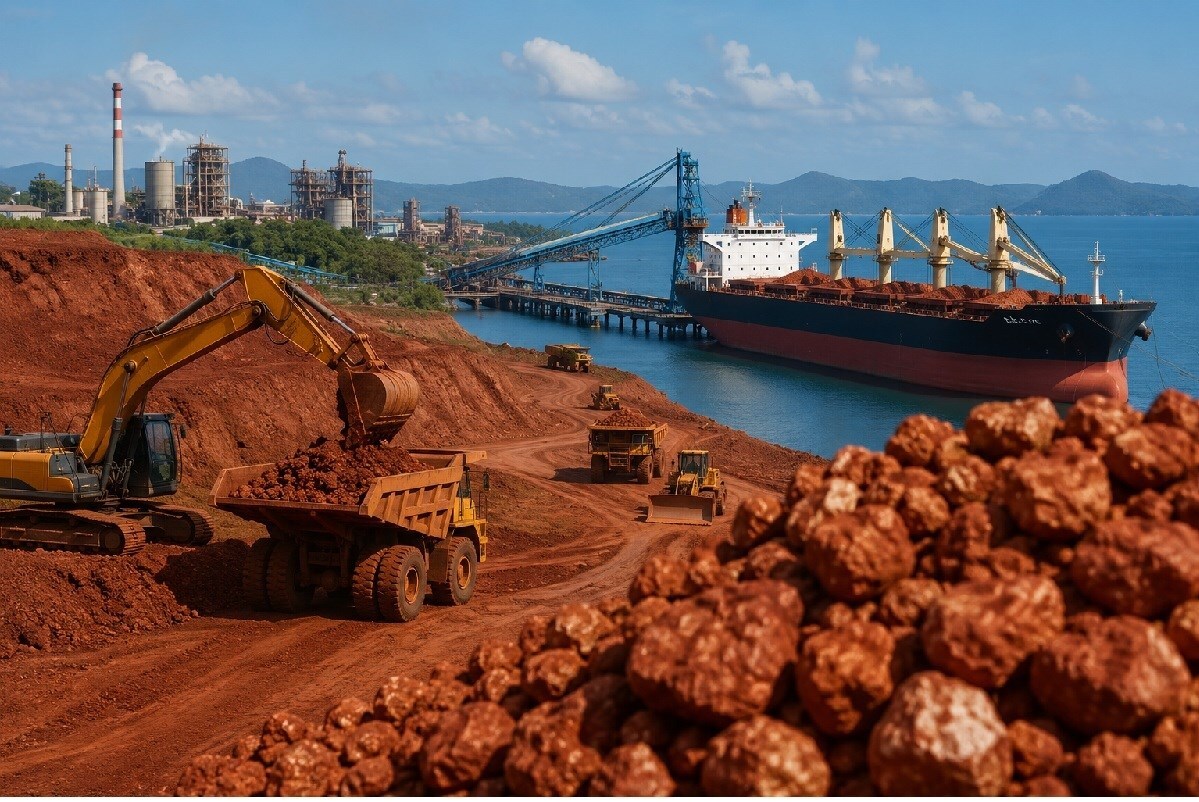
India’s bauxite industry is entering a new phase of expansion as domestic production and imports rise simultaneously. The country produced around 25 million tonnes of bauxite in 2025, slightly higher than the 24 million tonnes recorded in 2024. However, despite increasing domestic mining activity, imports also surged sharply to nearly 4.9 million tonnes from 4.1 million tonnes a year earlier, marking year-on-year growth of around 20 per cent. The trend points to a larger structural shift unfolding in India’s aluminium sector. As refinery capacities continue expanding, aluminium producers are increasingly prioritising stable and high-grade bauxite supplies for long-term operations, making imported ore important alongside domestic production. India currently produces around 9.5 million...

GCC aluminium production outlook revised for Q2 2026 after April output shock
As the Middle East conflict continues with full force, the Strait of Hormuz remains blocked, and 9 per cent of aluminium production and supply from the Gulf Cooperation Council (GCC) hangs by the thread of uncertainty. Compounded by the damages caused by the geopolitical unrest, GCC completes one-third of the April-June quarter (Q2) of 2026, with a staggering 26.87 per cent month-on-month production decline. GCC April’26 rings warning bells Aluminium production in the January-March quarter (Q1) of 2026 declined in the range of 540,000 to 570,000 tonnes or about 3.7 per cent, slipping from 1.55 million tonnes in the October-December quarter (Q4) in 2025 to 1.49 million tonnes in Q1 2026. As the GCC stepped into Q2 2026, the April aluminium output saw a drastic dip, with the daily average...

From Asia to South America: How aluminium packaging hubs are affected by the Middle East conflict
The aluminium packaging sector, which consumed around 16.70 million tonnes in 2025 and is projected to approach 17.16 million tonnes in 2026, is now confronting the risk of losing 3-3.5 million tonnes of aluminium supply this year. Packaging industries across Asia, Europe, the United States and Brazil are coming under mounting pressure as escalating tensions in the Middle East threaten to disrupt raw material supply chains. The Middle East produced 6.8 million tonnes of aluminium, accounting for 23 per cent of global output. The UAE remained the region’s largest producer with 2.7 million tonnes, contributing 39 per cent of Middle Eastern output. Bahrain followed with 1.6 million tonnes, or 24 per cent, while Saudi Arabia produced 0.9 million tonnes, representing 13 per cent. Qatar...

A resilient aluminium demand in North America: Scrap and FRP drive momentum after sluggish H1’25
The North American aluminium market has witnessed sharp shifts in trade dynamics, the trend shifting with policy changes and geopolitical developments. In 2025, North America’s aluminium market showed signs of recovery, with demand ending the year on a stable note despite economic and trade-related headwinds. According to the latest Aluminium Situation report by the Aluminium Association, the region recorded a modest 0.8 per cent increase in aluminium demand, backed by stronger manufacturing activity in the second half of the year after a weak start. Charles Johnson, President and CEO of the Aluminum Association, noted, “North American aluminium demand showed resilience in 2025, finishing the year essentially flat despite ongoing economic and trade uncertainty.” Explore the accurate...

Indonesia’s 2036 aluminium target signals a 43Mt bauxite demand challenge – here’s the gap and potential roadmap
Indonesia’s aluminium value chain is expanding rapidly, but a critical imbalance is beginning to emerge beneath the country’s downstream ambitions. While alumina refineries and aluminium smelters are being developed at a fast pace, bauxite mine production has not increased with the same momentum, raising questions over whether Indonesia can secure enough raw material to sustain its long-term aluminium strategy. The country is trying to build a fully integrated aluminium industry - from bauxite mining and alumina refining to aluminium smelting and downstream processing. Backed by export restrictions, foreign investment and large industrial projects, Indonesia is steadily shifting from being a raw mineral exporter to a producer of higher-value aluminium products. However, the success of...

From USD 86 to USD 350: how 6 months reshaped Japan’s aluminium premium to become Asia’s new risk benchmark
Japan’s aluminium premium has climbed from USD 86 per tonne in Q4 2025 to an average USD 351.5 per tonne (ranging between USD 350-353 per tonne) for Q2 2026 shipments, being the steepest quarterly escalation in more than a decade and the highest level since the USD 380-per-tonne settlements recorded in 2015. The recently agreed premium has added more than USD 260 per tonne to Japanese buyers’ physical procurement costs within 6 months, pushing delivered aluminium prices above USD 3,800 per tonne. The scale and speed of the escalation have fundamentally altered the role of the Japan Main Port (MJP) premium, long regarded as Asia’s benchmark for physical aluminium shipments. Historically, the premium largely reflected freight economics, regional demand and availability. In 2026, it has...

