AL Circle analysis: Germany’s aluminium trade surplus, Novelis’ US expansion, Asia’s EV demand & India’s underutilised downstream capacity
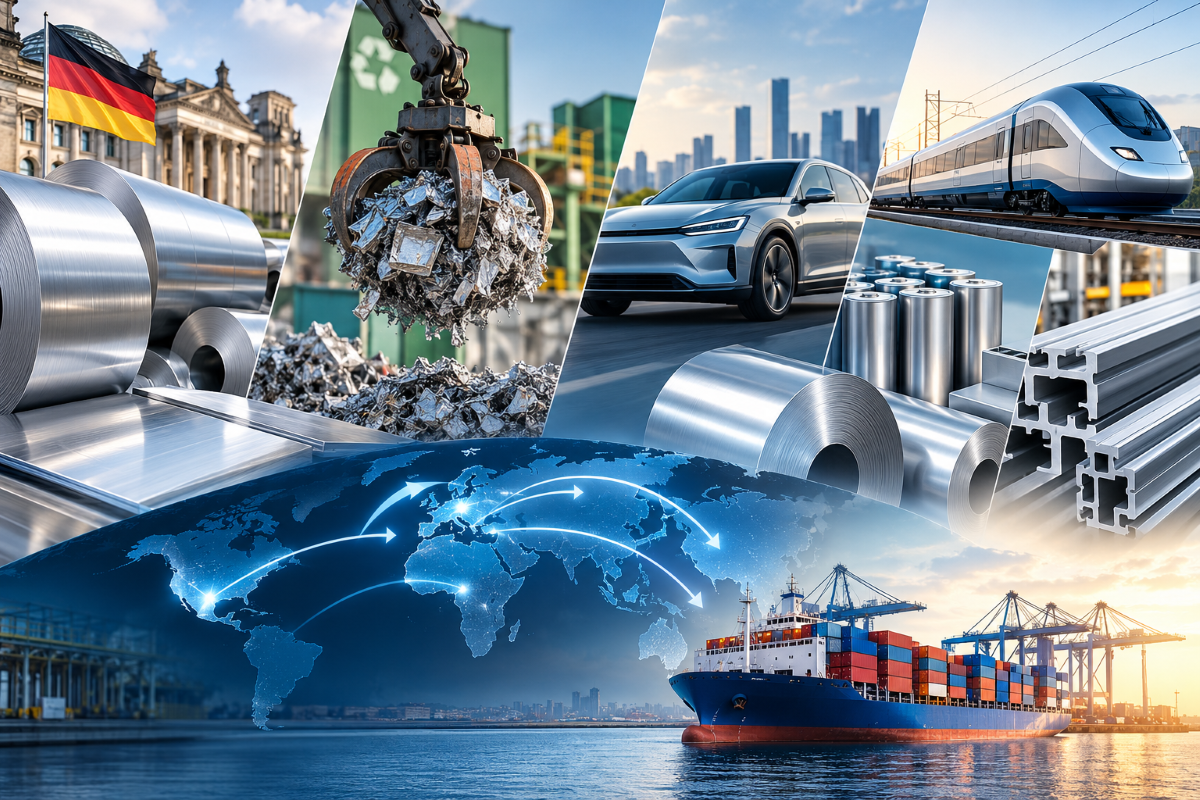
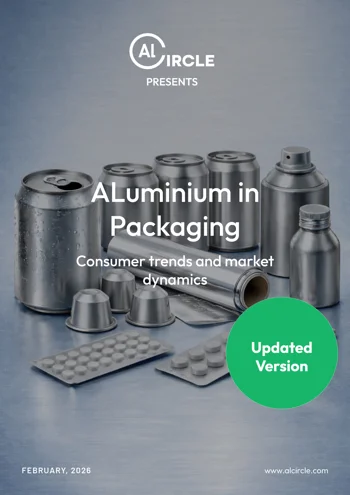
The image used in this article is generated with an AI tool and does not depict any real-time moment
Aluminium’s next growth phase is increasingly being shaped by downstream processing, supply-chain resilience and demand from specialised applications. Germany continues to generate a substantial trade surplus in flat-rolled products despite a shrinking primary aluminium base, while North America is investing in recycling and rolling. Across Asia, new manufacturing capabilities and growing demand from electric vehicles, railways and batteries are creating further opportunities.
However, declining exports, underutilised capacity and uneven profitability show that investment alone does not guarantee success.
For industry leaders, the challenge is to identify where demand is shifting, develop products that meet customer requirements and ensure that new investments translate into sustainable business growth.
Downstream manufacturing reshapes global trade
Germany’s aluminium flat-rolled products (FRP) consumption reached 1.68 million tonnes in 2025, up from approximately 1.66 million tonnes in 2024. Combined exports of aluminium plates, sheets, strip and foil reached USD 8.18 billion against imports of USD 5.04 billion, generating a trade surplus of around USD 3.14 billion despite the decline in domestic primary aluminium production.
However, Germany’s downstream aluminium exports fell 13 per cent year on year to 897,773.19 tonnes in H1 2026. Most traditional European customers reduced purchases, while US imports of German downstream aluminium surged 228.1 per cent to 68,061.61 tonnes, pushing the country into Germany’s top five export destinations.
Germany’s manufacturing base is supported by international producers. Emirates Global Aluminium (EGA) ships more than 600,000 tonnes of primary aluminium to Europe annually. Norsk Hydro operates 17 locations in Germany, employing more than 1,800 people, while Constellium’s Singen plant employs more than 1,300 people and supplies automotive, packaging and specialised applications.
Meanwhile, the US and Mexico postponed their fourth round of trade talks until October, prolonging uncertainty over tariffs affecting automobiles, steel and aluminium.
Key takeaways
- Reassess export markets: Germany’s 13 per cent fall in downstream exports alongside a 228.1 per cent rise in shipments to the US shows why exporters should track destination-level demand shifts.
- Protect market access: Monitor tariff changes and trade negotiations when evaluating export exposure and customer concentration.
- Prioritise value-added products: Germany’s trade surplus reinforces the commercial importance of downstream processing rather than relying solely on primary metal sales.
Recycling investments strengthen supply security
North America is directing investment towards recycled aluminium, flat-rolled products and lower-carbon production, alongside efforts to rebuild primary aluminium capacity.
Novelis has produced the first coil on the cold mill at its USD 5 billion greenfield aluminium rolling and recycling plant in Bay Minette, Alabama. Meanwhile, its Oswego, New York, hot mill returned to operation in June following multiple fires that disrupted production for several months.
The Oswego recovery has helped restore aluminium supply for Ford’s F-150 pickup production. During the disruption, Ford sourced metal from outside the US, increasing costs because of tariffs. The automaker had previously estimated that the interruption could cost up to USD 2 billion.
Asia is pursuing a broader investment strategy across bauxite, alumina, smelting, rolling, recycling, extrusion and battery foil, reflecting its diverse manufacturing requirements.
Key takeaways
- Track commissioning milestones: Novelis’ Bay Minette project could reshape regional supply as production ramps up; buyers should follow actual output, not just announced capacity.
- Build supply alternatives: The Oswego disruption shows the value of qualifying backup suppliers before an unexpected production stoppage.
- Secure suitable scrap: Recycling investments make regional scrap availability, quality and procurement costs increasingly important to project economics.
To know the global production, demand and consumption forecasts of aluminium extrusions, explore our report "The World of Aluminium Extrusions to 2035"
Extrusion investments contrast with India’s capacity crisis
New investments are expanding specialised manufacturing, but India’s extrusion sector continues to struggle with weak utilisation and input costs.
Sharvaya Metals commissioned a 10-inch aluminium extrusion press at its Ahilyanagar facility on October 5, 2026, completing its production process from alloy production to finished components. The company aims to serve defence, aerospace, railways, electric vehicles and engineering customers.
In the US, Mayville Engineering Company plans to invest approximately USD 26 million in a metal fabrication facility in Thomson, Georgia, expected to create around 140 jobs. MEC also provides aluminium extrusion services.
India’s extrusion output has fallen to close to 900,000 tonnes, with capacity utilisation at around 30 per cent. The Aluminium Extrusion Manufacturers Association of India (ALEMAI) has sought the removal of the 7.5 per cent basic customs duty on primary aluminium, which results in an effective duty of about 8.25 per cent including the applicable surcharge.
Key takeaways
- Improve utilisation before expanding: With Indian extrusion capacity utilisation at around 30 per cent, recovering idle capacity and strengthening order books deserve close attention.
- Target specialised demand: Defence, aerospace, railways and EV applications offer potential for extrusion producers with the required technical capabilities and customer approvals.
- Assess duty impacts across the value chain: Any change to primary aluminium import duties should be evaluated against both input costs and the competitiveness of domestic downstream products.
Connect with verified aluminium FRP buyers and suppliers through the AL Biz marketplace.
Mobility and battery applications expand aluminium demand
Electric vehicles, railway manufacturing and battery production are creating opportunities for specialised aluminium products.
Jaguar’s Type 01 electric grand tourer features 73 per cent aluminium, a 118 kWh battery and three electric motors delivering 1,015 horsepower. Its aluminium-intensive structure highlights the material’s role in advanced vehicle design.
Türkiye Raylı Sistem Araçları Sanayii (TÜRASAŞ) has started manufacturing the second set of its locally developed high-speed electric train, which features an aluminium body. Authorities plan to produce 14 trains during 2027 and 2028.
Battery foil is another growth area. South Korea’s aluminium foil imports reached 57,261.18 tonnes in YTD July 2026, up 23.94 per cent year on year. China supplied 52,751.81 tonnes, accounting for 92.12 per cent of the total. Chinese aluminium foil exports reached 802,000 tonnes between January and July 2026.
South Korea’s battery investment plans include KRW 400 billion in government research and development spending over five years and KRW 8 trillion in industry commitments for 2026–2030. Lotte Aluminium estimates that 1 GWh of battery capacity requires approximately 700 tonnes of electric foil.
Key takeaways
- Align capacity with confirmed programmes: EV and railway projects create opportunities, but suppliers should link investment decisions to customer contracts and production schedules.
- South Korea’s foil supply concentration: With China accounting for 92.12 per cent of South Korean aluminium foil imports, alternative suppliers need to assess qualification requirements and competitive pricing.
- Translate battery targets into material demand: Track actual battery output and electric-foil procurement to distinguish near-term demand from longer-term investment commitments.
Profitability remains the test of aluminium growth
Expanding markets and new manufacturing capacity have not eliminated commercial pressures. Golkonda Aluminium Extrusions Limited reported sales of INR 13.99 billion (USD 144.48 million) in Q2 ended September 30, 2026, compared with INR 1.86 million a year earlier. However, it recorded a net loss of INR 0.321 million, against net income of INR 0.471 million in Q2 2025.
The results underline the difference between reported sales growth and financial performance, particularly in a sector where raw-material costs, utilisation and operating efficiency influence returns.
Germany’s downstream trade strength, North America’s recycling investments and Asia’s expanding end-use markets offer opportunities, but companies must translate them into commercially sustainable production.
Key takeaways
- Look beyond headline sales: Golkonda Aluminium Extrusions’ reported sales surge alongside a net loss underlines the need to examine margins, costs and earnings quality.
- Benchmark returns on new capacity: Compare the expected returns from expansion with those from improving productivity and utilisation at existing facilities.
- Link production planning to profitable demand: Prioritise orders and product segments that can sustain margins, rather than treating higher volumes as proof of stronger performance.
Read our latest magazine “ALuminium’s Frontline: OEM Edition 2026” and learn how OEMs are transforming critical aluminium applications across end-use sectors.
Note: This is exclusive coverage by AL Circle and may not be reproduced, republished or shared without prior permission.
PMB Technology bets $133m on silicon-aluminium alloys amid mounting silicon metal losses
Next articleUS aluminum maker Shapes Unlimited faces up to $5m in extra costs as tariffs and Iran conflict bite
Grow with
AL Circle