More than 60% of Europe’s primary aluminium is imported through long supply chains exposed to disruption, says Maxime Vandersmissen
_md.webp)
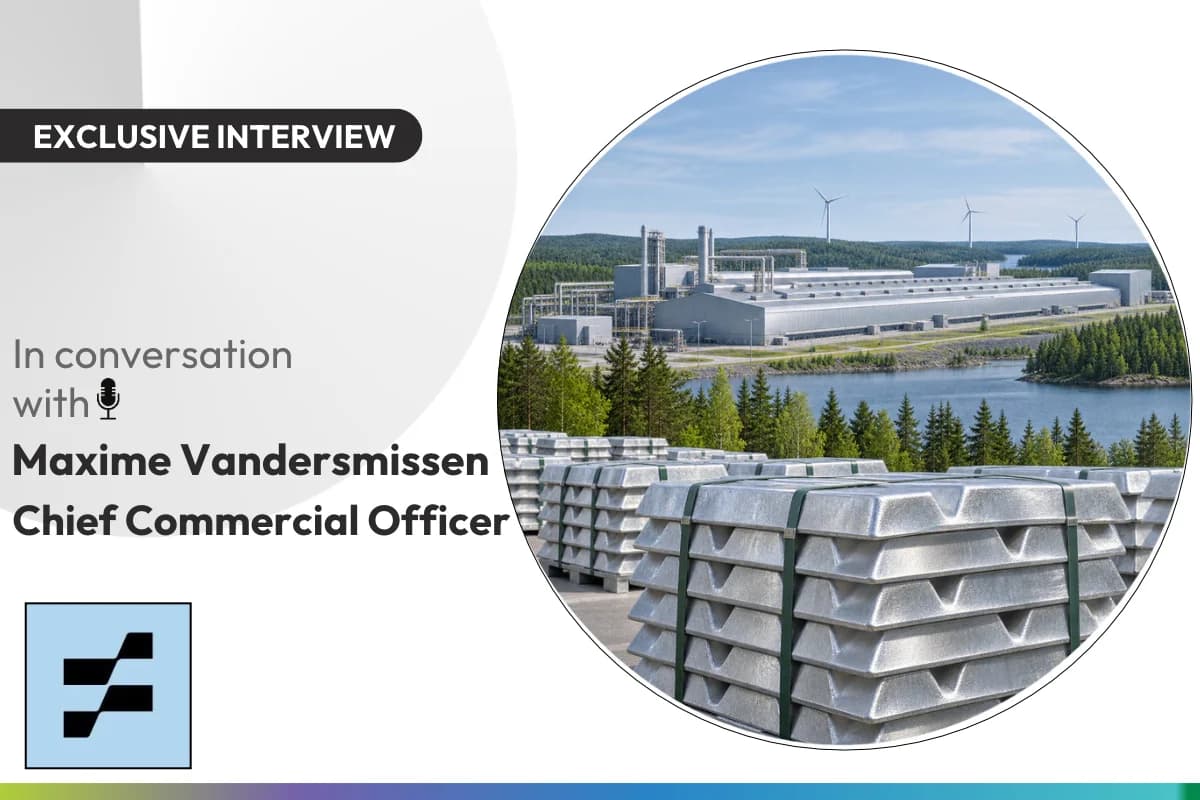
Could a new smelter in Finland help reshape Europe’s aluminium supply story? In conversation with AL Circle, Maxime Vandersmissen, Chief Commercial Officer at Arctial, discusses the ambition behind continental Europe’s first new primary aluminium smelter in over three decades.
With the region importing more than 60 per cent of its primary aluminium, Arctial aims to strengthen supply security and offer a lower-carbon alternative. But turning that ambition into reality depends on more than adding capacity. From securing competitive electricity to navigating evolving industrial policy, Vandersmissen explores the conditions needed to make the project commercially viable. As Europe’s strategic industries seek more resilient supply chains, what will it take to move towards a positive investment decision?
AL Circle: What gap in Europe’s aluminium market is Arctial being developed to address, and how has the project’s scope evolved through your feasibility work?
Maxime Vandersmissen: Arctial is being developed to address Europe’s structural dependence on imported primary aluminium. Today, more than 60 per cent of Europe’s primary aluminium is imported, through long supply chains that are exposed to disruption. The project aims to strengthen Europe’s security of supply by establishing continental Europe’s first new primary aluminium smelter in over 30 years, bringing large-scale, clean, low-carbon primary aluminium production capacity to the EU, with a carbon footprint of approximately 70 per cent lower than the average European imports.
Through the feasibility phase, the focus has remained consistent: developing a globally competitive primary aluminium smelter in Finland based on access to low-carbon, competitive electricity infrastructure and a strong industrial ecosystem. The work has progressively advanced across technical, environmental, social, commercial, and financing dimensions, providing increasing confidence in the project’s scale, location and strategic role in the European market. But significant work remains to get to a positive Final Investment Decision next year, and we will continue to advance the project in close cooperation with our stakeholders.
AL Circle: The European Commission has designated Arctial’s aluminium project as a Strategic Project under the Critical Raw Materials Act. What practical changes do you expect this recognition to bring to the project’s development and commercial discussions?
Maxime Vandersmissen: The Strategic Project status is a strong endorsement of Arctial’s role in achieving Europe’s supply security objectives. It brings practical benefits in at least two areas. In development, the project receives priority treatment and defined timelines in permitting, which gives us greater predictability as we move towards an investment decision. Commercially, the status confirms the European Commission’s independent assessment that Arctial is feasible, sustainable and strategically important. That credibility matters to customers, investors and other partners looking for secure, low-carbon European aluminium over the long term.
AL Circle: The announcement states that the project could increase European primary aluminium production capacity by approximately 20 per cent. Which customer segments and supply gaps would Arctial prioritise?
Maxime Vandersmissen: Europe is structurally short of primary metal, and demand continues to grow. Arctial is being developed to help close that increasing gap and to strengthen European industry as a whole, rather than to serve a single end market. The project is intended to provide secure, low-carbon European supply to a broad range of sectors, including transportation, construction, energy, packaging, machinery and defence. We see this diversified customer base as a strength, as it brings resilience in demand. Demand is growing, and primary metal is needed alongside more and better recycling, for both technical and availability reasons.
AL Circle: Finland’s access to low-carbon electricity is central to the project’s proposition. What needs to be secured in terms of electricity pricing and supply to make the plant commercially competitive over the long term?
Maxime Vandersmissen: Finland offers a strong combination of low-carbon electricity and reliable, affordable supply. It’s critical for Arctial that this power stays competitive over the long term and through market cycles. We are working with partners, including our strategic energy partner Fortum, to secure long-term power purchase agreements. Policy matters just as much. Parts of Europe’s carbon framework, including CBAM, are still being finalised, and long-term industrial investment depends on that clarity. Arctial must be able to compete on a level playing field with European producers and with imports from outside Europe. Ultimately, Arctial competes for capital globally, and a positive investment decision requires a stable, globally competitive operating environment.
AL Circle: How do you expect Europe’s primary aluminium supply-demand balance to evolve by the time Arctial starts production? Would the project mainly address today’s supply deficit or serve emerging demand?
Maxime Vandersmissen: We expect both factors (supply deficit and emerging demand) to remain relevant. Europe currently faces a structural deficit in primary aluminium and depends heavily on imports to meet demand. At the same time, demand is expected to remain supported by growth drivers such as the energy transition, electrification, and increasing defence-related needs. As a result, Arctial is not being developed solely as a solution to today’s supply gap. The project is intended to contribute to Europe’s long-term supply security while also supporting future demand growth from strategic industrial sectors.
AL Circle: How would the potential restart of idled European smelting capacity affect the market opportunity for Arctial, and how do you account for that possibility in your commercial planning?
Maxime Vandersmissen: We welcome any restart of European capacity: Europe needs the metal. But restarts do not change the fundamental picture. The volumes that can realistically come back are limited and remain sensitive to energy prices. Even with restarts, Europe would remain a large net importer of primary aluminium. Arctial offers something different: new, clean, long-term capacity built on Rio Tinto’s AP60 technology, one of the most efficient smelting technologies available, designed to be competitive globally and through the cycle.
AL Circle: Beyond adding new capacity, what changes in electricity costs, industrial policy and customer procurement practices are needed to reduce Europe’s reliance on imported primary aluminium sustainably?
Maxime Vandersmissen: Competitive and predictable electricity costs are essential for sustaining European primary aluminium production and attracting new industrial investments. Trade policy also plays an important role. Europe will continue to need imports. What matters is a level playing field, with consistent rules for all producers, wherever they are based. At the same time, customer procurement increasingly looks beyond price alone, to security of supply, supply-chain resilience and product carbon footprint.
AL Circle: Europe’s dependence on imported primary aluminium is central to the project’s rationale. How much of Arctial’s planned output would you expect to replace imports, rather than meet additional demand?
Maxime Vandersmissen: Arctial would cover only a modest share of Europe’s primary supply gap, in the order of 10 per cent, while demand for primary aluminium continues to grow. Under reasonable growth scenarios, Arctial may do little more than absorb the additional demand between now and start-up. Europe will continue to need substantial imports from its trading partners. Arctial adds resilience.

