Rio Tinto
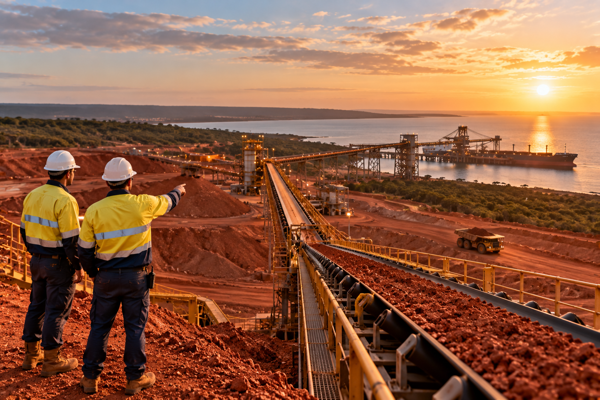
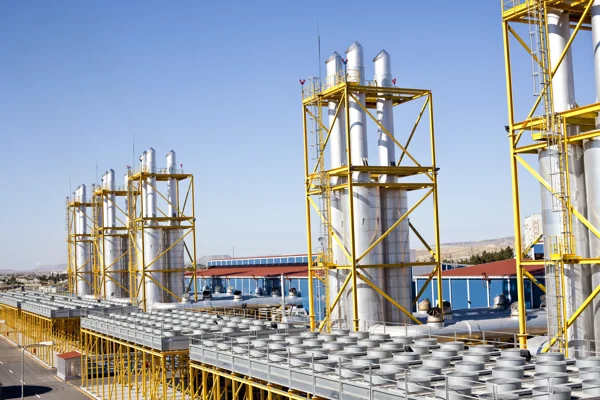
Rio Tinto plans 360 MWh heat battery, Australia’s largest for Yarwun alumina refinery
Rio Tinto is assessing the use of thermal energy storage at its Yarwun alumina refinery in Queensland, Australia, through a partnership with Rondo Energy. The proposed system would store 360 MWh of energy and deliver heat at a rate of 30 MW, potentially reducing the refinery’s reliance on fossil fuels to produce steam. The Australian Renewable Energy Agency (ARENA) has committed AUD 3.6 million (USD 2.5 million) for front-end engineering and design studies. A further AUD 38 million (USD 27 million) could be made available to support installation if the study is completed successfully and the project proceeds. Join the fourth edition of webinar " Hedging for recyclers - Become an expert in 6 hours " by Jorge Dyszel. The proposed installation would be among the first large-scale industrial...
Rio Tinto’s graphene battery technology push adds a new dimension to its materials strategy
Rio Tinto Group’s efforts to expand its presence in battery materials are drawing attention following progress on graphene-based battery technology developed with Graphene Manufacturing Group (GMG), alongside the miner’s third-quarter 2026 production update. Under a joint development agreement between the companies, GMG has reported progress on its graphene G®CELLS technology, which the supplied report describes as maintaining performance over rapid charging cycles. The development adds a technology-focused dimension to Rio Tinto’s wider battery materials strategy, although it is not yet identified as a current earnings driver. Rio Tinto’s latest operating figures provide the broader production context. The company reported 15.7 million tonnes of bauxite, 0.8 Mt of aluminium and 2.1 Mt of...
Grow with
AL Circle
Price
→
Business Cards
A report that reveals where the aluminium casting industry is heading and how businesses can act.
LEARN MORE
A report that reveals where the aluminium casting industry is heading and how businesses can act.
LEARN MOREEurope’s recycled aluminium production: Germany, Italy and the UK anchor a competitive market
Global EV sales to hit 35.4 million by 2030, with aluminium usage forecast to rise 38% in North America & 79% in China
AL Circle analysis: How do Germany’s 32.8% automotive aluminium share, 40% Diet Coke can price rise & 3.54Mt North American extrusion demand matter?
AL Circle Analysis: Guinea’s 150Mt bauxite cap, China’s import swings, US tariffs draw aluminium Q4’26
EU approves Germany’s power relief instrument: Could aluminium producers save €459m annually?
News
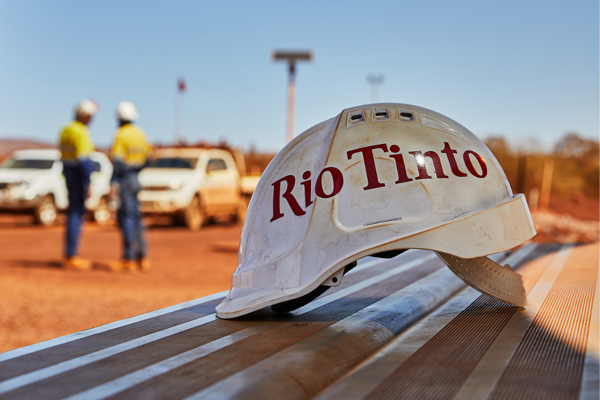
Rio Tinto Q3 2026: 10% alumina growth offsets 4% bauxite dip; aluminium output stays firm
Rio Tinto’s third-quarter (Q3) 2026 production results report contrasting trends across its aluminium value chain, with bauxite production declining 4 per cent year-on-year (Y-o-Y), alumina output amounting to 6.11 million tonnes and primary aluminium stood at 2.52 million tonnes. The company maintained its full-year 2026 production guidance for all three commodities, while highlighting operational improvements, upcoming refinery constraints and progress on Pacific aluminium smelter repowering. Rio Tinto Chief Executive Simon Trott stated, “We delivered strong operational performance in the third quarter.” He further highlighted progress on decarbonisation, noting that the company’s “Pacific Aluminium smelter repowering arrangements” were “now well progressed.” Explore the production,...
Nikon Advanced Manufacturing joins $5.5m aluminum alloy project
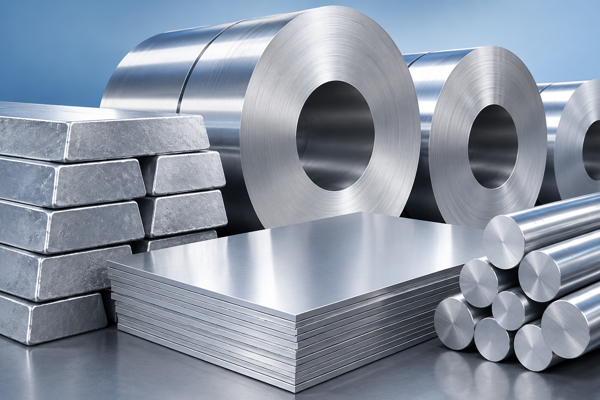
Nikon Advanced Manufacturing has joined the GOTHAAM project to develop a high-strength aluminum alloy for additive manufacturing. The $5.5 million project is funded by the Office of the Under Secretary of War’s Manufacturing Technology Office (OSW ManTech). America Makes, based in Youngstown, Ohio, and the National Center for Defense Manufacturing and Machining (NCDMM), headquartered in Blairsville, Pennsylvania, selected Nikon AM as a project partner. General Atomics Aeronautical Systems was named the group leader in August. GOTHAAM stands for Generation of Technical-data for High-strength Aluminum Alloy Material. The project aims to develop material data for a corrosion-resistant aluminum alloy equivalent to 7075-T73. The data will cover Laser Beam Powder Bed Fusion (PBF-LB) additive...

$1.5b Quebec AP60 expansion puts Rio Tinto at heart of low-carbon aluminum race
The low-carbon aluminum market has stepped into a more competitive phase as producers invest in cleaner smelting technologies, renewable power and new downstream applications. Rio Tinto’s $1.5 billion AP60 smelter expansion in Quebec is the latest major development, adding around 160,000 metric tons per annum (MPTA) of primary aluminum capacity when fully operational by the end of 2026. The project will lift total AP60 production at Complexe Arvida to about 220,000 MPTA while supplying lower-carbon aluminum to transportation, construction, electrical and consumer-goods customers. The Quebec expansion is expected to cut emissions by approximately 290,000 MPTA compared with the older Arvida technology, strengthening the case for energy-efficient, hydropower-based primary aluminum...
Metro Mining’s concern over Rio Tinto’s Aurukun plans brings 3.1Bt bauxite in focus
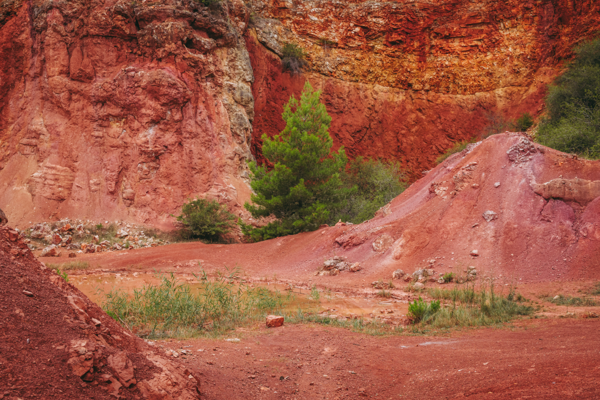
Metro Mining has raised concerns over Rio Tinto’s proposed acquisition of the Aurukun bauxite project in Cape York, warning that the leases could remain undeveloped under the mining giant’s ownership. Metro Mining Managing Director Simon Wensley mentioned that Rio Tinto already controls a 3.1 billion-tonne bauxite resource on Cape York, enough to suffice for around 75 years of production at current levels. Metro questions another change of hands Speaking at a recent Association of Mining and Exploration Companies meeting in Brisbane, Wensley noted that Rio could land bank the Aurukun leases, following a similar pattern under Glencore, which had held them for 14 years. Metro Mining is seeking to delay the proposed transfer of the leases from Glencore to Rio Tinto. In September, Rio...
Rio Tinto-RevoCast deal links Kitimat aluminum to new North American billet supply chain
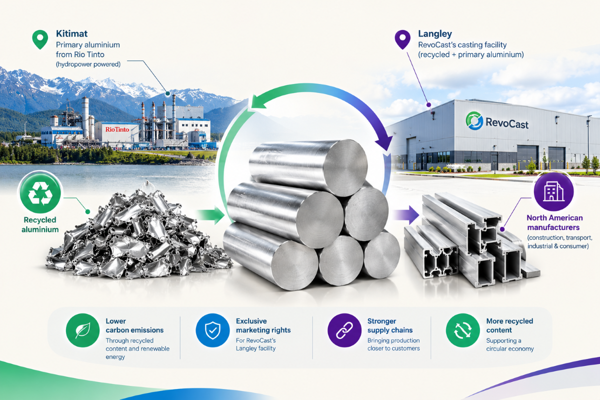
Rio Tinto is connecting its Kitimat aluminum production with a new British Columbia-based supply chain through a long-term agreement with RevoCast Aluminum Billets Ltd., under which aluminum from BC Works will be combined with recycled aluminum to produce billet for North American manufacturers. Announced on September 28, the agreement gives Rio Tinto exclusive marketing rights for aluminum billet produced at RevoCast’s newly commissioned Langley casting facility. The operation combines primary aluminum from BC Works with recycled aluminum processed by RevoCast. Explore the production, demand and consumption forecasts of bauxite and alumina in our report: “ Global Bauxite & Alumina Market Forecast to 2036: Supply–Demand, Trade Flows & Price Outlook ” The deal, however, will not change...
Ex-China aluminium market runs steadily as market awaits Q4 MJP settlement
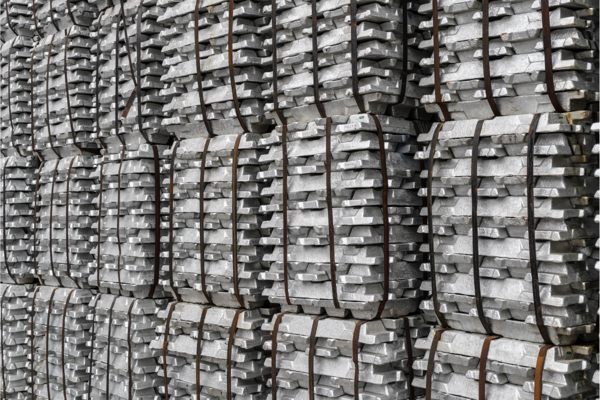
This week, the overseas aluminium market was generally mediocre, with limited trading activity across major markets. In South Korea, purchases were mainly small-scale restocking, with little change in prices. In Thailand, demand remained weak, and some sellers slightly lowered their offers due to shipment pressure. The market focused on Q4 MJP quarterly pricing, with Rio Tinto's latest offer further reduced, and market expectations suggested there is still room for the final settlement price to move lower. South Korea: Mediocre market, transactions mainly small-scale restocking This week, trading in the South Korean market was very subdued, with purchasing demand limited to small-scale restocking and no concentrated procurement seen. Sellers showed moderate willingness to offer, with...











Interviews
→_1788170565.776_md.webp)
Rachel Howard
Carbon emissions from Australian aluminium industry represent 7% of national emissions
“At Rio Tinto, we often say climate change is too big of a problem to go at it alone” Amy Abraham, Vice President Sales Aluminium

“Rio Tinto is extremely proud of its ability to produce some of the highest quality, lowest-carbon footprint aluminium,” Paramita Das, Head of Metals and Minerals, Marketing and ESG at Rio Tinto

Blog
LATEST POSTS




Turn marketplace visibility into more relevant buyer enquiries.
View Priority Plans
Turn marketplace visibility into more relevant buyer enquiries.
View Priority Plans
