AL Circle Analysis: Rising bauxite supply, India’s alumina surplus and US policy reshape the aluminium industry

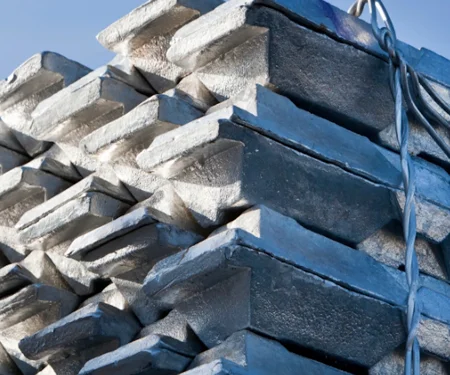
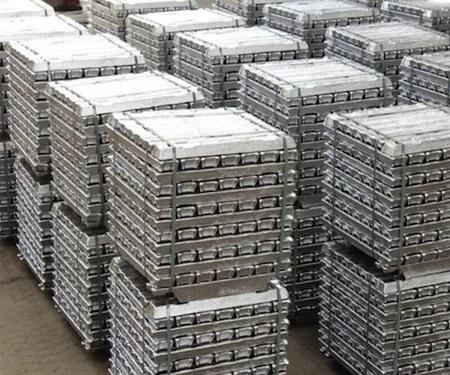
The image used in this article is generated with an AI tool and does not depict any real-time moment
The bauxite and alumina industry has been busy repositioning itself on several fronts. Companies are expanding mining and smelting capacity, exploring new resource regions and moving towards higher-value products, while governments are stepping in to protect strategically important alumina assets. At the same time, changing trade flows and softer regional premiums are offering a mixed picture for buyers and sellers.
The developments point to a common industry response: secure more supply, diversify where it comes from and capture more value from each tonne.
Companies are expanding, but not in the same direction
Growth plans across the industry show that producers are taking different routes to strengthen their positions.
Ashapura Minechem is expanding its Guinea bauxite operations while shifting its Indian business towards higher-value mineral products. The company is targeting 15 million tonnes of annual bauxite volumes by FY28, a level management believes could generate nearly INR 100 billion (USD 1.05 billion) in bauxite revenue, depending on bauxite prices, freight costs and operating conditions.
Rio Tinto is adding to its Australian resource base through the acquisition of the Aurukun bauxite project from Glencore and Mitsubishi. The undeveloped Cape York project could provide up to 8 million dry tonnes of export bauxite per year, adding to Rio Tinto's existing Weipa operations and growing regional pipeline.
Further east, Rusal is working on plans for a bauxite and alumina complex in Indonesia, together with domestic companies. The company has described the project as part of its “diversification strategy in the Pacific region.”
At the downstream end, NALCO is also preparing for expansion, signing a Technology Licensing Agreement with Emirates Global Aluminium to deploy DX+ Ultra aluminium smelting technology at its proposed 500,000-tonne-per-year brownfield expansion at Angul, Odisha.
Key takeaways
- Scale remains attractive, but weaker prices raise the bar for project economics.
- Ashapura's target puts execution and realised pricing at the centre of its revenue opportunity.
- Aurukun strengthens Rio Tinto's long-term Australian supply pipeline rather than adding immediate market tonnes.
- NALCO's expansion signals continued confidence in long-term aluminium demand despite softer regional premiums.
Supply is growing, making cost and quality more important
Bauxite supply remains plentiful, particularly from Guinea. Shipments reached 4.33 million tonnes between August 21 - 27, up 3.7 per cent week on week and 28.4 per cent year on year, according to Mysteel.
The increase came even as some Guinean mines that had previously suspended shipments continued to stockpile material at ports, with no plans to resume shipments in the near term.
Strong supply is contributing to weaker price expectations. Guinea's FOB bauxite price is forecast at USD 34-46 per dry metric tonne in 2026, compared with USD 40-65 per dry metric tonne in 2025. Australia is also expected to see a significant decline, with its FOB bauxite price forecast at USD 39.15 per wet metric tonne in FY26, down from USD 51.48 per wet metric tonne in FY25.
Yet the two origins do not occupy exactly the same price position. Ore quality and freight continue to influence the relative economics of Australian and Guinean material.
Key takeaways
- Abundant supply is limiting bauxite price upside.
- For buyers, delivered cost is becoming a more useful benchmark than FOB price alone.
- For new projects, cost competitiveness will matter more as seaborne supply expands.
- The cost of a tonne increasingly depends on freight and ore quality, not just the FOB benchmark.
That price pressure makes diversification particularly relevant. But it also means new resources need to be assessed for their ability to compete in a well-supplied market.
Trade flows are shifting the regional balance
The changing supply picture is already visible in alumina trade.
Asia exported 7.05 million tonnes of alumina worth USD 2.76 billion in H1 2026, up 27.36 per cent year on year. The sharp rise followed a considerable quarter-on-quarter surge, pointing to stronger aluminium production and alumina demand.
India has moved even further towards the export side. Its alumina exports rose 51.3 per cent to 2.5 million tonnes in H1 2026 from 1.65 million tonnes, while imports declined 34.9 per cent to 775,362 tonnes from 1.19 million tonnes.
India's resulting alumina trade surplus reached 1.72 million tonnes, nearly quadrupling year on year.
The next test will be H2. Whether Asia can reach 8 million tonnes of shipments will depend on geopolitical disruptions, refinery capacity and changing market demand.
The shift in alumina availability is also occurring alongside weaker aluminium premiums. Japanese buyers have been offered USD 310-325 per tonne for October-December shipments, down 18-22 per cent from the USD 395 per tonne premium agreed for July-September.
Key takeaways
- Asia's growing exports are increasing the importance of regional trade flows in price formation.
- India's sharp export growth has materially changed its position in the global alumina trade.
- H2 shipments will be critical in determining whether the current increase in alumina availability persists.
- Lower Japanese premiums indicate weaker regional pricing power for aluminium sellers.
With supply and trade both shifting, governments are also becoming more concerned about where critical processing capacity sits.
Governments are stepping in to secure strategic capacity
The US has made perhaps the clearest move. The US Department of War has committed another USD 100 million to Atlantic Alumina Company (Atalco), taking total government investment to USD 400 million.
The investment is aimed at protecting the country's last remaining domestic alumina refinery and strengthening a critical defence supply chain.
Meanwhile, Ghana's 920 million tonnes of bauxite reserves are drawing international attention. Coal India is evaluating opportunities in the country as it seeks to diversify beyond coal and secure mineral assets abroad.
However, the Ghana opportunity remains at an early evaluation stage. No specific Ghanaian mine, deposit or company has been identified, and there is no indication that formal negotiations with Ghanaian authorities have begun.
The policy and investment activity shows that governments and companies are increasingly looking at bauxite and alumina through a strategic supply-security lens, rather than purely through short-term commodity prices.
Key takeaways
- Domestic alumina capacity is becoming a strategic asset, particularly where it supports critical industries.
- Large resource bases such as Ghana's can attract investment interest well before they become new sources of supply.
- Policy support could increasingly influence the location and viability of future refining capacity.
Producers are looking beyond bulk-market growth
The final piece of the picture is the industry's attempt to capture value beyond conventional bauxite, alumina and aluminium volumes.
Impact Minerals is advancing plans for a staged 2,000-to-4,000-tonne-per-year high-purity alumina plant on the US Gulf Coast. A NewPro study supports a post-tax NPV of about USD 373 million and an IRR of 42.3 per cent.
At the same time, global aluminium output fell to 6.2 million tonnes, while prices rose 0.35 per cent to INR 345.6 (USD 3.64). Declining exchange inventories, expectations of additional fiscal measures in China and concerns over constrained Middle East supply supported prices, although improving regional production prospects limited gains. Gulf output fell 44 per cent, while SHFE stocks declined 3 per cent.
The combination of softer premiums, strong raw-material supply and continued investment suggests that producers cannot rely solely on higher volumes to drive returns.
Key takeaways
- Bulk-market growth alone may offer limited protection against pricing pressure.
- Specialised products such as HPA provide an alternative route to value creation.
- Inventory and supply disruptions remain important short-term aluminium price drivers despite softer premiums.
Note: This is exclusive coverage by AL Circle and may not be reproduced, republished or shared without prior permission.
Ghana puts bauxite, lithium and iron ore in the spotlight to woo Australian capital
Next article$450m in additional annual Capex as Alcoa’s South32 deal expected to improve aluminium cost competitiveness
Grow with
AL Circle