Ega

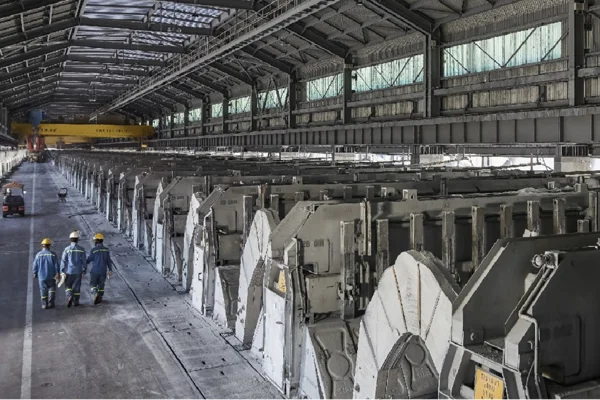
EGA restarts 50% of Al Taweelah aluminium smelter, targets full production by Q1 2027
Emirates Global Aluminium (EGA) has restarted 631 of the 1,262 reduction cells at its Al Taweelah aluminium smelter in the UAE, marking a major milestone in recovery efforts following an emergency shutdown on March 28 amid regional security developments that affected operations at Khalifa Economic Zone Abu Dhabi. The shutdown required a full evacuation of the Al Taweelah site, leaving molten aluminium frozen inside every reduction cell. EGA began restarting the first restored cell on May 26 and is now progressing across all three potlines simultaneously, with teams working to restore the remaining cells. Despite the scale of the disruption, EGA continues to expect the Al Taweelah aluminium smelter to return to full production during the first quarter of 2027. Abdulnasser Bin Kalban, Chief...
EGA’s Engineer the Future programme to encourage STEM interest at another 25 schools in the 2026/2027 academic year
Emirates Global Aluminium, the largest industrial company in the United Arab Emirates outside oil and gas, has launched this academic year’s Engineer the Future programme, which aims to inspire children’s interest in science, technology, engineering and mathematics at another 25 schools. Over 44,000 students from more than 170 schools across the UAE have participated in EGA’s Engineer the Future programme since its launch in 2017. Science, technology, engineering and mathematics are vital fields for the UAE’s industrial future. EGA employs over 1,500 STEM experts, including more than 500 UAE Nationals. Abdulnasser Bin Kalban, Chief Executive Officer of Emirates Global Aluminium, said: “Building a globally competitive industrial economy requires a strong pipeline of scientific and...
Grow with
AL Circle
Price
→Events

Business Cards
A report that reveals where the aluminium casting industry is heading and how businesses can act.
LEARN MORE
A report that reveals where the aluminium casting industry is heading and how businesses can act.
LEARN MOREEurope’s recycled aluminium production: Germany, Italy and the UK anchor a competitive market
Global EV sales to hit 35.4 million by 2030, with aluminium usage forecast to rise 38% in North America & 79% in China
AL Circle analysis: How do Germany’s 32.8% automotive aluminium share, 40% Diet Coke can price rise & 3.54Mt North American extrusion demand matter?
AL Circle Analysis: Guinea’s 150Mt bauxite cap, China’s import swings, US tariffs draw aluminium Q4’26
EU approves Germany’s power relief instrument: Could aluminium producers save €459m annually?
News
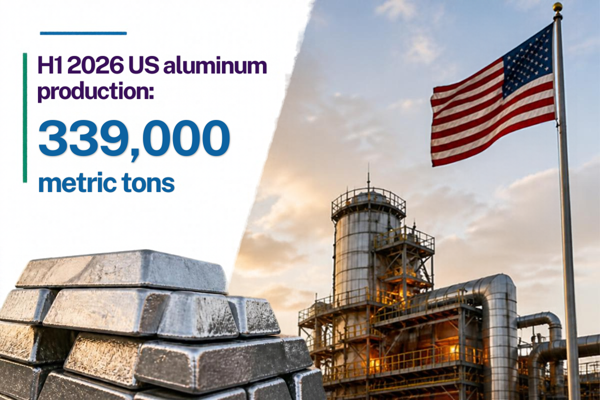
US produced 339kt aluminum in H1 2026: Can new projects change the outlook?
The US aluminum industry, through its troubled journey over the past four decades, has been holding on to its remaining active smelters to maintain domestic aluminum production. However, its production figures reveal how little ground it has regained. Stability has been a strong suit, with 339,000 metric tons produced in H1 2026, yet matching the volume recorded in H1 2024. With domestic primary production still constrained, the focus is shifting to whether the Century Aluminum’s Mt Holly restart and the proposed Oklahoma primary aluminum smelter can turn modest gains into a sustained supply revival. Explore the production, demand and consumption forecasts of bauxite and alumina in our report: “ Global Bauxite & Alumina Market Forecast to 2036: Supply–Demand, Trade Flows & Price Outlook ”...
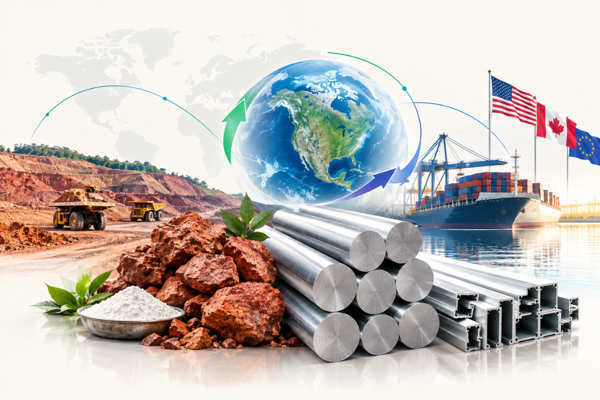
AL Circle Analysis: From Guinea to Gulf, how bauxite, tariffs and logistics redraw aluminium map
Aluminium markets in late 2026 are being shaped by more than the headline LME aluminium price. Bauxite security, alumina availability, geopolitical disruptions, tariff negotiations, logistics diversification and regional premiums are increasingly determining where metal moves and what buyers pay. From RUSAL reassessing Caribbean assets and Vedanta securing Odisha bauxite to Brazil extending mine life and EGA rebuilding its Guinea supply chain, producers are strengthening control over critical raw materials. At the same time, the US remains heavily dependent on imported bauxite and alumina, while Europe and Asia are experiencing sharply different premium dynamics. These developments point to a market where physical availability is becoming a regional factor even as aluminium itself remains...

$1.5b Quebec AP60 expansion puts Rio Tinto at heart of low-carbon aluminum race
The low-carbon aluminum market has stepped into a more competitive phase as producers invest in cleaner smelting technologies, renewable power and new downstream applications. Rio Tinto’s $1.5 billion AP60 smelter expansion in Quebec is the latest major development, adding around 160,000 metric tons per annum (MPTA) of primary aluminum capacity when fully operational by the end of 2026. The project will lift total AP60 production at Complexe Arvida to about 220,000 MPTA while supplying lower-carbon aluminum to transportation, construction, electrical and consumer-goods customers. The Quebec expansion is expected to cut emissions by approximately 290,000 MPTA compared with the older Arvida technology, strengthening the case for energy-efficient, hydropower-based primary aluminum...
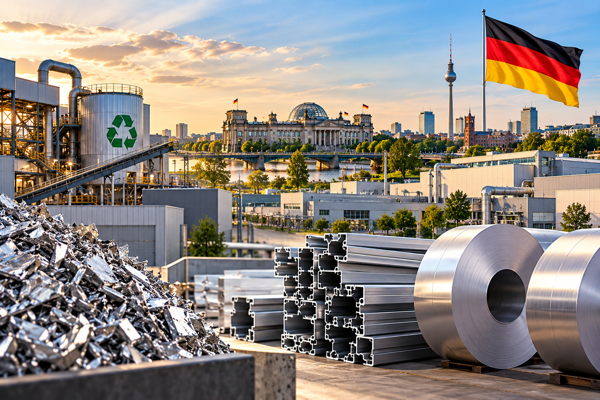
Who’s holding up Germany’s aluminium game? Meet EGA, Hydro and Constellium
Germany does cars, machinery and engineering rather well, and all of that needs a lot of aluminium. So, when three international players put serious money and muscle into the country's aluminium industry, it's worth a look. Together, the three companies offer an interesting snapshot of more recycling, more specialised products, stronger local supply chains and lower-carbon production. Here is who is doing what, and why it matters. EGA: The Gulf giant moving into Hannover Emirates Global Aluminium (EGA) is the world's largest "premium aluminium" producer. It already ships over 600,000 tonnes of primary aluminium to Europe every year, with the automotive and construction industries among its key customers. Then it did something it hadn't done in a decade: it bought a company. That company...
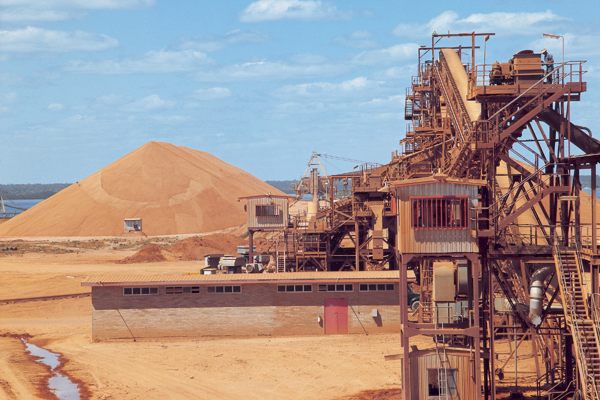
Bauxite transport and traceability: Why tracking the cargo back to the mine is difficult
Bauxite is the starting material for alumina refining and primary aluminium production, but its route from mine to refinery is rarely as simple as a labelled shipment moving from one country to another. Unlike fabricated metal products, bauxite is usually traded as a loose bulk mineral. It is loaded into stockpiles, trucks, rail wagons, barges and bulk carriers, often passing through multiple handling points before reaching an alumina refinery. This logistics model keeps transport costs low for a high-volume commodity, but it also makes mine-level origin difficult to establish. The key question for traders, refiners and downstream buyers is therefore not only about where a cargo was loaded but where the ore was actually mined and whether that origin can be traced and documented along the...
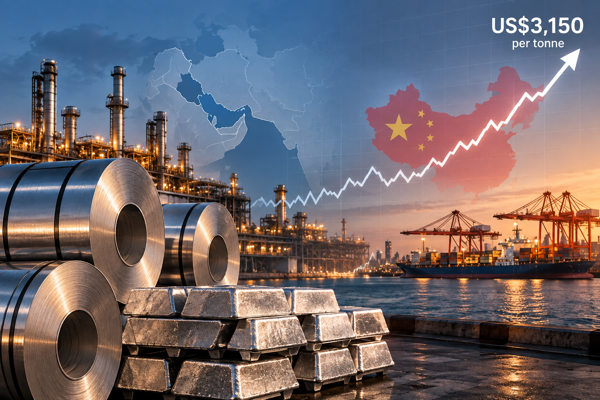
Gulf production recovery falters, China steps up as OCBC raises aluminium forecast to $3,150
OCBC has raised its end-2026 aluminium price forecast to about USD 3,150 per tonne from USD 3,050, citing a slower-than-expected recovery in Gulf production, although strong Chinese output is expected to continue offsetting supply disruptions. Three-month aluminium on the London Metal Exchange (LME) fell 0.9 per cent month-on-month in September to USD 3,214 per tonne as of September 29, remaining 2 per cent above OCBC’s third-quarter forecast of USD 3,150. The cash-to-three-month spread was broadly unchanged at a USD 7.40-per-tonne contango, compared with USD 7.60 at the end of August. The spread suggests limited urgency for immediate metal supply despite a continued decline in global exchange inventories. Gulf aluminium recovery loses momentum OCBC said aluminium production across the...













Interviews
→
Ziad Fares
Can Oklahoma reshape US aluminium supply? EGA’s Ziad Fares explains the project
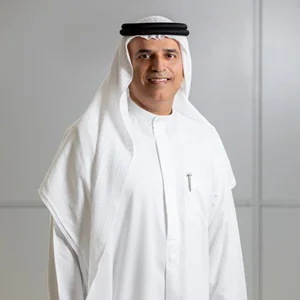
“EGA has strength from mine to metal and a strong balance sheet to pursue growth,” Abdulnasser Bin Kalban, CEO at Emirates Global Aluminium
“The aluminium industry in the Gulf is constantly evolving, and it will remain a prominent centre for aluminium production outside of China,” Mahmood Daylami, Secretary General, Gulf Aluminium Council.

Blog
LATEST POSTS





Turn marketplace visibility into more relevant buyer enquiries.
View Priority Plans
Turn marketplace visibility into more relevant buyer enquiries.
View Priority Plans
