AL Circle Analysis: Bauxite developments, alumina trade & primary aluminium market dynamics across Australia, Guinea, US & India

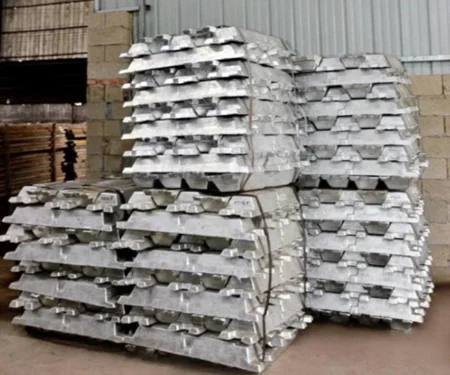
The image used in this article is generated with an AI tool and does not depict any real-time moment
The aluminium industry is entering another phase of supply-chain repositioning. Across bauxite, alumina and primary aluminium, companies are investing in new resources, consolidating strategic assets and expanding processing capacity, while governments are increasingly treating domestic supply as a strategic priority.
The latest developments from Australia, Guyana, Guinea, Indonesia, the US and India point to a market where resource security, processing location and control over supply chains are becoming as important as production growth. At the same time, new trading mechanisms and changing investment patterns are beginning to influence how aluminium and its raw materials reach the market.
Bauxite supply expands, but securing the right tonnes is becoming harder
In Western Australia, VBX is raising AUD 7 million (USD 5 million) to advance the definitive feasibility study (DFS) for its Wuudagu bauxite project, with completion now expected in the first quarter of 2027. At the same time, its indicative prepayment and offtake agreement with thyssenkrupp Materials Trading Asia has ended, highlighting how project development and commercial arrangements can evolve separately.
In Guyana, US-based Strategic Bauxite Inc. is preparing to expand its refractory-grade bauxite operations after acquiring First Bauxite LLC in July. The project has secured USD 85.5 million in US government equity funding through the Industrial Base Analysis and Sustainment (IBAS) programme, alongside USD 64.5 million in private-sector co-investment.
Australia is already showing how operational infrastructure can influence actual availability. Metro Mining shipped 756,000 WMT from its Bauxite Hills Mine in August 2026, up 8 per cent from July, after its offshore floating terminal Ikamba returned to full strength in late July.
The biggest strategic move, however, is Alcoa's proposed acquisition of South32's bauxite, alumina and aluminium assets. Alcoa has completed a USD 2.6 billion senior notes offering to finance the cash component of the transaction, comprising USD 1.5 billion of 6.63 per cent senior notes due 2034 and USD 1.1 billion of 6.88 per cent senior notes due 2036.
Key takeaways
- The bauxite market is moving towards strategic supply control: the combination of new project funding, asset consolidation and logistics recovery shows that securing reliable tonnes is becoming a competitive advantage in itself.
- The project pipeline may look stronger than near-term availability: Wuudagu is still at the DFS stage, while Metro's shipments show how infrastructure can influence actual exports even when mining capacity exists.
- Alcoa's South32 move adds another dimension: consolidation is increasingly being used to secure exposure across bauxite, alumina and aluminium rather than competing at only one stage of the chain.
Guinea and Indonesia push bauxite further down the value chain
The next change is occurring at the producing-country level. Guinea and Indonesia are both moving towards greater domestic processing, potentially changing the traditional flow of bauxite from mine to overseas refinery.
Guinea is looking beyond bauxite exports in its partnership with Glencore, with discussions covering potential investments in alumina refining, energy and other strategic projects. The talks follow a more than USD 300 million bauxite pre-financing and offtake agreement between state-owned Nimba Mining and Glencore, under which Glencore will market 10-12 million tonnes of bauxite annually for five years.
Guinea is also seeking US financing for an alumina refinery planned by Compagnie des Bauxites de Guinée (CBG), adding another potential domestic processing route.
Indonesia is following the same broader direction. RUSAL is nearing final approval for a planned bauxite-to-alumina project in Kalimantan, where it will work with Indonesian private companies while the government remains involved in the development.
Key takeaways
- The traditional flow of bauxite from producing countries to overseas refineries is beginning to change: Guinea and Indonesia are both moving towards greater domestic processing.
- That creates a potential supply squeeze without a mining shortfall: if additional bauxite is consumed domestically, international buyers could face tighter availability even as production expands.
- The competitive importance of producing countries is therefore shifting: control over refining capacity could become as significant as control over the bauxite resource itself.
Explore the production, demand and consumption forecasts of bauxite and alumina in our report: “Global Bauxite & Alumina Market Forecast to 2036: Supply–Demand, Trade Flows & Price Outlook”
Alumina moves towards more visible pricing and stronger market access
As the alumina supply chain becomes more diversified, the market is also beginning to experiment with how material is priced and sold.
Hindalco Industries has partnered with Germany-based digital marketplace Metalshub to introduce structured online bidding for spot sales of metallurgical-grade alumina. The first tender is expected between October and December 2026.
The initiative is significant because alumina remains largely dominated by long-term contracts. A functioning spot tender could provide more transaction-based price discovery and introduce another reference point for buyers and sellers.
At the specialised end of the market, Almatis and ROMCO have signed a term sheet outlining the principles for a long-term strategic partnership for Brown Fused Alumina. The proposed arrangement combines ROMCO's fused alumina manufacturing capabilities in India with Almatis' global sales, technical service and distribution network.
Key takeaways
- The alumina market could be entering a more transparent pricing phase: Hindalco's planned spot tenders introduce observable transactions into a market still heavily based on long-term contracts.
- If this model gains traction, the impact could extend beyond spot volumes: transaction-based prices could gradually influence contract negotiations and market benchmarks.
- At the same time, the Almatis-ROMCO partnership shows that market access is becoming part of the competitive equation, particularly in specialised alumina where production alone does not determine customer reach.
The changing upstream and alumina landscape is occurring alongside a much larger question in the primary aluminium market: how quickly can major consuming economies rebuild domestic supply?
US aluminium rebuilding exposes the gap between policy and physical supply
The US is trying to rebuild its primary aluminium base, but recent developments show that domestic capacity cannot replace imports overnight.
Alcoa CFO Molly Beerman said reducing US tariffs on Canadian aluminium alone is unlikely to significantly lower the elevated Midwest aluminium premium. The US requires around 4 million tonnes of aluminium imports annually, while Canada can supply roughly 3 million tonnes. The remaining 1 million tonnes must come from other markets, where tariffs and other trade barriers continue to raise delivered costs.
The scale of the domestic challenge is clear. The number of operational US smelters has fallen from around thirty to only four over two decades, while primary aluminium output was estimated at 660,000 metric tonnes in 2025.
The rebuilding effort is therefore extending beyond smelters. Infrastructure, ageing electrolysis assets, scrap processing and metal quality will all be required to strengthen the domestic industry.
Oklahoma Primary Aluminum's proposed USD 4 billion smelter at the Tulsa Port of Inola illustrates the scale of investment being considered. The Emirates Global Aluminium-Century Aluminium joint venture plans a 750,000 tonne-per-year facility. Its study projects a cumulative USD 49 billion contribution to Oklahoma's economy through 2060, with approximately 7,000 jobs on average per year and employment peaking above 10,600 in 2029.
Yet the immediate market remains exposed to global supply conditions. H1 2026 LME aluminium stocks fell 31.82 per cent amid Russian sanctions and the Gulf crisis, declining from 498,670 tonnes in January to 320,314 tonnes in June.
Key takeaways
- US import dependence will remain significant during the capacity rebuild: the proposed 750,000-tonne smelter covers only part of the roughly 4-million-tonne import requirement cited by Alcoa.
- Canadian supply cannot close the entire gap, keeping alternative origins, tariffs and Midwest premiums important for buyers.
- The timing gap is the key market issue: new domestic capacity will take time, while low inventories can affect aluminium costs much sooner.
Read our latest magazine “ALuminium’s Frontline: OEM Edition 2026” and learn how OEMs are transforming critical aluminium applications across end-use sectors.
India combines export strength with a deeper integrated aluminium chain
While the US is rebuilding a weakened primary industry, India is expanding from an already established production and export base.
Vedanta Aluminium exported around USD 3.5 billion in FY26 from its Jharsuguda SEZ, according to the company. The facility accounted for around 6 per cent of India's total SEZ goods exports during the financial year ended March 2026 and serves customers in more than 60 countries, including Europe, the US, Japan and Southeast Asia.
At the same time, Odisha has handed over more than 7,000 acres for the proposed USD 11.5 billion integrated aluminium complex of Adani Group and International Resources Holding (IRH). The project covers alumina refining, aluminium smelting and downstream manufacturing across Sundargarh and Rayagada districts, with around 4,000 acres in Sundargarh and 3,000 acres in Rayagada.
The land handover took place in the presence of India's Ambassador to the UAE, Deepak Mittal, with the documents handed over by Chief Minister Mohan Charan Majhi.
Key takeaways
- India is moving towards greater value-chain integration, linking alumina, primary aluminium and downstream manufacturing.
- Its existing export network gives future production international reach, rather than limiting growth to domestic demand.
- The combination of scale, integration and exports could make India increasingly relevant to regional aluminium trade and competition.
Taken together, these developments show an aluminium market becoming increasingly shaped by supply-chain control, regional processing and strategic investment. Bauxite-producing countries are moving closer to alumina, major producers are consolidating resources, the US is trying to rebuild domestic metal supply, and India is expanding an integrated value chain with established access to global markets.
For the industry, this points to a market where the availability of raw materials, location of processing capacity, logistics, pricing mechanisms and access to end customers will increasingly determine competitiveness alongside production volumes.
Note: This is exclusive coverage by AL Circle and may not be reproduced, republished or shared without prior permission.
15-tonne anorthosite push meets Greenland security pact as AnorTech advances sustainable alumina
Next articleOdisha commits local bauxite for Vedanta’s Lanjigarh alumina refinery as ₹1 trillion aluminium push gathers pace
Grow with
AL Circle