Australia’s alumina exports fall 9.46% despite China’s 19-fold import surge, with shipments to Indonesia & Oman also rising

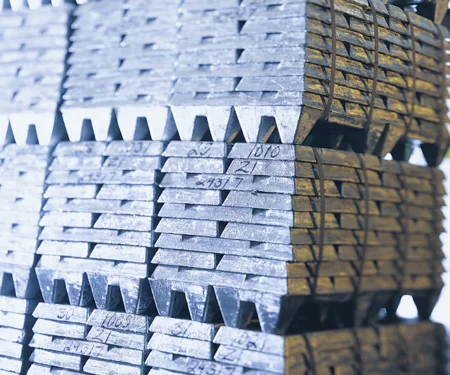
The image used in this article is generated with an AI tool and does not depict any real-time moment
Australia, one of the world’s major alumina production and export hubs, witnessed a significant shift in its trade flows in the first half (H1) of 2026. Although the country’s total alumina exports declined, shipments to China surged nearly 19-fold, making it Australia’s one of the largest export destinations. Meanwhile, exports to the UAE and South Africa fell, while Indonesia and Oman recorded increases.
Australia exported 6.7 million tonnes of alumina worldwide in H1 2026, down 9.46 per cent from 7.4 million tonnes in H1 2025. Compared with 7.5 million tonnes in H1 2024, exports declined by 800,000 tonnes, or 10.67 per cent, over two years.
The contrasting performance across major destinations highlights how Middle East shipping disruptions, changes in aluminium production requirements and favourable import price spreads have reshaped Australia’s alumina trade.
China becomes Australia’s largest alumina export market
China emerged as Australia’s leading alumina export destination in H1 2026, with shipments reaching 1.790 million tonnes, compared with 95,000 tonnes in H1 2025. The increase of 1.695 million tonnes represented a surge of 1,784.21 per cent.
If we break down quarterly, Australian alumina shipments to China rose from 32,000 tonnes in Q1 2025 and 63,000 tonnes in Q2 2025 to 590,000 tonnes and 1.2 million tonnes, respectively, in the corresponding quarters of 2026.
The shift marks a significant change from H1 2024, when Bahrain was Australia’s largest listed export destination, receiving 1.641 million tonnes of alumina.
To know the futuristic market and value proposition of red mud, explore the report "A Comprehensive Analysis of Bauxite Residue (Red Mud): Sustainability, Resource Recovery and Strategic Recommendations"
Why did China’s alumina imports from Australia surge?
Australian alumina shipments to China remained near historic lows in H1 2025 because logistical bottlenecks and unfavourable price spreads constrained trade flows. However, geopolitical tensions in the Middle East subsequently disrupted established shipping routes, including movements through the Strait of Hormuz.
Traders redirected some alumina cargoes originally intended for Middle Eastern markets to China. At the same time, a more favourable price spread between domestic Chinese and overseas alumina prices opened an import arbitrage window, encouraging additional purchases. The combination of redirected cargoes and improved import economics helped China take the lead among Australia’s alumina export destinations.
Top importers of Australian alumina
- UAE alumina shipments lose momentum
After China, UAE leads the Australia’s alumina export destinations, though it lost some momentum. It imported 761,000 tonnes, down 34.23 per cent from 1.157 million tonnes in H1 2025. The decline amounted to 396,000 tonnes.
Shipments fell from 610,000 tonnes in Q1 2025 and 547,000 tonnes in Q2 2025 to 423,000 tonnes and 338,000 tonnes, respectively, in H1 2026. In H1 2024, the UAE received 1.263 million tonnes of Australian alumina.
The decline coincided with March geo political issues that disrupted UAE aluminium facilities, forcing production curtailments and reducing near-term alumina consumption.
- South Africa records a marginal decline in Australian alumina imports
South Africa ranked third among Australia’s alumina export destinations, receiving 710,000 tonnes in H1 2026, down 1.80 per cent from 723,000 tonnes in H1 2025. The decrease amounted to 13,000 tonnes.
Shipments increased from 369,000 tonnes in Q1 2025 to 392,000 tonnes in Q1 2026. However, Q2 volumes declined from 354,000 tonnes in 2025 to 318,000 tonnes in 2026, resulting in a lower half-year total.
In H1 2024, South Africa received 691,000 tonnes of Australian alumina. The marginal decline in H1 2026 reflects softer operating conditions and the closure of Mozal in Mozambique on 15 March 2026.
- Indonesia’s Australian alumina imports surge
Indonesia recorded the second-highest growth rate among Australia’s five leading export destinations, with imports increasing to 520,000 tonnes in H1 2026 from 225,000 tonnes in H1 2025. The increase of 295,000 tonnes represented growth of 131.11 per cent.
Quarterly shipments rose from 119,000 tonnes in Q1 2025 and 106,000 tonnes in Q2 2025 to 241,000 tonnes and 279,000 tonnes, respectively, in H1 2026.
In H1 2024, Canada occupied the fourth position among the listed destinations, importing 542,000 tonnes of Australian alumina.
- Oman’s Australian alumina imports rise 30.95 per cent
Oman imported 495,000 tonnes of Australian alumina in H1 2026, up 30.95 per cent from 378,000 tonnes in H1 2025. The increase amounted to 117,000 tonnes.
Shipments stood at 189,000 tonnes in each quarter of H1 2025. In H1 2026, imports reached 156,000 tonnes in Q1 before climbing to 339,000 tonnes in Q2.
In H1 2024, Mozambique ranked fifth among the listed destinations, receiving 386,000 tonnes of Australian alumina.
Oman gained importance as an alternative logistics hub during disruptions to shipping through the Strait of Hormuz. Emirates Global Aluminium (EGA) routed aluminium exports and alumina feedstock through Sohar, while the Gulf conflict increased the strategic importance of Oman’s operating smelting capacity.
Explore alumina and other essential inputs in the right grades from global suppliers on AL Biz
From where did Australia imported alumina
While Australia’s alumina exports declined, its imports contracted much more sharply. Total alumina imports from the world fell to 4,800 tonnes in H1 2026 from 215,000 tonnes in H1 2025, a decrease of approximately 97.8 per cent. In H1 2024, imports totalled 76,000 tonnes.
However, imports from China and India increased despite the overall decline.
- China
Australia imported 2,474 tonnes of alumina from China in H1 2026, up 39 per cent from 1,780 tonnes in H1 2025.
Quarterly shipments rose from 680 tonnes in Q1 2025 to 1,600 tonnes in Q1 2026. In contrast, Q2 imports declined from 1,100 tonnes to 874 tonnes over the same period.
The two-way alumina trade between Australia and China involves different product categories. Australia primarily exports smelter-grade, or metallurgical, alumina to China, while importing comparatively small quantities of specialty, chemical, high-purity or processed alumina, where Chinese producers have cost, scale or product-specific advantages.
- India’s alumina shipments to Australia surge
Imports from India rose to 1,975 tonnes in H1 2026 from 290 tonnes in H1 2025, an increase of approximately 581 per cent.
Shipments increased from 154 tonnes in Q1 2025 to 1,200 tonnes in Q1 2026. Q2 imports also climbed, rising from 136 tonnes in 2025 to 775 tonnes in 2026.
- US imports increase while German and French shipments decline
Australia’s alumina imports from the United States increased to 101 tonnes in H1 2026 from 58 tonnes in H1 2025.
In contrast, shipments from Germany declined to 58 tonnes from 137 tonnes, while imports from France fell to 32 tonnes from 119 tonnes over the same period.
Australia’s alumina trade in H1 2026 highlights a changing export landscape, with China’s import surge and rising shipments to Indonesia and Oman offsetting declines in the UAE and South Africa, even as overall exports and imports contracted.
Unlock key insights from leading companies and experts across the aluminium ecosystem with our e-Magazine - Mine to Market: Aluminium Producers & Manufacturers 2026
Note: This is exclusive coverage by AL Circle and may not be reproduced, republished or shared without prior permission.
Guangxi’s newly commissioned capacity continues to release, alumina supply stays high
Next articleHead of State Property Fund acknowledges: Mykolaiv Alumina Plant privatisation auction in Q1 2027
Grow with
AL Circle