“The aluminium industry in the Gulf is constantly evolving, and it will remain a prominent centre for aluminium production outside of China,” Mahmood Daylami, Secretary General, Gulf Aluminium Council.
- Category
- Interview
- Date
- Source
- AlCircle.com
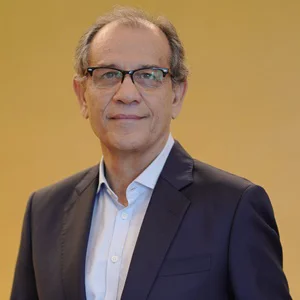
Mahmood Daylami is the Secretary General of the Gulf Aluminium Council (GAC) and former Deputy Chief Executive at ALBA. He has been associated with the aluminium business for over forty years. Additionally, he is the author of the book 'Understanding Cultural Diversity in the Gulf: A Management Perspective.
AL Circle: As we are nearing the end of 2023 - we would like to know how the aluminium industry did in the GCC this year - some key trends emerging?
Mahmood Daylami: Despite market uncertainty due to the war in Europe, GCC smelters maintained full-capacity production in 2023, with a collective output expected to exceed 2022.
The key focus area is developing carbon emission reduction strategies; some have moved to implementation, refarming GCC producers' commitment to long-term carbon neutrality.
2024 will be more of the same.
AL Circle: The GCC has demonstrated a strong inclination towards green energy. How is the aluminium industry adopting that practice & moving forward?
Mahmood Daylami: GCC aluminium producers are taking significant steps towards decarbonizing aluminium production in the short and long term.
EGA is the world's first to produce aluminium using solar energy from one of the world's largest renewable energy projects. Solar energy enabled the production of 50,000 tons of aluminium in 2022, with scope for expansion in the future.
In collaboration with General Electric Co., EGA is investigating hydrogen as a fuel and exploring carbon capture, utilization, and storage solutions. They have recently completed a new power plant with a generation capacity of around 600 megawatts. The newly constructed power block will reduce greenhouse gas emissions from the Jebel Ali smelter by 10%, equivalent to planting over 17 million trees annually, and decrease NOx emissions by 58%, equivalent to removing more than 850,000 cars from the roads.
Alba is working on installing a 6MW solar panel project, which spans over 37,000 square meters of operational areas, car parks, and the Alba Club. Additionally, they upgraded their Power Station 5 by integrating 680.9 megawatts (M.W.) Combined Cycle Gas Turbine Power Block can currently use up to 30% hydrogen fuel by volume, potentially transitioning to 100% hydrogen fuel.
Ma'aden has recently partnered with Gulf Cryo to establish a carbon capture plant within the Kingdom. The primary objective of this collaboration is to minimize carbon emissions and simultaneously produce a pure source of CO2 for industrial gas applications within the country. This initiative will contribute towards establishing a circular carbon economy within the Kingdom, providing an eco-friendly and sustainable solution to the growing environmental concerns.
Qatalum and GE have upgraded power generation to improve efficiency and reduce emissions.
Sohar Aluminium just completed its comprehensive decarbonisation plan that will be implemented over the coming years.
Balexco, one of the Gulf Extruders, plans to build solar plant facilities generating around 30% of its total electricity needs.
In addition to reducing emissions from power generators, GCC aluminium producers are also working on reducing direct emissions from other processing plants within the smelters.
Alba collaborates with Mitsubishi Heavy Industries EMEA Ltd to reduce carbon footprint by capturing CO₂ from flue gas at the anode production plants.
Ma'aden and GlassPoint have announced a joint project to develop the world's largest solar process steam plant at Ma'aden's Alumina refinery. The facility, which will have a capacity of 1,500 MW, is expected to reduce carbon emissions by over 600,000 tons annually. This represents more than a 50% reduction in the carbon footprint of Ma'aden's Alumina refinery.
EGA is building a 150,000 tonnes per year aluminium post-consumer recycling facility.
Maaden is expanding its recycling facilities to reach 150,000 tonnes a year.
Garmco completed its US$ 50 million Project by installing three new remelting furnaces to recycle post-consumer aluminium.
Sustainability encompasses more than just green energy. EGA, a UAE-based company, has become the first in the region to join the First Movers Coalition, which includes over 50 major companies worldwide. The coalition aims to leverage demand to accelerate the development and scaling-up of new technologies necessary to decarbonize the aviation, aluminium, chemicals, concrete, shipping, steel, and trucking industries.
Alba commissioned a 35,000-tonne SPL treatment plant, transforming treated SPL into valuable products in other industries.
All the SPLs produced by Qatalum, EGA, Maaden, and Sohar are recycled as valuable byproducts for their respective countries' steel and cement industries. There are zero landfills of SPL in the Gulf.
AL Circle: Trained manpower is often mentioned as one of the top three critical challenges by the leaders of the global aluminium industry. How big is the problem in the Gulf region?
Mahmood Daylami: The workforce in the Gulf is multinational, and this has been the case since the economic development started in the seventies and will likely remain as such for the foreseeable future. Accordingly, industries will attract talent from many countries and different regions. This does not reduce the need to develop local expertise and a skilled workforce. Investment in workforce training in the GCC aluminium industry is around US$ 20 M annually. Governments in the region also encourage such policies with assistance and policies to ensure local talents' availability and industry stability.
AL Circle: Can you please mention a few major transformational projects in the aluminium industry in the GCC region?
Mahmood Daylami: The aluminium industry in the Gulf is constantly evolving, and it will remain a prominent centre for aluminium production outside of China. The demand for this metal is rising, and the Gulf region is expected to be the primary supplier to meet future needs.
Several projects are at different stages of feasibility studies, such as Line 7 at Alba, a new smelter in Oman, and an Expansion in Maaden; final decisions on all these projects are still to be made. The construction to build a 150,000 tonnes recycling plant by EGA has started and should be operational in 2025.
The GCC countries are increasing the use of renewable energy and working on carbon capture and hydrogen technologies as part and parcel of the transition.
AL Circle: What are the upcoming drivers and challenges for the Aluminium industry in 2024?
Mahmood Daylami: It is worth noting that 65% of aluminium production in the Gulf is exported worldwide. Our strategy involves increasing our efforts to stay open for business, stay connected to the world, and continue as global players despite the various protection policies and measures taken by different countries and regions.
This means continuously improving current capabilities and adapting facilities to future technologies.
To respond to AI and many more technologies, our businesses must adapt and transform, develop new operating methods, and open new markets.
Our workers need to learn new skills to do the jobs that will be required.
It will be challenging, but All are doable.
The aluminium industry challenge is the transition to reducing carbon emissions and the availability of affordable technologies to support these efforts.
Between now and 2050, the world's demand will increase by 25 million tonnes of primary aluminium. I don't know how we will meet the Paris Agreement objectives without affordable carbon capture technology. Renewable energy alone will not meet the enormous challenge, and nuclear power is very costly and unavailable everywhere.
AL Circle: Please share a few key GAC initiatives for 2023 and 2024.
Mahmood Daylami: In the GCC, there is a renewed focus on the need for a sustained effort to mobilise the economy, a readiness to take risks, and a passionate vision of the future; the aluminium industry is part and parcel of such a drive.
GAC's primary goal is to foster collaboration among the region's aluminium producers by promoting the exchange of best practices, minimising emissions, enhancing equipment reliability, updating cybersecurity measures, elevating ESG standards, and sharing platforms for responsible sourcing. Our initiatives are regularly reviewed and updated to ensure they are practical and relevant to daily operations, contributing to increased productivity and human resources development.
To achieve its objectives, GAC has several specialised committees comprising experts from the regional aluminium industries who regularly meet under GAC's auspices.
We aim to strengthen the relationship between Gulf aluminium producers and organisations with regional business interests. The GAC annual dinner is instrumental in achieving this goal.
The GAC just took over ARABAL, a significant milestone to ensure Arabal Conference and exhibition continuity, making it more business-friendly and a global aluminium event.

