EU industrial emissions fall 3.3% as CBAM expansion eyes more aluminium products
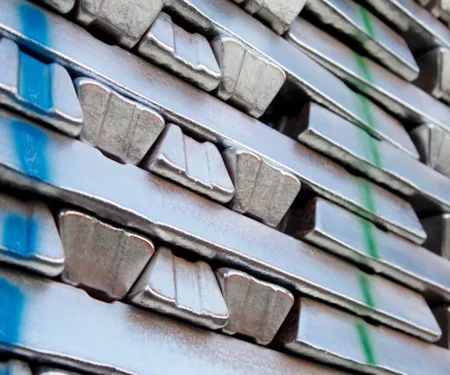
Stock image for referential purposes only
Industrial emissions across the European Union (EU) have declined by 3.3 per cent year-on-year in 2025, while the European Commission plans to widen the Carbon Border Adjustment Mechanism (CBAM) to cover 180 additional downstream aluminium and steel products. The proposed expansion, scheduled for 2028, signals a broader application of the EU’s carbon rules, extending their reach beyond basic materials to manufactured goods.
According to the Commission’s November 9 report on the functioning of the European carbon market in 2025, lower emissions from metals, cement and chemicals contributed to industrial emissions reduction from installations covered by the EU Emissions Trading System (ETS).
Under the ETS, free emission allowances are distributed according to performance benchmarks based on the average emissions intensity of the 10 per cent most efficient installations producing a certain product. Operators are to purchase additional allowances for emissions exceeding the free allocation.
To know the aluminium casting demand forecast, explore our report "Global Aluminium Casting Market 2026-2032: Plant Economics, Alloy Segmentation, Pricing Intelligence, Supply Chain Analysis & Strategic Recommendations"
However, the report mentions that this system is gradually changing for sectors covered by CBAM. It has begun replacing free allocation in covered sectors, such as aluminium, from 2026. These sectors accounted for approximately 54 per cent of total free allowances distributed between 2021 and 2025. Around 211 million allowances that will no longer be allocated free of charge during the 2026–2030 phase-in period will instead be made available to the Innovation Fund.
The Commission reiterated that CBAM initially covers direct emissions from metal production, while indirect emissions associated with electricity consumption remain outside its scope at this stage.
CBAM expansion targets 180 downstream products
The Commission’s December 2025 proposal seeks to extend CBAM coverage from 2028 to 180 downstream products heavily reliant on aluminium and steel. The proposed list includes washing machines, industrial radiators and casting machines.
Looking for aluminium extrusion equipment providers? Browse through a comprehensive list on AL Biz.
The expansion is intended to block circumvention of the carbon border tax. Without broader coverage, imports could shift from basic aluminium materials already subject to CBAM to finished or semi-finished downstream goods that currently fall outside its scope.
Additionally, the Commission has outlined a Temporary Decarbonisation Fund to tackle the rest of the carbon leakage risks in trade-intensive sectors covered by the ETS. The proposed fund would reimburse part of the carbon costs incurred under the ETS by producers whose goods face competition from cheaper, more carbon-intensive alternatives manufactured in non-EU markets.
EU expands support for energy-intensive industries
The report also highlighted the financial support provided to industries facing indirect carbon costs. In 2025, 15 EU member states paid a combined EUR 6.9 billion (USD 7.58 billion) to eligible industries to compensate for indirect carbon costs incurred during 2024.
Trading aluminium across borders? Find out the exact cost you need to bear for the embedded carbon in the product by using this CBAM calculator.
The Commission’s amendments to state aid guidelines in December 2025 expanded eligibility to additional electricity-intensive sectors and raised the permitted level of aid for industries already covered.
Companies receiving this support are required to reinvest part of the assistance in projects aimed at reducing their direct or indirect carbon footprint.
Summing up, the proposed CBAM expansion, the gradual withdrawal of free allowances and the planned decarbonisation support reflect the EU’s evolving approach to industrial carbon costs, with implications extending across steel, aluminium and their downstream value chains.
Read our latest magazine “ALuminium’s Frontline: OEM Edition 2026” and learn how OEMs are transforming critical aluminium applications across end-use sectors.
EBRD and Emirates NBD extend $9.3m loan to boost Egyptian aluminium tubes production
Grow with
AL Circle












_md.webp)
_md.webp)
_md.webp)