Cbam
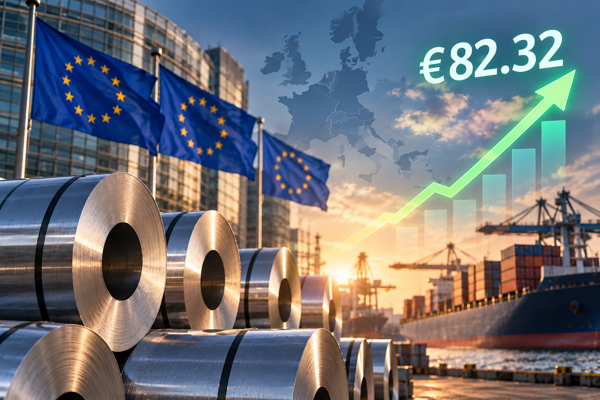
EU CBAM certificate price jumps to €82.32 in Q3, highest level of 2026
The European Commission sets the Q3 2026 price of CBAM certificates at EUR 82.32 (USD 92.66), up from EUR 75.28 (USD 84.74) in Q2 and EUR 75.36 (USD 84.83) in Q1, making it the highest quarterly price published so far this year. The Commission calculates CBAM certificate prices based on the weighted average of auction clearing prices for EU Emissions Trading System (EU ETS) allowances. The methodology is designed to align the carbon cost applied to EU producers with that applied to imports covered by the Carbon Border Adjustment Mechanism (CBAM). The Q3 price was published on October 5, 2026, following the end of the quarter. To learn about the market potential of aluminium dross, explore "ALuminium Dross Processing: Generation, Recovery & Strategic Roadmap" CBAM certificate prices rise...
There is real tightness of aluminium in Europe, but it is a supply shock rather than a CBAM-driven deficit
Europe’s aluminium market is navigating a new carbon-cost reality as the EU’s Carbon Border Adjustment Mechanism (CBAM) enters its definitive phase. Since 1 January 2026, the policy has brought fresh questions over import costs, domestic versus imported aluminium pricing, low-carbon premiums and changing procurement strategies. In search of these answers, AL Circle has engaged in a candid conversation with Nick Ogilvie, CBAM Lead at CarbonChain, in which he has unpacked how these dynamics are playing out in the market. He explains that while CBAM is designed to close the carbon-cost gap between EU-produced and imported aluminium on direct emissions, its pricing impact remains relatively modest. According to Ogilvie, the current tightness in European aluminium supply is being driven far...
Grow with
AL Circle
Price
→Events

15th International Bauxite, Alumina & Aluminium Conference & Exhibition - IBAAS–VFMSTA 2026
ICSOBA 2026 - 44th International Conference and Exhibition
SMM AICE 2026 Southeast Asia Aluminum Conference
15th International Bauxite, Alumina & Aluminium Conference & Exhibition - IBAAS–VFMSTA 2026
ICSOBA 2026 - 44th International Conference and Exhibition
SMM AICE 2026 Southeast Asia Aluminum Conference
Business Cards
A report that reveals where the aluminium casting industry is heading and how businesses can act.
LEARN MORE
A report that reveals where the aluminium casting industry is heading and how businesses can act.
LEARN MOREGlobal EV sales to hit 35.4 million by 2030, with aluminium usage forecast to rise 38% in North America & 79% in China
AL Circle analysis: How do Germany’s 32.8% automotive aluminium share, 40% Diet Coke can price rise & 3.54Mt North American extrusion demand matter?
AL Circle Analysis: Guinea’s 150Mt bauxite cap, China’s import swings, US tariffs draw aluminium Q4’26
EU approves Germany’s power relief instrument: Could aluminium producers save €459m annually?
North America’s aluminum extrusion demand set to reach 3.54Mt by 2035: The end-use sectors behind the climb
News
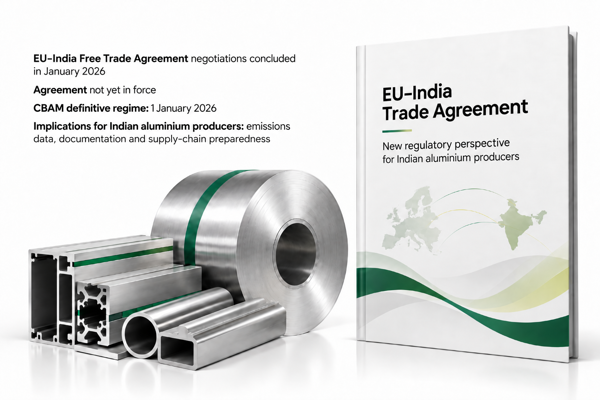
EU–India trade agreement opens a new regulatory perspective for Indian aluminium producers
The conclusion of negotiations on the EU–India Free Trade Agreement creates a new context for Indian manufacturers considering the European market, but future opportunities will increasingly depend on regulatory preparedness as well as commercial competitiveness. Negotiations on the Free Trade Agreement were concluded in January 2026. Earlier this month, the European Commission submitted proposals to the EU Council for its signature and conclusion. The Agreement is not yet in force and remains subject to the required European and Indian procedures. For the Indian aluminium industry, the development comes at a time when access to Europe is increasingly shaped by environmental, product and supply-chain regulation. One of the most immediate examples is the European Union’s Carbon Border...
European Aluminium welcomes EU ETS changes, proposes 1.7% LRF and 2040 ICC extension
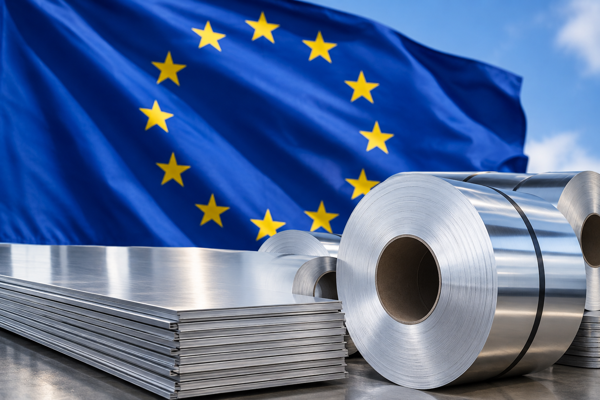
European Aluminium has welcomed the European Commission’s proposal to review the EU Emissions Trading System (ETS) Directive and a separate proposal to adjust the ETS free-allocation fallback benchmarks for 2026–2030. The revised ETS review aims to strengthen industrial decarbonisation while supporting Europe’s climate goals. Investment will be a key focus, with the EUR 100 billion (USD 114 billion) Industrial Decarbonisation Bank, ETS Investment Booster and Innovation Fund supporting clean technology. Member States will also direct 50 per cent of national ETS revenues toward decarbonisation investments. Join the fourth edition of webinar " Hedging for recyclers - Become an expert in 6 hours " by Jorge Dyszel. The industry group said the proposed rules are a step in the right direction...
EU Parliament backs wider CBAM scope for steel and aluminium products
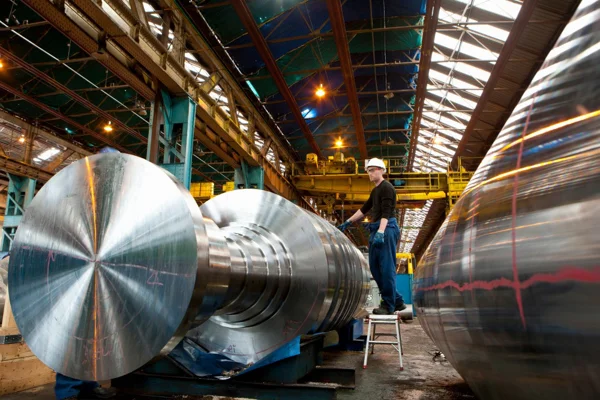
The European Parliament has backed plans to expand the European Union’s Carbon Border Adjustment Mechanism (CBAM) to a wider range of steel and aluminium products, including screws, wires, springs and household utensils. MEPs approved the Parliament’s position on the proposed CBAM review with 464 votes in favour, 50 against and 159 abstentions, supporting a broader product scope than initially proposed by the European Commission. The expansion would take the EU’s carbon border system beyond basic raw materials and cover more downstream goods, with the aim of preventing imported products from gaining a cost advantage over European production by avoiding equivalent carbon costs. The Parliament also wants tighter rules to prevent companies from exploiting gaps in the mechanism. Parliament...

Germany’s aluminium scrap exports rebound 4.58% in H1 2026: Which countries are buying the most?
Germany’s aluminium scrap trade showed signs of recovery in the first half of 2026, with exports to the world reaching 616,000 tonnes, up 4.58 per cent from 589,000 tonnes in H1 2025. The increase was even more pronounced against the second half of 2025, with H1 2026 shipments rising 7.50 per cent from 573,000 tonnes. However, exports remained 4.05 per cent below the 642,000 tonnes recorded in H1 2024. Among Germany’s leading destinations, Italy retained the top spot, Austria and France gained the most, Poland lost ground, and the Netherlands saw only limited growth. If we look at the percentage of the share, Italy took 15.58 per cent of Germany’s scrap exports, followed by Austria at 13.64 per cent, the Netherlands at 10.06 per cent, Poland at 8.12 per cent and France at 6.17 per cent....

AL Circle Analysis: How are scrap, CBAM, EVs, energy rewiring the aluminium industry?
The aluminium industry stands at a juncture material quality, recycling capacity, cross-border cooperation, carbon compliance and energy security are falling into a network of interconnectivity. The aluminium supply chain is evolving from simply securing enough metal to securing the right quality, the right carbon profile, the right technology and the right energy at the right cost. For businesses, this means supply-chain decisions are increasingly becoming strategic rather than purely transactional. From secondary aluminium trust to a recycling ecosystem India’s secondary aluminium market is expanding, but buyers need stronger checks before committing to suppliers, as trust has to accompany volume. As Indian buyers increase their participation in secondary aluminium, supplier...

Buying Indian secondary aluminium? Start with these seven verifications
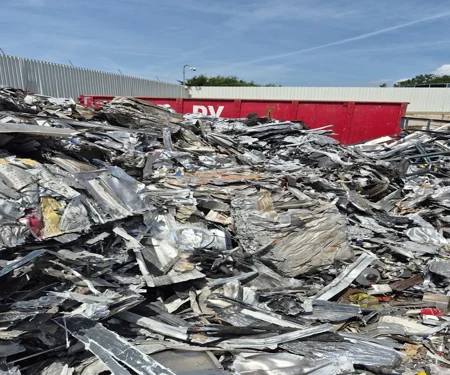
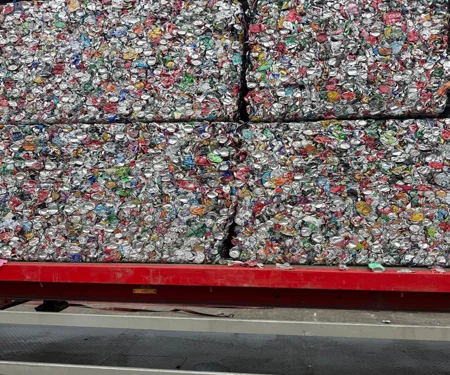
Secondary aluminium is increasingly central to Europe’s decarbonisation plans. It is used in automotive castings, construction profiles, packaging and consumer goods and is valued because it can deliver similar mechanical properties to primary metal while requiring a fraction of the energy and emitting far less carbon dioxide. The European Union’s Emissions Trading System (ETS) and the Carbon Border Adjustment Mechanism (CBAM) have made low-carbon aluminium a strategic priority. As India’s scrap aluminium imports have continued to rise, from 0.88 million tonnes in CY15 to nearly 2 million tonnes in CY25, with a long-term CAGR of about 8.6 per cent, stronger traceability and licensing requirements are becoming increasingly important across the secondary aluminium supply chain. For this...













Interviews
→
Nick Ogilvie
There is real tightness of aluminium in Europe, but it is a supply shock rather than a CBAM-driven deficit
Emilio Braghi
Stronger collection, sorting and quality standards can enable European aluminium scrap to return to high-value applications

Emanuele Manigrassi, European Aluminium
Double pressure for Europe with risen ETS costs for aluminium recyclers while valuable scrap moves to higher-paying international markets

Blog
LATEST POSTS





Turn marketplace visibility into more relevant buyer enquiries.
View Priority Plans
Turn marketplace visibility into more relevant buyer enquiries.
View Priority Plans
