European aluminium industry ‘bruised but resilient’ amid CBAM pressure and rising ETS costs, says Paul Voss
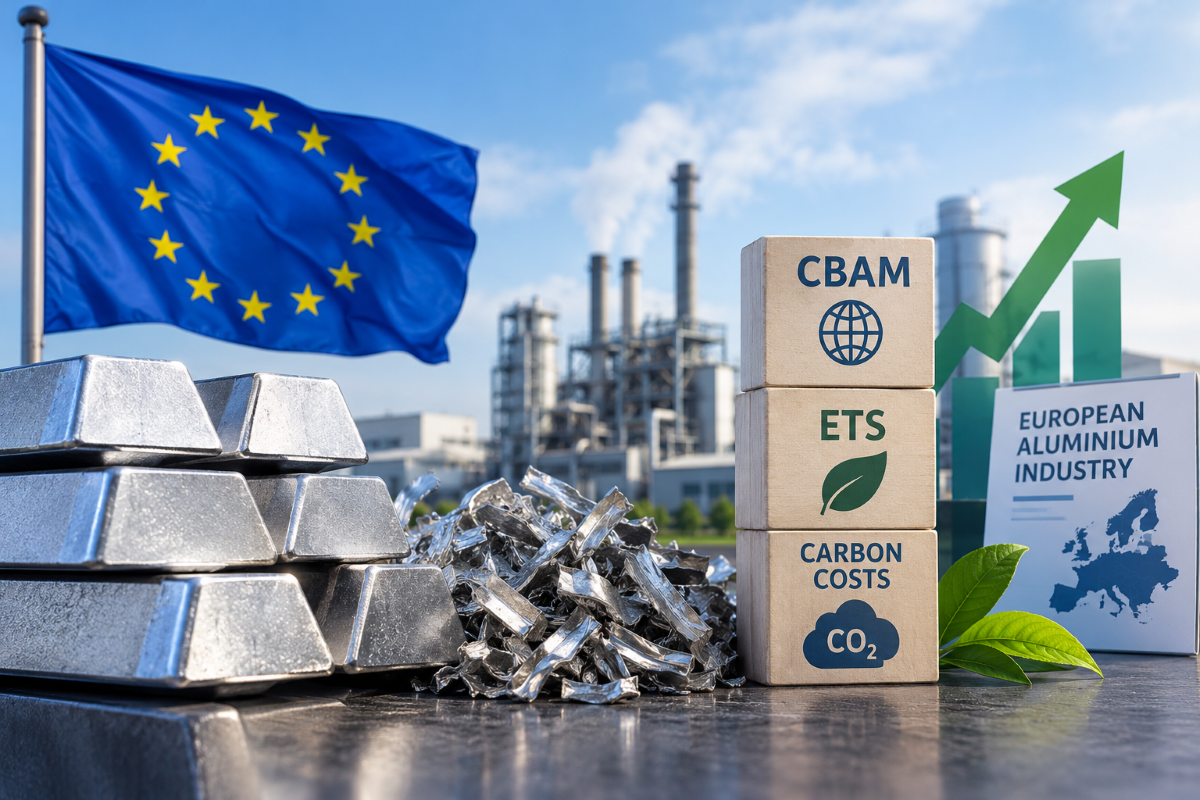
The image used in this article is generated with an AI tool and does not depict any real-time moment
Europe's aluminium industry is facing mounting pressure from rising carbon costs, shifting trade policies and limited willingness among buyers to pay premiums for low-carbon metal. Yet, despite a series of crises since the Covid pandemic, producers remain committed to maintaining their presence in Europe and investing in decarbonisation, said Paul Voss, Director General of European Aluminium.
In an exclusive interview with Fastmarkets at Aluminium Düsseldorf, Voss described the European aluminium industry's condition as bruised but resilient. He highlighted concerns over the EU Emissions Trading System (ETS), the potential inclusion of indirect (Scope 2) emissions under the Carbon Border Adjustment Mechanism (CBAM) and the treatment of aluminium scrap in carbon accounting.
Reflecting on his time as Director General, Voss said the optimism that followed the Covid pandemic had gradually given way to a series of "rolling crises". Russia's war with Ukraine, soaring energy prices, increasing trade pressures and rising carbon costs have all added to the difficulties facing European aluminium producers.
Yet, despite these challenges, companies across the sector have continued investing and developing decarbonisation technologies.
“I still feel a real appetite in this industry to fight, to remain here in Europe and to thrive here in Europe in the coming years,” he said.
Explore the production, demand and consumption forecasts of bauxite and alumina in our report: "Global Bauxite & Alumina Market Forecast to 2036: Supply–Demand, Trade Flows & Price Outlook"
CBAM and ETS costs intensify European aluminium competitiveness concerns
With CBAM entering into force on January 1, 2026, its impact on the European aluminium industry has become an increasingly important market concern. Although fluctuations in aluminium premiums have dominated much of the market discussion this year, uncertainty over the mechanism's future development remains a major issue heading into 2027.
One of the biggest concerns for European Aluminium is the possible inclusion of indirect, or Scope 2, emissions under CBAM. Voss explained that European aluminium producers already face carbon-related costs through electricity pricing, irrespective of whether individual smelters use carbon-intensive power.
At the same time, existing carbon leakage protections, including free allocation and indirect cost compensation, are facing changes as CBAM develops. This could leave European producers carrying additional indirect carbon costs through electricity, while overseas competitors may have greater flexibility in structuring their power arrangements.
“That creates a major competitiveness problem,” he said, adding that bringing indirect emissions into CBAM in the short term could be “fairly catastrophic” for European producers.
The pressure is not limited to CBAM. Rising costs under the EU ETS are creating another challenge, particularly as policymakers consider the future of carbon leakage protections. Voss argued that financial support under the ETS should not be made conditional on companies undertaking additional green investments.
He said the support was intended to compensate European producers for costs that their international competitors do not face, rather than provide additional capital for decarbonisation.
“It’s sort of survival support,” Voss said. “It’s to keep the lights on, to try and survive in a world where our competitors simply don’t face these challenges.”
Voss also pointed to a shift in Europe's political debate since 2022, with industrial competitiveness receiving greater attention alongside climate policy. However, the challenge remains translating this change in political thinking into policies that allow European aluminium producers to remain competitive while continuing their decarbonisation efforts.
Scrap carbon accounting becomes a major CBAM concern
Beyond the treatment of direct (Scope 1) and indirect emissions, Voss identified scrap accounting as another area requiring attention under CBAM.
When asked which aspect of the mechanism he would most like to change, he highlighted the distinction between pre-consumer and post-consumer aluminium scrap and how these materials are treated in carbon calculations.
“The biggest thing for us right now is this question of the carbon accounting of scrap and how you treat post-consumer scrap versus pre-consumer scrap and how you treat scrap generally,” Voss said.
European Aluminium has called for a single default value for unwrought aluminium, irrespective of whether it contains pre-consumer or post-consumer scrap. The organisation believes that distinguishing between the two could create competitive distortions between European producers and importers.
The scrap debate adds another layer to the industry's broader concerns over the cost of producing aluminium in Europe. While producers continue to invest in lower-carbon technologies, the market's willingness to pay a premium for greener metal remains limited. To explore trade opportunities of secondary aluminium, visit AL Biz
“There’s an interest in having green material, but very little interest in paying for it,” Voss said.
Low-carbon aluminium premiums remain relatively stable
Despite the uncertainty surrounding Europe's carbon policies and the competitiveness of its aluminium producers, low-carbon premiums have remained relatively stable year on year.
However, uncertainty over US tariffs on Canadian aluminium has had some impact on low-carbon P1020 premiums, given the significant volumes of low-carbon aluminium produced in Canada.
Fastmarkets assessed the aluminium low-carbon differential P1020A, Europe, at USD 15-30 per tonne on Friday, October 2, compared with USD 10-25 per tonne on Friday, August 7.
Looking ahead, uncertainty also surrounds the availability of low-carbon aluminium units in the duty-unpaid market. The expected influx of Indonesian material is not considered low-carbon, adding another factor to the market outlook.
For Voss, the wider challenge remains ensuring that Europe's aluminium industry can withstand rising carbon costs and international competition without losing its industrial base, while continuing its transition towards lower-carbon production.
Trading aluminium across borders? Find out the exact cost you need to bear for the embedded carbon in the product by using this CBAM calculator
Information credit: https://www.fastmarkets.com/insights/european-aluminium-industry-bruised-but-resilient-according-to-director-general-of-european-aluminium-paul-voss/
Grow with
AL Circle