AMS Advanced Material expands aluminium processing capacity as semiconductor revenue reaches 59.2%
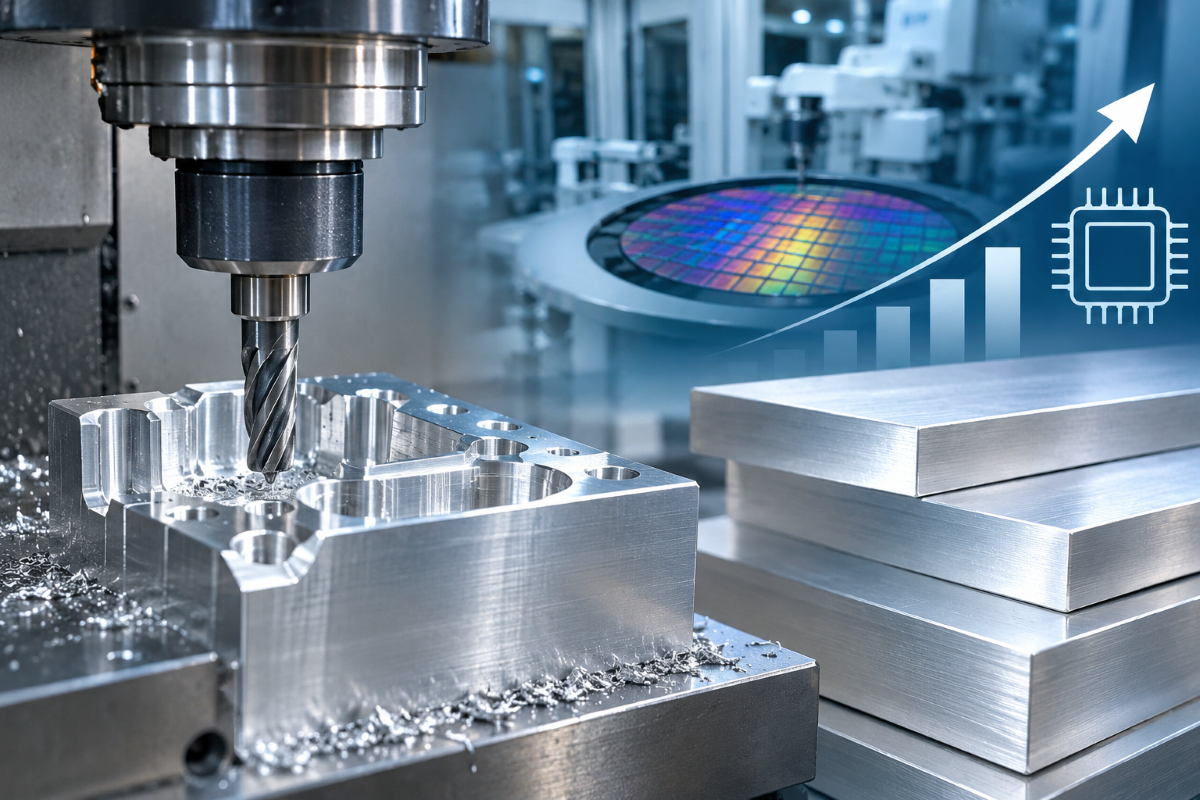
The image used in this article is generated with an AI tool and does not depict any real-time moment
AMS Advanced Material Bhd is expanding its aluminium processing capacity to capitalise on rising semiconductor industry investments, with growing demand for value-added machining services expected to support its next phase of growth. The Malaysian company is setting up a new Penang facility, expanding its processing capabilities and pursuing original equipment manufacturer (OEM) orders as semiconductor-related business becomes an increasingly important contributor to revenue.
The company's semiconductor and engineering support segment accounted for 59.2 per cent of group revenue in the third quarter of the financial year ended September 30, 2026 (3QFY2026), compared with 36.9 per cent in FY2025, 31 per cent in FY2024 and 8.7 per cent in FY2023.
Group managing director Keith Keh Teng Yang describes the current semiconductor cycle as the strongest he has experienced since joining the business in 2013. With purchase orders secured until May 2027, he expects the company to record its strongest growth in 2027.
The outlook is supported by rising capital expenditure (capex) among global chipmakers as technological transitions require existing semiconductor equipment to be upgraded or replaced.
AMS Advanced Material expands aluminium processing capacity in Penang
The increase in semiconductor orders has pushed AMS' existing facilities to their limits. Its main Penang facility is operating at full capacity, with extended working hours and a second shift. Meanwhile, utilisation at its smaller Johor plant has risen from around 75 per cent to 100 per cent following orders from a new semiconductor customer.
To accommodate further demand, AMS is establishing a new Penang facility with twice the floor space of its existing main plant. Scheduled to begin operations in the first quarter of 2027, the facility will house 10 new machines, including three-axis machining equipment.
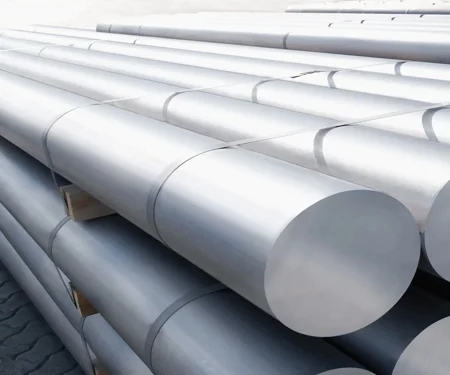
The expansion will enable AMS to undertake more preliminary aluminium processing, including roughing, side milling and vertical simple drilling. These services have become increasingly important as machining houses seek to improve production efficiency by outsourcing initial metal preparation.
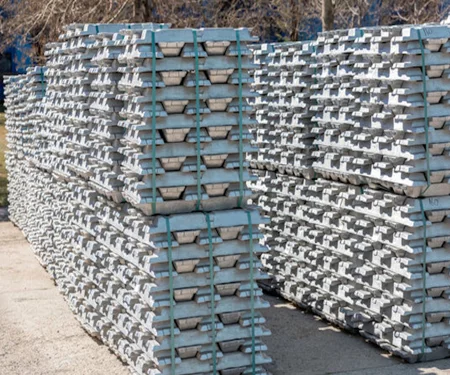
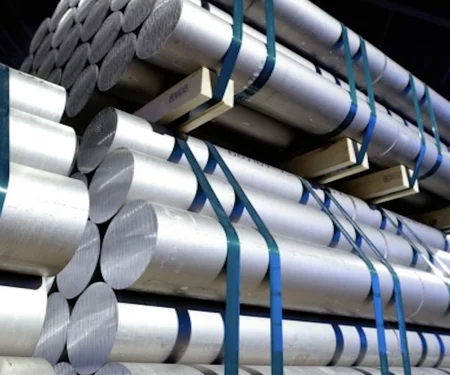
AMS supplies non-ferrous industrial metals, primarily aluminium, alongside value-added processing services. Its semiconductor customers include machining houses serving front-end and back-end equipment manufacturers, while its wider customer base spans aerospace, marine, automotive, construction and consumer products.
By undertaking preliminary machining, AMS will allow its customers to reserve their more sophisticated and expensive equipment for higher-value finishing operations. However, the company intends to remain a material supplier and processor rather than compete directly with machining houses undertaking advanced work for semiconductor equipment manufacturers.
To know the global production, demand and consumption forecasts of aluminium extrusions, explore our report "The World of Aluminium Extrusions to 2035"
Semiconductor demand opens OEM and international opportunities
Alongside expanding its processing capacity, AMS is looking to strengthen its direct relationships with OEMs, particularly in Europe and the US.
The company has already secured a European OEM customer and started receiving orders. It is also supplying US machining houses as multinational corporations (MNCs) diversify their supply chains under the China-plus-one strategy.
The new Penang facility is expected to support these opportunities by broadening the company's customer base and bringing it closer to end customers.
Keh believes Penang could become an increasingly important semiconductor hub as more MNCs invest in the state. He compares the potential development with Taiwan's semiconductor ecosystem, where equipment manufacturers, OEMs and suppliers operate within an interconnected industrial network.
AMS is nevertheless taking a cautious approach to expansion. Rather than committing substantial capital based on forecasts from individual customers, the company wants its new machines to serve multiple customers and applications.
The investment is being funded through cash and proceeds from its initial public offering (IPO), without additional borrowing. Listed on the ACE Market in April 2026, AMS raised RM32.77 million in gross IPO proceeds, of which MYR 22.99 million remains unutilised.
The company is in a net cash position, with RM40.98 million in cash against total borrowings of RM31.94 million. It also maintains a diversified customer base, with none of its five largest customers accounting for more than 10 per cent of overall revenue.
Inventory management remains important given the semiconductor industry's cyclical nature. Material lead times currently extend to six to seven months, requiring AMS to make procurement decisions well ahead of delivery. Keh says the company replenishes stocks based on only 60 to 70 per cent of expected demand to manage potential changes in market conditions.
Aluminium scrap recycling creates another revenue opportunity
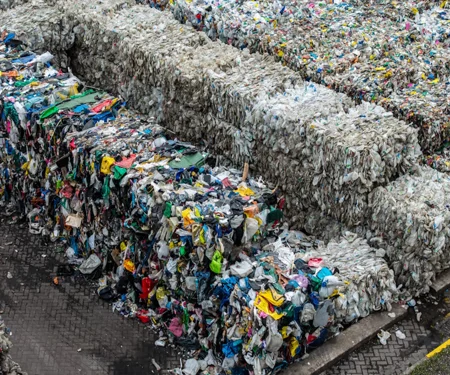
Beyond aluminium supply and processing, AMS is developing an aluminium scrap collection and processing business to recover material generated through machining activities across its customer network.
The group plans to collect aluminium scrap from its approximately 900 customers, process the material and sell it directly to smelters.
Its subsidiary, AMS Ecogreen Sdn Bhd, has obtained the necessary licences to begin operations. The initial target is to process around 17 tonnes of aluminium scrap monthly, with plans to increase the volume towards 40 tonnes a month as supply grows.
By avoiding smelting operations, AMS can limit exposure to substantial energy overheads and additional compliance requirements while developing another potentially high-margin revenue stream.
The initiative also carries environmental benefits by recovering material that would otherwise be discarded and supporting customers' sustainability objectives.
For now, the company intends to establish a consistent supply base before considering further expansion into aluminium scrap collection and processing.
Explore aluminium extrusion products from our comprehensive list of AL Biz.
Aerospace, automotive and marine provide sector diversification
While semiconductor demand is becoming the main growth driver, AMS continues to serve customers across aerospace, automotive and transport, construction, marine and consumer-related industries.
This diversified presence gives the company flexibility to deploy its processing capabilities when demand weakens in individual sectors. However, the growth outlook differs across these markets.
Keh sees limited upside from automotive customers, partly because Chinese automakers assembling vehicles in Malaysia tend to bring in their own components. This restricts opportunities for local component suppliers despite the expansion of electric vehicle manufacturing.
Aerospace demand has also softened as geopolitical tensions and flight disruptions affect customers with exposure to the Middle East.
Marine offers a more encouraging outlook. AMS supplies aluminium products to vessel builders, including those involved in manufacturing crew-transfer vessels servicing offshore wind farms in Taiwan and South Korea. It has also secured new orders from Batam and sees Indonesia as a potential focus market in 2027.
Chinese competition, however, remains a challenge for Malaysian manufacturers. AMS has been approached by Chinese automotive companies for potential business but has walked away from some opportunities because margins were too thin to justify the working capital and capacity required.
Keh says Chinese manufacturers' ability to operate on thinner margins creates pricing pressure that makes it difficult for Malaysian small and medium enterprises to compete on cost alone.
Consequently, AMS prefers customers that are willing to grow alongside the company, collaborate on expansion and support suppliers' capital investment rather than compete purely on price.
AMS Advanced Material financial performance and profit outlook
The company's expansion plans come against a backdrop of steady financial growth. Between FY2022 and FY2025, AMS recorded a three-year compound annual growth rate of 28.4 per cent in both revenue and net profit.
Revenue increased from RM61.3 million in FY2022 to RM129.7 million in FY2025, while net profit rose from RM4.2 million to RM8.9 million.
For the first nine months of FY2026, adjusted net profit, excluding listing expenses, stood at RM8.2 million, while revenue reached RM107.4 million.
Annualising these figures implies full-year revenue of approximately RM143.2 million, representing a 10.4 per cent increase from FY2025. Adjusted net profit could reach RM10.9 million, up 22.7 per cent.
The expansion into higher-value aluminium processing is also expected to support profitability. AMS' gross margin increased to 16.8 per cent in the first nine months of FY2026, compared with 15.6 per cent in FY2025 and 13.2 per cent in FY2024. Keh hopes the company can raise its profit before tax margin from high single digits to double-digit territory.
Since its ACE Market listing on April 23 at an IPO price of 29 sen, AMS' share price has gained 27.6 per cent to close at 37 sen last Tuesday. With a market capitalisation of RM226.4 million and indicative annualised net profit of RM10.9 million, the shares are trading at an indicative price-to-earnings ratio (PER) of 20.8 times. No analysts currently cover the stock.
Keh remains the largest shareholder, with a total equity interest of 74.05 per cent, held mainly through AMS Metal Group Sdn Bhd, which owns 51.27 per cent, and Wisdom Partners Sdn Bhd, which holds 22.59 per cent.
Keh owns 56 per cent of AMS Metal Group, while Tan Chee Yuen, Lee Boon Kean and See Cherng Jye hold 20.5 per cent, 13.5 per cent and 10 per cent, respectively. Wisdom Partners is a wholly owned subsidiary of AMS Metal Group.
Participate in AL Circle's upcoming e-Magazine Smart ALuminium: Advancing Industrial Technologies in 2027 to showcase the advancement of technologies in aluminium recycling
Grow with
AL Circle












_md.webp)
_md.webp)
_md.webp)