Adv
LANGUAGES
English
Hindi
Spanish
French
German
Chinese_Simplified
Chinese_Traditional
Japanese
Russian
Arabic
Portuguese
Bengali
Italian
Dutch
Greek
Korean
Turkish
Vietnamese
Hebrew
Polish
Ukrainian
Indonesian
Thai
Swedish
Romanian
Hungarian
Czech
Finnish
Danish
Filipino
Malay
Swahili
Tamil
Telugu
Gujarati
Marathi
Kannada
Malayalam
Punjabi
Urdu
AL CIRCLE

Coal vs renewables: The electricity cost battle influencing aluminium production pattern
EDITED BY : 7MINS READ

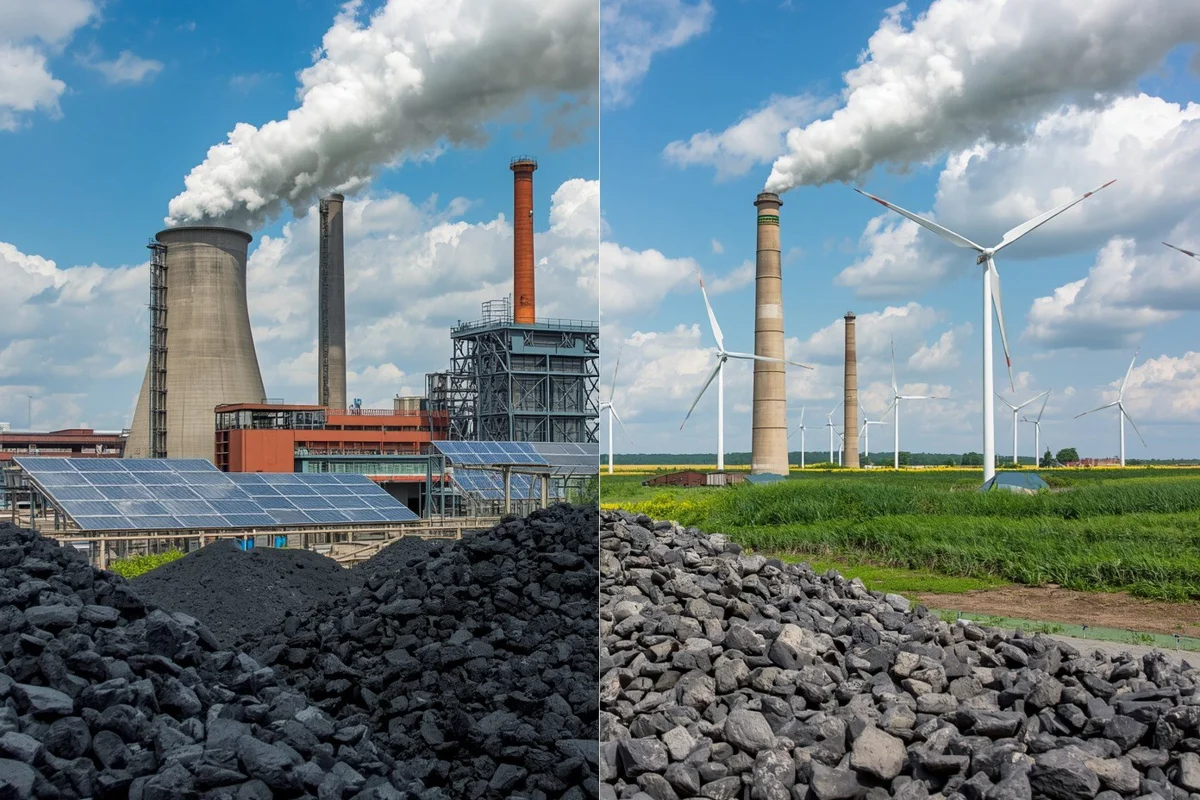
aluminium production with coal and renewables

The image used in this article is generated with an AI tool and does not depict any real-time moment

For more than a century, aluminium producers have lived by a simple rule of securing the cheapest electricity possible, and everything else becomes manageable.

{alcircleadd}

The logic was straightforward. Aluminium smelting is one of the most electricity-intensive industrial processes on earth. Every tonne of primary aluminium requires enormous volumes of power to separate aluminium from alumina through the Hall-Héroult process, a technology that has remained fundamentally unchanged since the late nineteenth century. The industry's fortunes have therefore been determined less by geology and more by what happens on power grids.

For decades, coal represented the backbone of global aluminium production. It was abundant, dispatchable and, in many regions, cheap enough to support large-scale smelting operations. Today, however, a growing number of producers are finding themselves in an unusual position where renewable energy is no longer merely an environmental aspiration. In several markets, it is becoming a credible competitor to coal on cost.

The shift is creating one of the most important economic questions facing the aluminium industry today. If electricity is already the largest operating expense for most smelters, does coal still offer the cheapest path forward, or are renewables beginning to rewrite the industry's cost equation?

An industry built around electricity

The scale of aluminium's dependence on electricity is difficult to overstate. Globally, primary smelters consume an average of 13,990 kWh of electricity for every tonne of aluminium produced. Even the most advanced commercial smelting technologies still require between 12,200 and 12,500 kWh per tonne. That makes aluminium significantly more energy-intensive than most other major industrial materials on a per-tonne basis.

The consequence is visible in every producer's cost structure as electricity accounts for roughly 30 per cent of operating costs in Canada, around 35 per cent in China and as much as 40 to 45 per cent in markets exposed to volatile power prices, such as Australia. At Australia's Tomago smelter, one of the country's largest aluminium facilities, electricity expenses alone can amount to between USD 400 million and USD 500 million annually.

Last updated on : 01 JUNE 2026

Adv
Adv
Adv
Adv
Adv
Adv
Adv
EDITED BY : 7MINS READ

Responses

Adv
Adv
Adv
Loading...
Adv
Adv
Adv
Loading...
Reports VIEW ALL
Loading...
Loading...
Business Leads VIEW ON AL BIZ
Loading...
Adv
Adv
Would you like to be
featured with us?
Loading...

AL Circle News App

AL Biz App

A proud
ASI member
© 2026 AL Circle. All rights reserved. AL Circle is not responsible for content from external sources.