Top Stories
Grow with
AL Circle
Price
→Events

MRAI and IMRC 2027
22nd Aluminum Industry Conference and Expo (AICE) SMM
ET '27 - Fourteenth International Aluminum Extrusion Technical Seminar & Exposition
MRAI and IMRC 2027
22nd Aluminum Industry Conference and Expo (AICE) SMM
ET '27 - Fourteenth International Aluminum Extrusion Technical Seminar & Exposition
Business Cards
A report that reveals where the aluminium casting industry is heading and how businesses can act.
LEARN MORE
Korea's battery foil build-out meets the ESS (energy-storage system) turn
North America aluminium output declines 0.68% on smelter constraints, while South America posts 0.26% growth in 9M 2026
AL Circle Analysis: Guinea’s 183Mt bauxite output, China's 46Mt aluminium push & Indonesia’s 2.77bt reserves rewrite global supply scene
Aluminium flat-rolled products: 6 emerging applications businesses cannot afford to overlook
AL Circle Analysis: Hindalco's $10.6b push, Vietnam's new packaging plant and Asia's growing aluminium casting market
News
VIEW MORE
Jamaica targets critical minerals recovery from bauxite residue through US partnership
Jamaica is looking to unlock the mineral value of its decades-old bauxite residue deposits through a new partnership between US-based ElementUSA Inc. and Jamaican mineral exploration company Geophysx Jamaica Limited. The companies have signed a Memorandum of Understanding (MOU) to explore the recovery of critical minerals, iron and other valuable materials from the residue, while developing commercially sustainable ways to address the environmental challenges associated with these legacy industrial sites. Jamaica’s alumina industry has generated large volumes of bauxite residue over several decades, with significant quantities remaining in storage across the island. The proposed collaboration aims to assess whether this material can be converted into a commercial resource by combining...

Yokogawa advances autonomous plant operations with new AI-enabled CENTUM system
Yokogawa Electric Corporation will introduce artificial intelligence (AI)-powered control capabilities into its CENTUM integrated production control system from November 19, 2026, as the company advances its efforts to move industrial plants from conventional automation towards autonomous operations. The new CENTUM R7.02 version will include AI Control and AI Estimation as standard functions, targeting process industries including metals, chemicals, refining and power. The updated system marks a new phase for CENTUM, which was introduced in 1975 as the world's first distributed control system (DCS). Alongside the launch, Yokogawa is dropping the "VP" designation from the product name, moving from CENTUM VP to CENTUM as it develops the platform for more autonomous plant operations. AI...
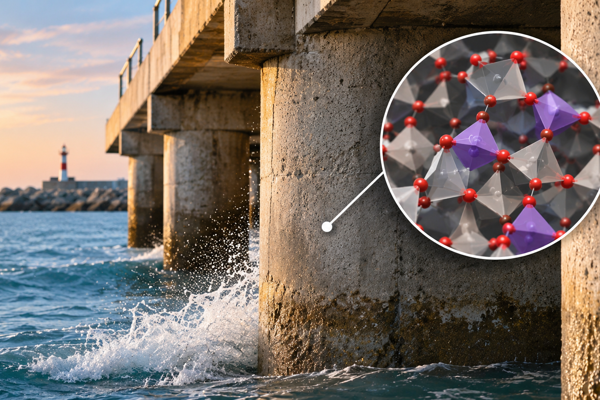
75% less calcium leaching: Aluminium strengthens cement against sulphate attack
Aluminium could help make cement-based materials more resistant to chemical deterioration, according to a new molecular dynamics study that found a significant reduction in calcium leaching when aluminium was incorporated into cement hydrates. Increasing the aluminium-to-silicon ratio to 0.2 reduced calcium loss by approximately 75 per cent under simulated sodium sulphate exposure, highlighting a potential approach to improving the durability of concrete used in aggressive environments. The research examined calcium aluminosilicate hydrate (C-A-S-H), a key binding phase in cementitious materials, to understand how changes in its chemical composition influence resistance to sulphate attack. Sulphate ions found in seawater and groundwater can penetrate cement structures and disrupt the...
NTPC Green Energy targets 60 GW by 2032; 16 GW renewable power hub planned
NTPC Green Energy Limited (NGEL) plans to expand its renewable energy capacity from around 12 gigawatts (GW) to 60 GW by 2032, marking a major step in its clean-energy expansion strategy. The target forms part of parent company NTPC Limited’s broader ambition to reach 149 GW of installed power capacity, supported by renewable energy, thermal expansion and a proposed entry into nuclear generation. The roadmap was outlined by P. Rahul, Deputy General Manager, Business Development – Green Hydrogen at NGEL, during the Bharat Renewable Energy Summit and Expo 2026. Alongside renewable capacity additions, the company is advancing green hydrogen, energy storage and green chemicals projects. To learn about the market potential of aluminium dross, explore "ALuminium Dross Processing: Generation,...
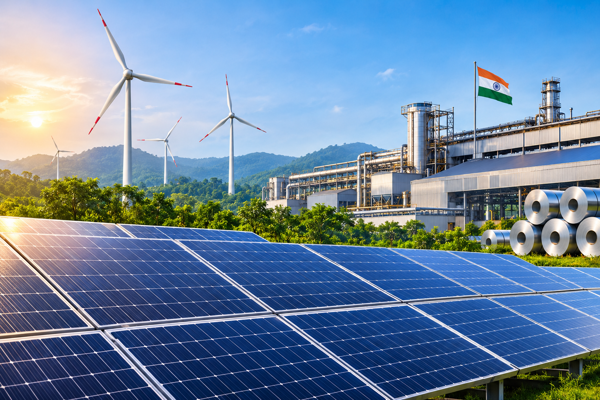
India’s renewable power capacity set to reach 530 GW by 2030 as solar leads expansion
India’s renewable energy transition is gathering pace, with installed renewable power capacity surpassing 300 gigawatts (GW) in 2026, almost quadrupling over the past decade. The country has also achieved its target of sourcing 50 per cent of installed electricity capacity from non-fossil fuel sources five years ahead of schedule, strengthening its position as one of the world’s fastest-growing clean energy markets. The expansion is beginning to deliver measurable energy security benefits by reducing dependence on imported fossil fuels, while competitive renewable power costs and expanding domestic manufacturing are opening new investment opportunities. However, sustaining this momentum will require substantial improvements in electricity transmission, storage infrastructure and...
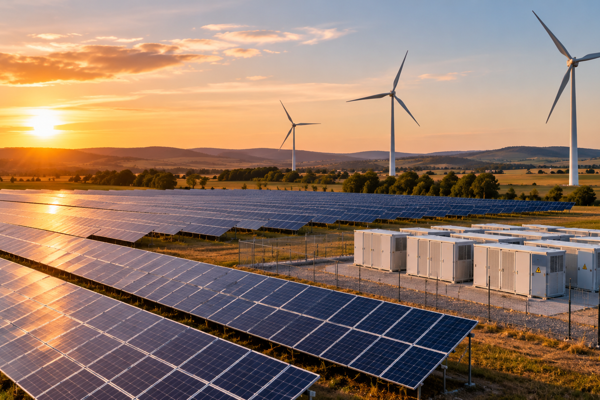
Neoen secures $1.26b backing for five Australian clean energy projects
French renewable energy company Neoen has secured AUD 1.8 billion (USD 1.26 billion) in debt financing from 13 lenders to support a 1.2 GW portfolio of solar, wind, and battery storage projects across Australia, marking its largest financing transaction to date. The financing package covers five operating and under-construction assets across New South Wales, South Australia, and Western Australia. The portfolio includes the 440 MWp Culcairn solar PV plant and its associated 215 MW/963 MWh battery storage project, alongside wind and storage assets in the other two states. Neoen said the transaction would strengthen its balance sheet and support further investment in new projects, as the company continues to expand its renewable energy footprint in Australia. “This transaction reflects the...















_md.webp)
Blog
LATEST POSTS





Turn marketplace visibility into more relevant buyer enquiries.
View Priority Plans
Turn marketplace visibility into more relevant buyer enquiries.
View Priority Plans
