





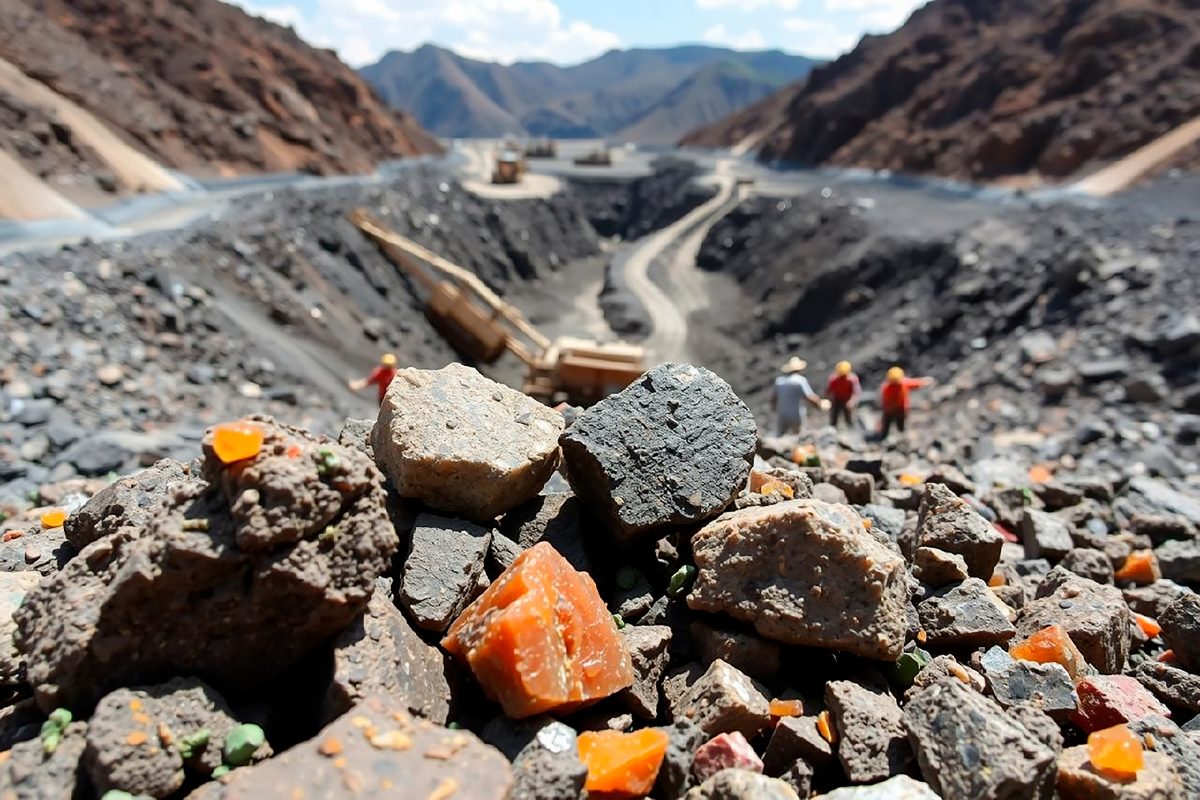
Every electric vehicle, offshore wind turbine, advanced defence system and high-performance electronic device has one thing in common: their reliance on the rare earth elements (REEs). As global demand for REEs accelerates, governments and industries are intensifying efforts to secure reliable and sustainable supply chains. While conventional mining remains the primary source, growing concerns over resource security, environmental impact and rising demand are prompting a search for alternative sources of REEs.
Surprisingly, one of the most promising sources may already exist within the aluminium industry’s largest by-product: Red mud.
During the Bayer process of alumina production, the bauxite residue is generated and has long been viewed as one of the aluminium industry’s biggest environmental challenges. With global alumina production reaching approximately 154 million tonnes in 2025, an estimated 189.5 million tonnes of red mud were generated worldwide and this figure is projected to rise to more than 225 million tonnes by 2036 as alumina production continues to expand.
For decades, the industry’s primary focus has been on safely storing and managing this highly alkaline residue. Today, however, the conversation is gradually shifting. Rather than viewing the residue as just a disposal challenge, researchers and aluminium producers are increasingly recognising its potential as a valuable secondary resource capable of supplying critical minerals, particularly REEs.
Why REEs have become strategically important in today’s market dynamics
REEs are indispensable to modern manufacturing, especially in making permanent magnets, electric motors, wind turbines, robotics, consumer electronics, aerospace applications and defence technologies. As countries accelerate electrification and renewable energy deployment, demand for REEs is expected to remain strong for decades. But, at the same time, industries are seeking ways to diversify their sources of critical minerals. Recovering REEs from industrial by-products not only strengthens resource security but also aligns with broader sustainability and circular economy objectives by extracting additional value from materials that have traditionally been treated as waste.
This changing outlook has placed red mud firmly in the spotlight.
Why does red mud contain valuable REEs?
Although alumina is extracted from bauxite during the Bayer process, many naturally occurring minerals remain in the residue. Besides iron oxides, titanium-bearing minerals and other metal oxides, red mud also retains trace quantities of REEs. While these concentrations may appear modest, the enormous volumes of red mud generated every year create a significant cumulative resource.
The aluminium industry has already demonstrated that red mud can be utilised in applications such as cement, bricks, ceramics and road construction. However, recovering high-value minerals from the residue represents a far greater economic opportunity. Instead of simply reducing disposal volumes, resource recovery has the potential to transform red mud into a strategic raw material for multiple industries. This shift reflects a broader change in thinking, from waste management to resource optimisation.
What is preventing commercial-scale recovery?
While the recovery of REEs from the bauxite residue has made significant technological progress, large-scale commercial deployment still faces several challenges. One of the biggest hurdles lies in the complex composition of red mud itself. The residue varies considerably depending on the quality of bauxite, refining conditions and the Bayer process adopted by individual alumina refineries. This variability makes it difficult to develop a standard extraction process that can be applied consistently across different facilities.
Another challenge is the selective separation of REEs from other constituents present in red mud. Conventional extraction methods often dissolve iron, silica and other impurities alongside REEs, increasing downstream processing requirements and overall costs. Although advanced techniques such as selective acid leaching, ion-exchange separation and integrated recovery processes are improving extraction efficiency, further optimisation is required to make these technologies commercially competitive.
Economic viability also remains a key consideration. Recovering REEs must deliver sufficient value to justify additional processing, energy consumption and reagent costs. As research continues and pilot-scale projects mature, improvements in process efficiency and integrated mineral recovery are expected to strengthen the commercial case. The growing global emphasis on securing critical mineral supplies is also likely to accelerate investments that can bridge the gap between laboratory success and industrial-scale implementation.
Technologies bringing commercial recovery closer
Extracting REEs from red mud is technically challenging. Conventional direct acid leaching can dissolve not only REEs but also unwanted components such as silicon and iron, making downstream separation complex and increasing processing costs.
To overcome these limitations, researchers and technology developers are focusing on more selective extraction methods that improve recovery efficiency while reducing reagent consumption.
Among the most promising approaches are:
- Selective acid leaching
- Ion-exchange separation
- High-pressure acid leaching (HPAL)
- Electric arc furnace pre-treatment
- Integrated recovery processes capable of extracting both iron and REEs
Each of these technologies aims to maximise the recovery of valuable elements while improving overall process economics. Selective extraction techniques reduce impurities entering subsequent processing stages, while integrated recovery approaches improve the overall value generated from red mud by recovering multiple minerals instead of targeting a single product. Although many of these technologies remain at the pilot or demonstration stage, continuous improvements are steadily bringing commercial-scale recovery closer to reality.
What this means for the aluminium industry
For decades, red mud has represented one of the industry’s most persistent environmental and operational challenges. As alumina production continues to grow, so does the volume of bauxite residue requiring long-term storage and management. Recovering REEs presents an opportunity to change this narrative by transforming a waste management issue into a value-generation opportunity.
Rather than viewing red mud solely as a disposal liability, aluminium producers can increasingly consider it a secondary resource capable of contributing to additional revenue streams while reducing the environmental footprint of residue management. Coupled with ongoing efforts to recover other valuable components such as iron and titanium, rare earth extraction supports a more circular approach to alumina refining. As technologies continue to advance, resource recovery could become an integral part of future refinery operations, improving both sustainability and resource efficiency across the aluminium value chain.
Beyond aluminium: Why this matters to global industries
The significance of recovering REEs from the bauxite residue extends far beyond the aluminium industry. REEs are indispensable to electric vehicles, renewable energy systems, consumer electronics, aerospace applications and defence technologies, where all sectors are experiencing rapid growth and increasing pressure to secure reliable supplies of critical minerals.
Developing red mud as an alternative source of REEs can help diversify global supply chains while reducing dependence on conventional mining alone. Instead of relying exclusively on newly extracted resources, industries could increasingly source critical minerals from existing industrial by-products, supporting broader resource recovery and circular economy objectives. As governments and manufacturers continue prioritising supply chain resilience, successful commercialisation of rare earth recovery from red mud could play an important role in strengthening critical mineral security across multiple strategic industries.
The road ahead
The journey from industrial waste to strategic resource is still unfolding. While commercial-scale recovery of REEs has not yet become widespread, technological progress over recent years has demonstrated that the concept is no longer confined to research laboratories. Continued collaboration between alumina producers, technology developers, research institutions and policymakers will be essential to overcome technical and economic barriers and accelerate commercial adoption.
As extraction technologies mature and demand for critical minerals continues to rise, the value proposition of red mud is expected to evolve beyond waste management. Future alumina refineries may increasingly view bauxite residue not as the end of the production process, but as the beginning of another resource recovery opportunity.
Conclusion
The global pursuit of critical minerals is reshaping how industries perceive industrial by-products, and red mud is emerging as one of the most promising examples of this transition. Once regarded primarily as a disposal challenge, bauxite residue is now being recognised for its potential to contribute to future rare earth supply chains through continuous advances in extraction and recovery technologies.
Although commercial-scale implementation still faces technical and economic challenges, the momentum behind red mud valorisation continues to grow. For the aluminium industry, recovering REEs offers an opportunity to extract greater value from an existing by-product while supporting more sustainable refinery operations. Beyond aluminium, it represents a step towards more resilient and diversified critical mineral supply chains.
As innovation continues to close the gap between research and industrial application, recovering REEs from red mud could redefine how the world views one of the aluminium industry’s largest residues, not as waste, but as a strategic resource for the industries of tomorrow.
Source: A Comprehensive Analysis of Bauxite Residue (Red Mud)

 Voyagerman Technology


