Adv
LANGUAGES
English
Hindi
Spanish
French
German
Chinese_Simplified
Chinese_Traditional
Japanese
Russian
Arabic
Portuguese
Bengali
Italian
Dutch
Greek
Korean
Turkish
Vietnamese
Hebrew
Polish
Ukrainian
Indonesian
Thai
Swedish
Romanian
Hungarian
Czech
Finnish
Danish
Filipino
Malay
Swahili
Tamil
Telugu
Gujarati
Marathi
Kannada
Malayalam
Punjabi
Urdu
08 JUNE 2026 AL CIRCLE

Auminium CBAM 2028 downstream expansion: Carbon-risk strategies exporters need for Europe
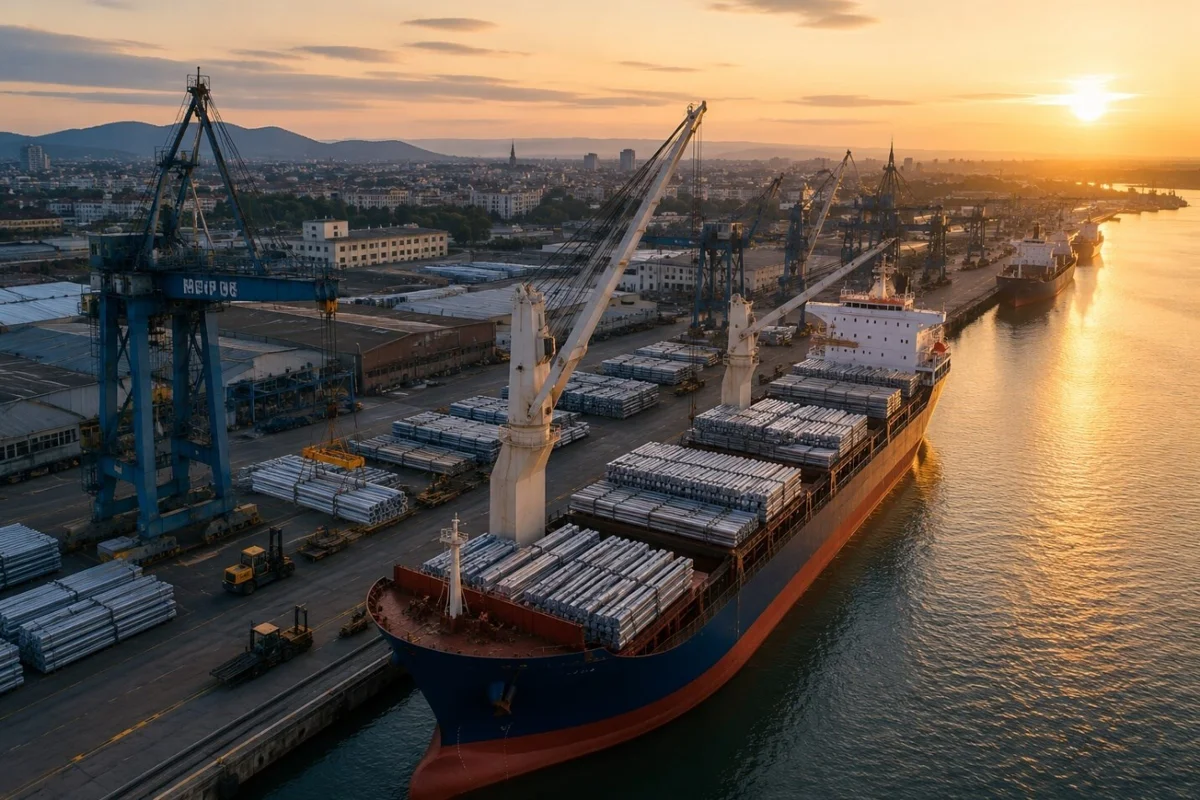
EDITED BY : DR ABHISHEK SEN 11MINS READ

 Auminium CBAM 2028 downstream expansion

The 2028 CBAM Downstream Expansion: Is Your Aluminium Supply Chain Ready?

A plant manager running a highly efficient aluminium extrusion facility in Guangdong or an advanced die-casting hub outside Pune currently operates under a comfortable, yet highly precarious, illusion. They produce complex window frames, automotive structural castings, and precision-machined parts bound for the European market. Currently, they watch the headlines about the European Union Carbon Border Adjustment Mechanism and assume it is a problem exclusively for the primary smelters. They believe that the raw material giants will absorb the carbon taxes, enabling their finished goods to cross European borders without any scrutiny.

{alcircleadd}

This illusion will remain no longer on the 1st of January, 2028.

The European Union launched the transitional phase of the Carbon Border Adjustment Mechanism (CBAM) in late 2023. At present, the bureaucratic net catches foundational materials like cement, iron, steel, and unwrought aluminium. As noted in our recent AL Circle coverage regarding what is in, what is out, and who pays, the immediate regulatory goal is simply to map the carbon footprint of these primary heavy industries. However, the legislation features a built-in trigger designed to close the most obvious loophole in global trade.

If Brussels only taxes raw metal, European original equipment manufacturers will logically stop buying it. They will instead import finished, carbon-heavy components. This scenario would destroy the domestic European manufacturing base while doing absolutely nothing to curb global greenhouse gas emissions.

The European Commission anticipated this evasion. Consequently, 2028 marks the year the definitive regime expands violently down the value chain. It will swallow semi-finished products, complex assemblies, and roughly 180 downstream product categories. As AL Circle has previously reported, this legislative shift could lead to up to EUR 230 per tonne in additional costs for aluminium extrusion imports into Europe by 2028. Every downstream exporter operating outside the European Union is now facing a pressing deadline. You are no longer merely selling metal. You are selling a verified carbon data package. If that data is missing, inaccurate, or tied to dirty energy, your products will be priced out of the European market entirely.

The macro reality: The 0.37 per cent paradox and structural inequality

Before diving into the operational mechanics, we must understand the macroeconomic reality of this legislation. The European Union presents CBAM as fair competition; however, empirical trade data uncovers a significant structural disparity.

The mechanism is projected to cover a microscopic 0.37 per cent of global trade and will cut only 0.4 to 0.5 per cent of global emissions. The climate benefits are objectively marginal on a planetary scale. However, the economic distortions for developing nations are severe and highly concentrated. Current economic models estimate that India's steel and aluminium sectors alone face immediate export losses of approximately $0.77 billion, representing nearly a full per cent of their total output.

Last updated on : 08 JUNE 2026

Adv
Adv
Adv
Adv
Adv
Adv
Adv
EDITED BY : DR ABHISHEK SEN 11MINS READ

Responses

Adv
Adv
Adv
Loading...
Adv
Adv
Adv
Loading...
Reports VIEW ALL
Loading...
Loading...
Business Leads VIEW ON AL BIZ
Loading...
Adv
Adv
Would you like to be
featured with us?
Loading...

AL Circle: Aluminium Ecosystem App

A proud
ASI member
© 2026 AL Circle. All rights reserved. AL Circle is not responsible for content from external sources.