Aluminium consumption in India's transportation sector increased from 0.70 million tonnes in 2020 to 1.35 million tonnes in 2025, nearly doubling in five years at a compound annual growth rate (CAGR) of about 14 per cent. The growth momentum is expected to continue, with consumption projected to reach 3.82 million tonnes by 2035.
In comparison, global transportation-sector aluminium consumption rose from 22.57 million tonnes in 2020 to 27.1 million tonnes in 2025, reflecting a CAGR of 3.73 per cent.
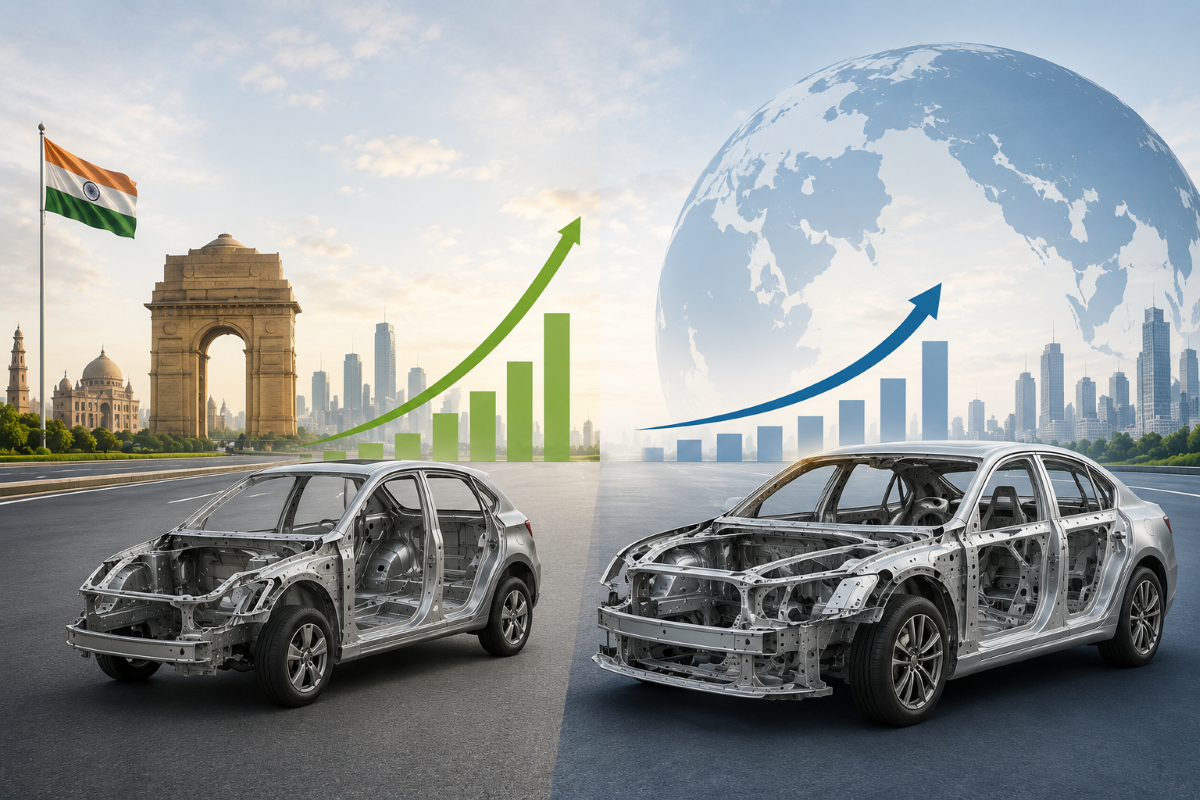
However, growth in overall consumption masks a structural gap. Despite producing more than 28 million vehicles in 2023-24 and recording strong growth in electric mobility and transport infrastructure, aluminium use per vehicle in India remains significantly lower than in major automotive markets such as China, Europe and the United States.
The disparity highlights a broader challenge for the sector. While total aluminium consumption is rising alongside vehicle production, the penetration of aluminium in individual vehicles remains relatively limited. Vehicle cost sensitivity, the pace of lightweighting, recycling infrastructure, manufacturing capabilities and policy support continue to influence aluminium adoption across the transportation industry.
What is the aluminium gap between India and the world?
The difference becomes most evident when aluminium use is measured on a per-vehicle basis. In Europe, the United States and China, a typical vehicle contains between 160 -200 kg of aluminium. In India, the average passenger vehicle uses only 40-50 kg despite the implementation of Corporate Average Fuel Efficiency (CAFE) norms.
According to the US Department of Energy, reducing vehicle weight by 10 per cent can improve fuel economy by 6-8 per cent. This advantage has accelerated aluminium adoption across major automotive markets to reduce vehicle weight, improve fuel efficiency and lower emissions while meeting increasingly stringent regulatory requirements. But in India, manufacturers continue to rely heavily on steel, particularly in cost-sensitive mass-market vehicle segments.
The contrast raises an important question: what enabled widespread aluminium adoption in global automotive markets while India continues to lag behind?
How policy accelerated aluminium adoption overseas
Part of the answer lies in regulation. Europe, the United States and China have used increasingly stringent fuel-efficiency and emissions standards to encourage vehicle lightweighting and the adoption of advanced materials. Over time, these policies have helped raise average aluminium content in vehicles to around 160-200 kg across many developed automotive markets.
China has adopted a particularly ambitious approach. Its automotive roadmap targets approximately 350 kg of aluminium per new-energy vehicle by 2030, up from around 190 kg in 2020. Several developed economies have supplemented regulations with tax incentives, research funding and industry programmes to encourage the use of lightweight materials.
India's experience has been different. While CAFE norms have encouraged improvements in fuel efficiency, the country has not introduced aluminium-content targets, dedicated lightweighting incentives or lifecycle carbon-credit mechanisms linked to low-carbon materials. As a result, aluminium use per vehicle remains substantially below levels seen in leading automotive markets.
Electric vehicles could reshape aluminium demand
While regulation supported earlier growth in aluminium use, electrification is expected to be the next major driver. Electric vehicles typically use 25-30 per cent more aluminium than conventional internal-combustion vehicles. The metal is increasingly used in battery enclosures, structural components, thermal-management systems and large castings, raising average aluminium content to around 260 kg per vehicle.
India has supported EV adoption through programmes such as FAME and the Production Linked Incentive (PLI) scheme, helping expand manufacturing capacity and strengthen the domestic EV ecosystem.
With EV penetration expected to reach 30 per cent of vehicle sales by 2030, the combination of higher aluminium intensity and rising EV adoption could significantly increase transportation-sector aluminium demand.
Recycling remains a missing link
The difference between India and mature automotive markets extends beyond vehicle design and policy. It is also visible in how efficiently aluminium is recovered and reintroduced into the supply chain after a vehicle reaches the end of its life.
Secondary aluminium accounts for about 59 per cent of aluminium consumption in the transportation sector, compared with around 15 per cent from primary aluminium.
In Europe and several other developed markets, end-of-life vehicle regulations have helped create established systems for recovering aluminium from scrapped vehicles. Recycling rates often exceed 70 per cent, providing manufacturers with a steady supply of recycled metal and reducing reliance on primary aluminium production.
India is still some distance from achieving that level of circularity. The country's aluminium recycling rate is estimated at around 25 per cent, reflecting the relatively early stage of development of its recycling ecosystem.
Cost remains the biggest obstacle
Policy and recycling explain part of the gap, but market economics explain another.
India's passenger vehicle market remains concentrated in the INR 0.5-0.8 million segment, where affordability is often the primary purchasing consideration. Aluminium components typically cost two to three times more than comparable steel alternatives, making widespread adoption difficult in cost-sensitive vehicle categories.
Given the importance of affordability in the mass-market segment, steel is likely to remain the dominant material in many vehicle categories.
Breakdown of aluminium usage in transportation
Aluminium consumption in the global transportation sector is projected to reach 28.58 million tonnes in 2025, with passenger vehicles remaining the dominant source of demand. Passenger cars alone account for 62 per cent of total consumption, equivalent to 17.72 million tonnes.
Commercial vehicles contribute a further 15 per cent, or 4.29 million tonnes, while rail, aerospace, marine and other transport applications collectively make up 14 per cent of demand.
The remaining 9 per cent or roughly 2.57 million tonnes, comes from motorcycles and two-wheelers, highlighting the broadening use of aluminium across mobility segments.
India has the manufacturing capability of alloys and die-casting
India already possesses much of the manufacturing capacity required to support higher aluminium usage in vehicles.
South India has developed a significant aluminium die-casting and alloy-production base, supported by automotive clusters across Tamil Nadu, Karnataka and Andhra Pradesh. Companies such as Aswini Enterprises, Marcus Hi-Tech and Vee J Pee Aluminium Foundry manufacture aluminium components used in engine blocks, transmission cases, cylinder heads, heat shields and EV battery housings.
The alloy landscape is also evolving in line with global automotive trends. Aluminium-silicon alloys account for 63.62 per cent of automotive alloy demand in 2025 and remain the dominant material for conventional die-casting applications.
Aluminium-magnesium alloys are expected to be the fastest-growing segment, expanding at a CAGR of 8.02 per cent through 2031 as EV production increases and demand rises for lighter, corrosion-resistant materials.
Despite these capabilities, aluminium usage in Indian vehicles remains well below global levels. A significant share of domestic production serves export markets and global OEM supply chains rather than local vehicle manufacturing.
Similar pattern is visible in extrusions
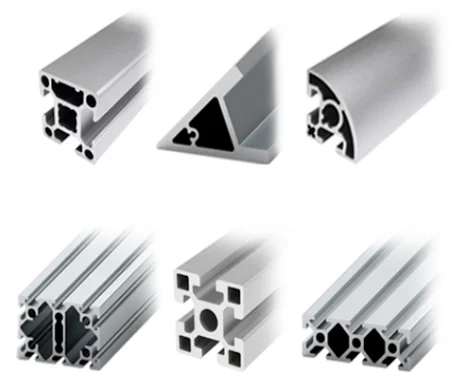
India's extrusion industry presents a similar picture. The country has installed an extrusion capacity of 3.5 million tonnes per annum but currently utilises only around 2 million tonnes. Annual production ranges between 1 million and 1.5 million tonnes, reaching approximately 1.08 million tonnes in 2024. The market is valued at nearly USD 1.9 billion.
Western India accounts for around 35 per cent of total extrusion capacity and output, followed by northern and central India at 30 per cent, southern India at 25 per cent and eastern India at 10 per cent. Southern states such as Telangana and Andhra Pradesh are emerging as important manufacturing centres, supported by demand from construction, electric vehicles and export markets.
Yet transportation accounts for only around 15 per cent of extrusion consumption. Building and construction dominate the market with a 61 per cent share, followed by electrical applications at 10 per cent, machinery and equipment at 7 per cent, consumer durables at 4 per cent and other sectors at 3 per cent.
Demand for aluminium extrusions is projected to grow at a CAGR of around 7 per cent between FY22 and FY27, rising from 0.45 million tonnes to 0.63 million tonnes. FY25 demand is estimated at 0.55 million tonnes.
The figures indicate that although India has developed significant downstream aluminium capacity, transportation remains a relatively small end-use segment compared with several major automotive markets.
Note: This is exclusive coverage by AL Circle and may not be reproduced, republished or shared without prior permission.













_md.webp)