US-Canada tariff dispute puts North American auto-parts supply chains under pressure
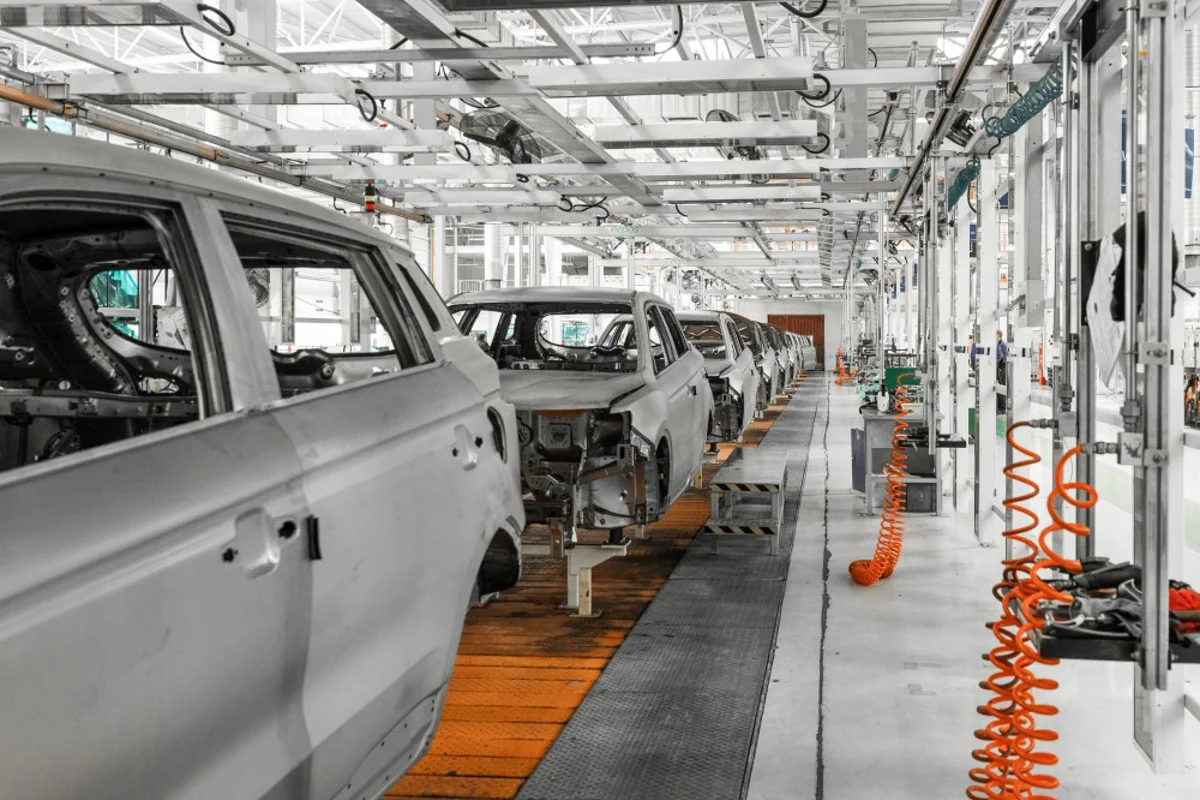
Stock image for referential purposes only
The latest escalation in the US-Canada trade dispute is putting pressure on one of North America's most deeply integrated manufacturing networks, with auto-parts makers facing higher costs and growing uncertainty over where and how components should be produced.
The two countries have spent decades building an automotive supply chain in which parts and materials routinely cross the border multiple times before reaching a finished vehicle. The latest tariff measures, including duties on aluminium and steel, threaten to disrupt that model and could force suppliers to reconsider long-established production routes.
The immediate challenge for automakers and their suppliers is deciding whether to absorb higher costs in the short term or make expensive changes to their supply chains.
For smaller parts manufacturers in particular, the impact could be significant. Many supply components to larger Tier 1 suppliers or automakers and have less flexibility to absorb additional costs or quickly shift production.
"It's really, really damaging to the industry and to the financials of the industry. It makes planning for things very difficult," said Dan Hearsch, global co-leader of automotive and industrial at AlixPartners.
A supply chain built around North America
The integration of the US and Canadian automotive industries dates back to 1965, when the two countries signed an agreement designed to consolidate their auto industries and expand their combined market.
That integration deepened under the North American Free Trade Agreement and later the United States-Mexico-Canada Agreement (USMCA), which established rules allowing qualifying vehicles and components to move across borders with preferential treatment.
Over time, manufacturers built production networks spanning the US, Canada and Mexico. A component can be processed in one country, sent to another for additional manufacturing and then cross the border again for final assembly.
Jim Jarrell, president and chief executive of Canadian manufacturer Linamar, described the system as being like an "omelet", with ingredients coming from across the three countries.
"Think about a casting that starts in Mexico and that gets sent into the U.S. to get processed. That part then jumps over to Canada to get further processed," Jarrell said. "Then we ship it back into the U.S. sub-assembly, to get it finished and assembled."
"And that story is, quite frankly, not unusual," he added. "That is actually how the industry works."
Linamar operates plants across the US, Canada, Mexico and Asia, with different facilities specialising in different products. Reworking that network in response to tariffs would require companies to reassess entire production and sourcing chains.
"So it's a lot of cost and time," Jarrell said.
Aluminium and steel add another layer of pressure
The latest tariff measures are particularly relevant to automotive manufacturers because vehicles depend heavily on both aluminium and steel, while many components move between plants and suppliers before final assembly.
Canada has imposed retaliatory tariffs of up to 50 per cent on US imports worth around CAD 27.6 billion (USD 20 billion), including aluminium and steel products. The measures followed Washington's decision to impose tariffs of up to 50 per cent on Canadian goods.
For automotive suppliers, the concern extends beyond the direct cost of imported metal. Components made using tariff-affected materials can move through several stages of the supply chain, potentially exposing manufacturers to additional costs as products cross the border.
A steering wheel, for example, can contain dozens of individual components sourced from different suppliers. Across the wider vehicle, thousands of parts can be linked through the same cross-border production network.
"There’s probably 50 to 100 different parts coming from all over the world" in a steering-wheel system alone, Hearsch said.
The industry is divided into several supplier tiers. Tier 1 companies provide components or systems directly to automakers, while Tier 2 and Tier 3 suppliers produce the smaller components and materials that feed into those systems.
That structure means a tariff affecting a raw material or intermediate component can potentially work its way through multiple levels of the supply chain.
Suppliers face difficult investment decisions
For now, many companies are taking a wait-and-see approach as they assess whether the latest tariff measures will remain in place and whether further changes could follow.
Bosch and Magna, two major North American automotive suppliers, told NPR they were monitoring the situation and its potential impact on customers.
The Motor & Equipment Manufacturers Association also warned that continued trade measures could undermine the competitiveness of North America's vehicle supply chain.
"The vehicle supplier industry has built deeply interconnected North American supply chains over decades," the association said, adding that policies that raise costs or create new trade barriers could weaken the region's position amid global competition.
For companies such as Aisin, which is headquartered in Japan but conducts a significant share of its business in North America, the uncertainty is particularly difficult because materials and components routinely move between US and Canadian facilities.
"We've always looked at North America as totally North America, not Canada-specific or U.S.-specific," said Chuck Sanders, executive vice president of Aisin's North American division.
"When there's rapid changes or new tariffs that are introduced suddenly," he added, "that kind of creates chaos on the business."
Reshaping supply chains will take time
The automotive industry now faces a difficult choice: continue operating established cross-border networks while absorbing additional costs, or invest in new production and sourcing arrangements that could reduce tariff exposure.
Changing supplier, relocating production or altering manufacturing routes requires capital and time. Companies also risk making expensive investments based on tariff policies that could subsequently change
"The challenge is that the automotive industry does not move at the speed of politics," said Sean Tucker, an editor at Cox Automotive.
The industry's transition to electric vehicles and the continuing fallout from earlier supply-chain disruptions add to the uncertainty. Automakers and suppliers are already having to make major investment decisions while facing changing technology and increasingly competitive global markets.
Economist Sue Helper of Case Western Reserve University said companies are trying to avoid moving too early or too late as they assess potential supply-chain changes.
"The more uncertainty there is, obviously the harder it becomes to invest and grow in a confident way," Jarrell said.
The result is a tariff dispute that extends well beyond the cost of individual shipments. For an automotive industry built around the free movement of components across North America, even relatively small changes at the border can ripple through multiple tiers of suppliers, raising costs and complicating long-term production decisions.
Alba Voronezh launches 4k cans-per-minute plant, targets 25% of Russia’s aluminium can demand
Next articleYadea finds a new route into Africa’s electric two-wheeler market, partnering with Spiro
Grow with
AL Circle