5083 aluminium holds durable growth potential, but real demand will hinge on marine, transport and defence programmes
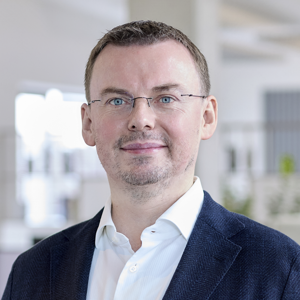
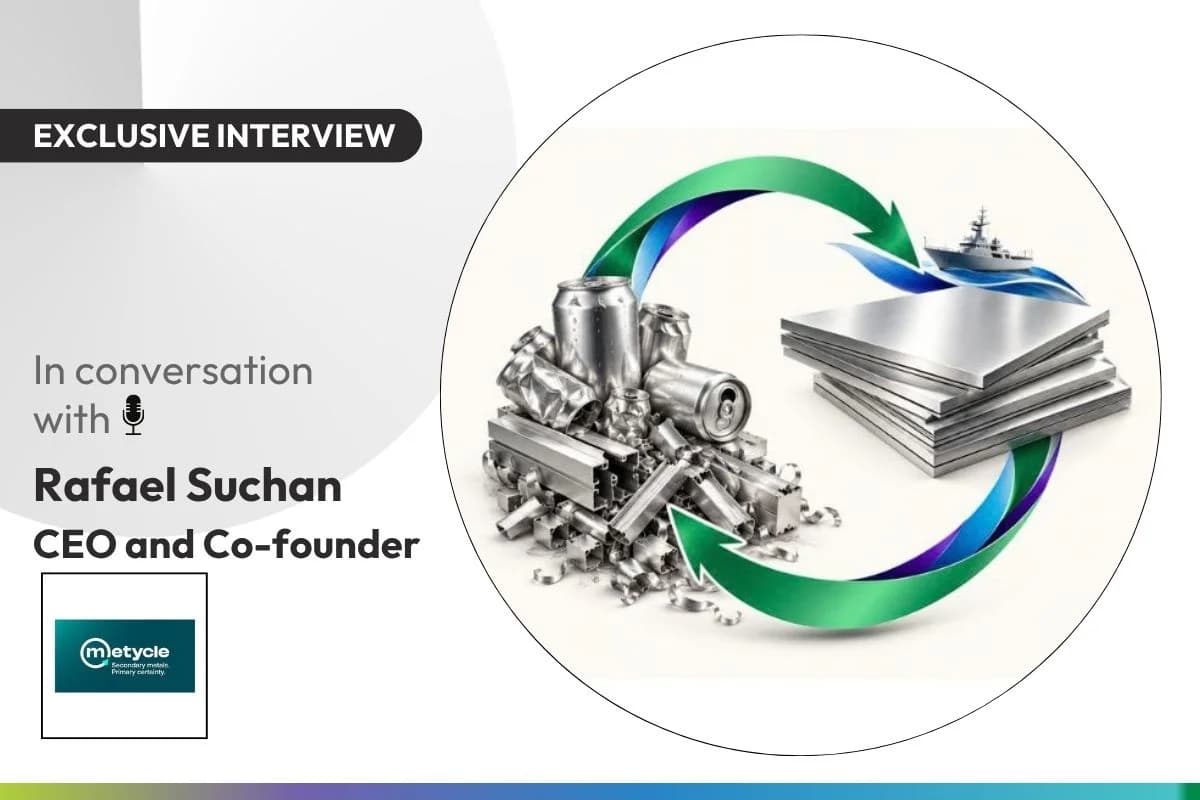
In an interview with AL Circle, Rafael Suchan, CEO and co-founder of Metycle, a vertically integrated secondary metals company headquartered in Cologne, Germany, has shared his thoughts on the European Union’s aluminium scrap sourcing strategy and the demand trends of scrap grades. According to Rafael, the EU must aim for more scrap sourcing options since the bloc’s tighter non-OECD waste-export rules may lead to scrap material leaving Europe. Regarding aluminium scrap grades in demand, UBC scrap, clean extrusion scrap and segregated sheet are the highest consuming grades. Upon asking about the growth opportunities of 5083 high-magnesium aluminium alloys, he further said the pace will follow actual marine, transport and defence programmes.
Before co-founding Metycle, Rafael Suchan served as CEO and Executive Director of Hong Kong-listed Chiho Environmental Group and CEO of its German subsidiary, Scholz Recycling, leading the group’s global recycling operations and trading network across Europe, Asia, and North America. His career spans more than two decades in industrial operations, commercial leadership, and digital transformation, beginning at Bayer and including senior global and Asia-Pacific roles at Lanxess with full P&L and manufacturing responsibility. At Metycle, he is building an integrated model that combines global trading, physical processing, financing, and proprietary material data to turn fragmented scrap flows into reliable industrial supply.
AL Circle: The European Union is increasingly focusing on securing domestic aluminium scrap availability as part of its circular economy strategy, including discussions around policies affecting scrap trade flows. From Metycle’s perspective, how has this evolving regulatory environment influenced aluminium scrap movements into Europe? Have you observed any changes in sourcing patterns, import volumes, or customer behaviour?
Rafael Suchan: For us, the practical consequence is to qualify more sourcing options, rather than assume Europe will automatically attract more scrap. The EU’s tighter non-OECD waste-export rules apply from May 2027, with the first list of authorised countries still being finalised. Those concern material leaving Europe; they do not establish that imports are rising.
I wouldn’t attribute import movements to regulation alone. Freight, regional prices and processing capability still matter. In our industry conversations, the recurring concern is consistency: knowing what specific material will arrive and whether it can support the production plan.
At Metycle, we’re combining international sourcing with regional sorting capacity. The aim is to qualify more sources and make more material usable. A mill gains little from extra tonnes nearby if they don’t fit its melt. Supply security ultimately means material you can build a production schedule around.
AL Circle: Through your global trading network, Metycle has visibility across different aluminium scrap markets. Which aluminium scrap grades are currently experiencing the strongest demand globally, and what factors are driving this preference? Could you also highlight how demand varies regionally, for example, which scrap grades are most sought after in Europe, North America, Asia and the Middle East?
Rafael Suchan: I’d highlight used beverage cans (UBC), clean extrusion scrap and segregated sheet. Buyers value predictable chemistry and metal recovery, especially when increasing recycled content without compromising the finished product.
In our trading activity, we see strong demand in Europe and North America for UBC going back into can sheet, clean 6xxx extrusion scrap for billet, and controlled 5xxx and 6xxx streams for automotive applications. Asia has those markets too, alongside demand in India and Southeast Asia for casting scrap such as Tense and mixed material such as Zorba, where further separation is available. In the Gulf, new recycling capacity is creating demand for both production scrap and prepared post-consumer material.
There is no single global winner. The buyer’s product and furnace determine the value. Bidding harder for the same clean tonnes mainly redistributes supply. Making mixed scrap suitable for those applications gives industry more material to work with.
AL Circle: With increasing demand from marine, transportation, defence and lightweight structural applications, 5083 high-magnesium aluminium alloys are gaining attention. How do you see the future demand trajectory for 5083 aluminium? What specific properties make this alloy attractive compared with other aluminium grades, and what challenges exist in sourcing and recycling high-magnesium aluminium scrap?
Rafael Suchan: I see durable growth opportunities for 5083, but the pace will follow actual marine, transport and defence programmes. Lightweighting alone is not a demand forecast for a particular alloy.
5083 offers relatively high strength among non-heat-treatable alloys, good weldability and seawater resistance. That combination matters more in a welded structure than a headline strength figure. The finished product still needs the right temper and corrosion qualification for its application.
In recycling, preserving alloy identity is essential. Segregated offcuts are easier to work with than mixed end-of-life assemblies, and a high-magnesium fraction is not automatically suitable for making 5083. The full chemistry has to fit. Magnesium can also oxidise during remelting, reducing the alloying value recovered. Careful sorting and melt control help preserve alloying value that the next producer would otherwise have to replace.
AL Circle: Advanced sorting technologies are becoming increasingly important as recyclers deal with more complex scrap streams. How does Metycle view the role of technologies such as laser-induced breakdown spectroscopy (LIBS), automated sorting and digital traceability in improving scrap quality and recovery rates? How are these technologies helping overcome challenges related to alloy identification and cross-border scrap trading?
Rafael Suchan: LIBS matters because aluminium pieces that look identical can have very different uses. By identifying their chemistry before melting, we can separate compatible alloys rather than lose their value in a mixed melt.
The industrial challenge is getting quality, recovery and throughput right together. Rejecting too much usable metal to achieve a purity figure is not a viable business. At Metycle’s SmartSorting Hub in Maasmechelen, Belgium, we’re bringing mechanical separation, sensors, AI-assisted classification and our own process control together around the buyer’s specification.
TrustTrack is designed to keep each batch connected to its origin, composition and processing records. That gives an overseas buyer evidence to assess, rather than just a description to trust. Sound sampling and testing remain essential, and digital records do not replace shipment compliance. The commercial value is making more material acceptable to a customer, with less uncertainty over what will arrive.
AL Circle: How is the market reacting to a 15.65 per cent price rise of UBC aluminium scrap on LME in the last six months? How has this higher valuation shaped sourcing strategies, inventory management or buyer preferences for UBC scrap?
Rafael Suchan: The first thing I look at is whether UBC is rising with aluminium or becoming more expensive relative to it. The latter squeezes recycling margins. The LME UBC contract reflects a US-delivered mill-grade assessment, so I would not treat the move you cite as a global price signal.
Higher prices put working capital under pressure: the same tonnage needs more funding, even when metal-price exposure is hedged. That makes reliable suppliers, sensible inventory buffers and aligned purchase and sales pricing more important. Volume security and price exposure are separate decisions. A longer supply agreement need not fix the metal price.
Buyers also have to compare usable metal, not invoice prices. UBC has an established route back into can sheet, cheaper mixed scrap is not automatically a substitute. Once you account for contamination, processing and metal losses, the apparent saving can disappear in the furnace.
AL Circle: One of the biggest challenges in international aluminium scrap trading is maintaining consistent quality across different regions and suppliers. How does Metycle use target specifications and quality parameters to improve sourcing decisions, supplier matching and transaction efficiency? How important is specification accuracy in reducing disputes and improving trust in cross-border scrap trade?
Rafael Suchan: We start with what the customer needs to make and work backwards. Chemistry determines whether material fits the alloy, moisture, coatings, attachments and size affect how it behaves in the furnace. A familiar scrap grade is useful shorthand, but it doesn’t tell a buyer everything they need to know.
Agreeing how quality will be sampled, tested and accepted before shipment protects both sides. It reduces room for disputes and gives suppliers a clear basis for settlement. Requirements should be as tight as the application needs, without excluding usable material unnecessarily.
At Metycle, we’re connecting what we buy with what sorting recovers and what customers need. Over time, that builds a clearer picture of which sources suit which applications. The purpose is to make better buying decisions before we commit capital, rather than simply keep better records afterwards.
AL Circle: Europe continues to face a structural gap between 7 million tonnes of aluminium scrap generation and 8 million tonnes of demand. How do you see this supply gap evolving? Will increased imports bridge the deficit, or do you expect investments in collection, sorting and recycling capacity to significantly improve Europe’s domestic scrap availability?
Rafael Suchan: Europe will need both, but I would be careful calling that headline comparison a structural gap. The EU has long exported more aluminium scrap than it imports, while individual mills can still lack suitable feedstock. Total tonnes and usable grades tell different stories.
I expect competition for qualified material to intensify as recycled-content ambitions grow. Imports can balance regional shortages. Better collection and sorting can make more domestic material usable. The larger opportunity is recovering alloys from end-of-life products with the consistency already achieved in many pre-consumer scrap loops. Primary metal will remain necessary while demand grows and large volumes of aluminium remain locked in long-lived products such as buildings and vehicles.
That is the business we’re building at Metycle: connecting global trading, regional processing, material knowledge and financing. A furnace investment only works when the supply chain around it works. Our ambition is for customers to use more secondary metal without accepting more uncertainty.

