AL Circle Analysis: The new downstream aluminium investment map – where investors should watch

The image used in this article is generated with an AI tool and does not depict any real-time moment
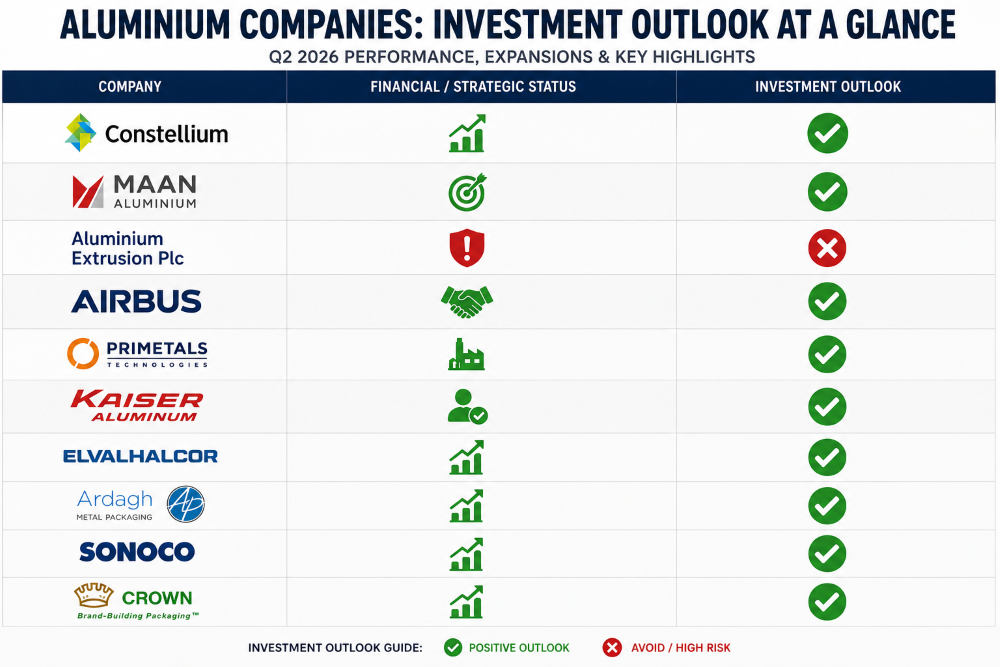
The aluminium industry's growth story is increasingly being shaped by value-added manufacturing rather than production volumes. Robust earnings, expansion projects and business diversification continued to strengthen confidence in downstream aluminium, with several producers raising their outlooks despite macroeconomic and geopolitical headwinds. At the same time, global trade trends favoured economies with stronger downstream capabilities, while weaker exports in some regions and governance challenges highlighted that growth across the industry remains uneven.
Key takeaways
- Constellium reported record quarterly results, with revenue rising 31 per cent to USD 2.7 billion and net income increasing to USD 148 million. The company raised its full-year 2026 guidance and brought its 2028 financial targets within reach ahead of schedule.
- Maan Aluminium received shareholder approval to diversify into renewable and conventional power generation, expanding its business beyond aluminium manufacturing.
- Nigeria's Aluminium Extrusion Plc had its shares suspended from trading on the Nigerian Exchange after failing to submit its FY2025 audited financial statements within the regulatory deadline.
- Airbus signed a long-term agreement with SeAH Aerospace & Defense, making it the first Korean materials supplier to join the aircraft manufacturer's aluminium supply chain.
- Primetals Technologies secured an order to supply rolling mill technology for Lidao New Energy's battery aluminium foil project in China, supporting EV and energy storage applications.
- Kaiser Aluminum attracted fresh institutional investment after Jennison Associates LLC acquired additional shares, with institutional investors now holding 99.3 per cent of the company's stock.
- ElvalHalcor completed a successful share capital increase, with the proceeds supporting its €855 million aluminium rolling mill expansion through 2030.
- Ardagh Metal Packaging reported 18 per cent revenue growth and 14 per cent EBITDA growth in the second quarter, prompting the company to raise its 2026 EBITDA outlook.
- Sonoco posted USD 1.9 billion in second-quarter sales, supported by improving demand for metal packaging alongside stronger industrial packaging performance.
- Crown Holdings increased second-quarter revenue to USD 3.668 billion as aluminium beverage can demand strengthened globally, leading the company to upgrade its 2026 earnings outlook.
Trade trends highlight where global momentum is shifting
Global trade data presented a more selective growth picture. Countries with strong downstream manufacturing continued to strengthen their competitive position, while others faced weaker exports, softer industrial demand and increasing pressure from oversupply.
India reinforced its position as a leading supplier of aluminium alloy products worth USD 1.29 billion. The European Union also maintained healthy downstream export growth, with exports rising despite softer imports. In contrast, Bahrain recorded a sharp decline in aluminium exports, Türkiye's downstream imports weakened despite higher values, and China's aluminium rod market remained under pressure as shrinking export orders, slower destocking and falling processing fees reflected weakening market conditions.
Beyond trade, geopolitical tensions also continued to influence downstream industries.
Key takeaways
- India exported 1.2 million tonnes of aluminium alloy products worth USD 1.29 billion, reinforcing its growing position in the global value-added aluminium market.
- The European Union continued expanding its downstream trade footprint, with exports rising 6.8 per cent by volume and 15.2 per cent by value despite softer imports.
- Türkiye's downstream imports declined 8.0 per cent by volume, pointing to softer domestic demand even as higher prices supported import values.
- Bahrain's aluminium exports fell 14 per cent during January-May 2026, reflecting weaker international demand across multiple product categories.
- China's aluminium rod market remained under pressure as weaker export orders, excess supply and declining processing fees continued to weigh on market sentiment.
- The Middle East conflict exposed growing vulnerabilities in downstream supply chains, with aluminium can shortages already affecting packaging costs and consumer pricing in India.
Regional investment outlook
- India – Positive: Record aluminium alloy exports and expanding value-added manufacturing continue to strengthen the country's long-term growth potential.
- European Union - Positive: Strong downstream export growth reflects resilient global demand for processed aluminium products and reinforces the region's competitive position.
- Türkiye - Neutral: Higher import values have partly offset weaker volumes, but softer domestic demand suggests near-term growth could remain moderate.
- China - Cautious: Weak export demand, oversupply and declining processing fees continue to weigh on the aluminium rod market.
- Bahrain - Cautious: Falling export volumes point to weaker external demand and a more challenging trade environment.
- Middle East - Risk watch: Continued geopolitical tensions and supply chain disruptions remain key risks, with the potential to increase costs and volatility across the global aluminium value chain.
To know the production, demand and consumption forecasts of aluminium casting, explore our report "Global Aluminium Casting Market 2026-2032: Plant Economics, Alloy Segmentation, Pricing Intelligence, Supply Chain Analysis & Strategic Recommendations"
Beyond buying and selling: How AL Biz Assisted Trade joins the aluminium value chain
Next article66% and counting: China leads aluminium extrusions as India’s demand nears 858,000 tonnes
Grow with
AL Circle