

AL Circle analysis: Germany’s aluminium trade surplus, Novelis’ US expansion, Asia’s EV demand & India’s underutilised downstream capacity
Aluminium’s next growth phase is increasingly being shaped by downstream processing, supply-chain resilience and demand from specialised applications. Germany continues to generate a substantial trade surplus in flat-rolled products despite a shrinking primary aluminium base, while North America is investing in recycling and rolling. Across Asia, new manufacturing capabilities and growing demand from electric vehicles, railways and batteries are creating further opportunities. However, declining exports, underutilised capacity and uneven profitability show that investment alone does not guarantee success. For industry leaders, the challenge is to identify where demand is shifting, develop products that meet customer requirements and ensure that new investments translate into sustainable...
AL Circle Analysis: From Guinea to Gulf, how bauxite, tariffs and logistics redraw aluminium map
Aluminium markets in late 2026 are being shaped by more than the headline LME aluminium price. Bauxite security, alumina availability, geopolitical disruptions, tariff negotiations, logistics diversification and regional premiums are increasingly determining where metal moves and what buyers pay. From RUSAL reassessing Caribbean assets and Vedanta securing Odisha bauxite to Brazil extending mine life and EGA rebuilding its Guinea supply chain, producers are strengthening control over critical raw materials. At the same time, the US remains heavily dependent on imported bauxite and alumina, while Europe and Asia are experiencing sharply different premium dynamics. These developments point to a market where physical availability is becoming a regional factor even as aluminium itself remains...
Grow with
AL Circle

Global aluminium plates, sheets and strips trade 2025: Policy, cost and geopolitics reshape export
Global exports of aluminium plates, sheets and strips between 2023 and 2025 have formed a chain that goes beyond routine market cycles. The export trend depicts the reshaping of the market by policy decisions, geopolitical tensions and evolving supply chains. Latest trade data accumulated from the International Trade Administration throws light on how these factors directly influence export performance across major producing nations. Explore- Most accurate data to drive business decisions with Global ALuminium Industry Outlook 2026 across the value chain With the global consumption of aluminium plates, sheets and strips standing at 26.92 million tonnes in 2025, the total quantity traded by the top 10 exporters stood around 23.09 million tonnes, reflecting their dominance in the global...

Aluminium as a ‘Critical Mineral’ – how much is it catching up with the label given in the US, EU, UK, Canada and Africa?
Across major economies – from the United States and European Union to the United Kingdom, Canada, and Africa, aluminium has formally entered the league of critical minerals – not because the metal is rare but it is indispensable for economic and environmental growth. Aluminium, over the period of time, has made itself a non-substitutable element in modern economies through critical applications in industrial growth, defence capability, and decarbonisation. It is also the metal that has built direct relation with global economic structures; hence, any disruption in its supply chain affects employment, trade balances, and industrial output. Economic contribution – a mature industry with strategic weight To all these regions stated above, the aluminium industry supports a substantial share...

From copper oversupply to aluminium crisis: Middle East conflict reshapes metals market
What began as an overall surge in the metals market towards the beginning of the year has quickly turned far more uneven, as the ongoing Middle East conflict enters its fifth week. While early market sentiment was dominated by fears of a copper crisis, the unfolding reality focuses on a different crisis surrounding aluminium. Global institutions, including the International Energy Agency, International Monetary Fund and World Bank, have already referred to the conflict as one of the most severe recent energy shocks. Beyond the immediate humanitarian impact, the geopolitical situation is disrupting trade routes, hoisting energy prices and introducing fresh volatility across markets. Explore- Most accurate data to drive business decisions with Global ALuminium Industry Outlook 2026 across...

Market surplus lets alumina price on LME hardly cross $315/t when aluminium soars past $3500/t
At a time when aluminium prices are climbing sharply, alumina - the very raw material that feeds it - is barely moving. This unusual split raises a simple question: why is the input material weakening while the output strengthens? The answer lies in a mix of supply, expansion, demand shifts, and geopolitical shocks that are pulling the two markets apart. The divergence has been clearly visible since late 2025, with both commodities moving in opposite directions and creating an imbalance across the value chain. Alumina price opened 2026 at USD 304 per tonne and briefly touched USD 309.14 in early January, but failed to sustain momentum. Prices stayed confined to a narrow range through the month before softening. By mid-March, they had dropped to USD 300.14 per tonne and eventually settled...

Bioenergy in India’s aluminium sector: Scale potential meets a 3-million-tonne reality
India reports abundant bioresources and rapidly growing biofuel markets. Modern bioenergy from biomass, biogas and biofuels already supplies about 13 per cent of India’s total final energy. It is expanding fast, with the International Energy Agency (IEA) projecting bioenergy use to rise by roughly 45 per cent between 2023 and 2030. This growth is driven by policy mandates, including ethanol and biodiesel blending targets, a 5–7 per cent biomass co-firing target in coal power plants by 2026, and compressed biogas (CBG) expansion under the SATAT initiative. By one estimate, India’s liquid and gaseous biofuel use doubled from 2018 to 2024 (from 101 to 210 petajoules) due to ethanol and CBG programmes, and could more than double again by 2030 with stronger policy support. Modern solid...

Europe aluminium foil production rose 3.1% in 2025, but import dependency persists - explore market dynamics and trade flows
The European aluminium foil industry appeared to regain its footing in 2025, extending the stabilisation seen a year earlier. Demand moved in a positive direction overall, yet the recovery did not follow a straight line. As the year progressed, momentum began to soften, with the fourth quarter emerging as a clear weak spot. The question, then, is not whether recovery happened -but how steady it really was. Despite an installed production capacity estimated at 1–1.4 million tonnes annually, actual output has consistently remained a bit below this range, underlining persistent underutilisation across the sector. The past few years help explain why. Output edged up slightly by 0.4 per cent from 967,000 tonnes in 2021 to 971,300 tonnes in 2022. Then came a sharp fall of 14.4 per cent to...
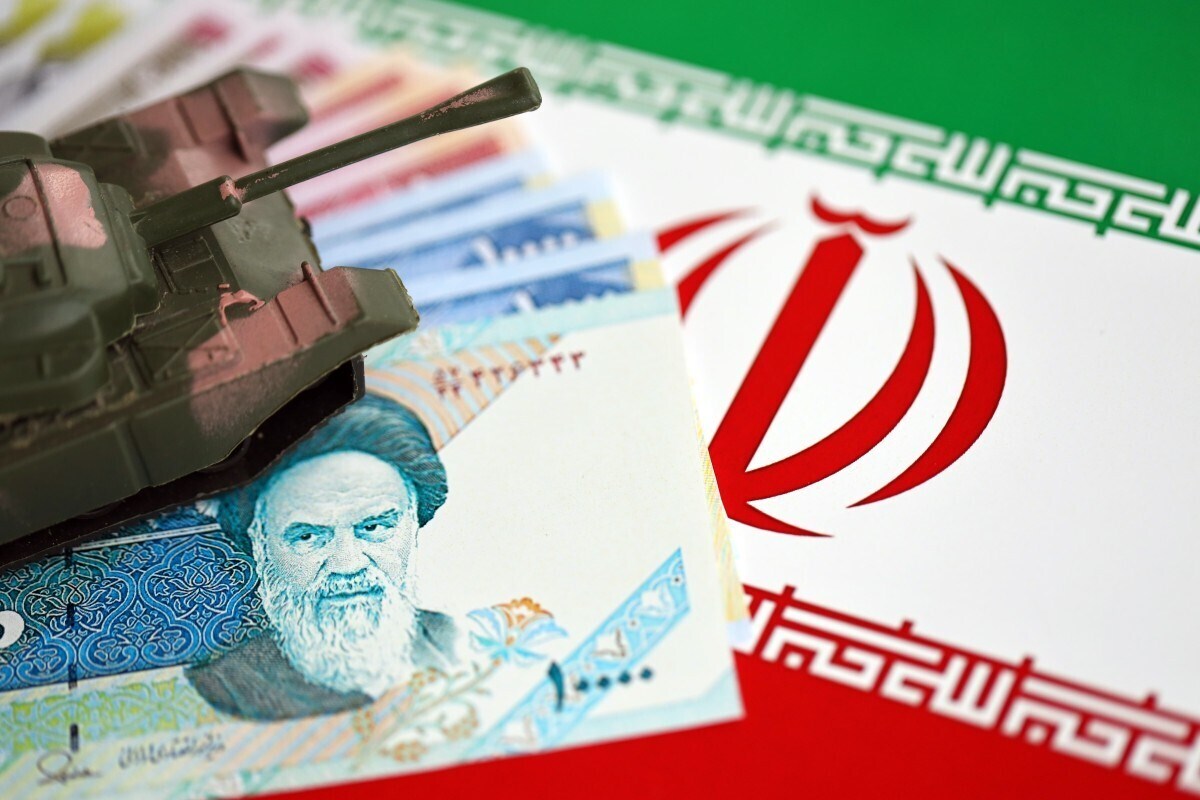
The $4,000 price tag forecast: Iran’s blow to the global aluminium value chain
The kinetic targeting of primary aluminium production facilities in the United Arab Emirates and Bahrain on March 28 2026 represents a seminal shift in the intersection of regional conflict and global commodity security. For decades, the Gulf Cooperation Council (GCC) nations have leveraged their abundant natural gas reserves and strategic maritime positioning to establish a dominant posture in the global aluminium market, currently providing approximately 9 per cent of the world’s primary metal. The coordinated strikes by Iran’s Islamic Revolutionary Guard Corps (IRGC) on Emirates Global Aluminium’s (EGA) Al Taweelah smelter and Aluminium Bahrain’s (Alba) production complex have not only idled significant portions of global capacity but have effectively weaponised the supply chain...

European aluminium premium reaches a record $472/t in March - is it a build-up from last year or the Hormuz crisis?
The European aluminium premium, the extra cost buyers pay above London Metal Exchange prices to obtain physical metal, has risen in early 2026, indicating higher costs and tighter supply in the region. It was at USD 335 per tonne on January 2, 2026 and stayed within USD 340 per tonne to USD 360.63 per tonne through February. The change became evident in March. Premiums moved up to USD 369.5 per tonne on March 2, rose to USD 427.5 per tonne by March 4, and continued increasing to USD 472.22 per tonne on March 25. Over this period, average aluminium costs in Europe rose by roughly 17–18 per cent compared to late 2025. The timing lines up with rising tensions in the Middle East. The Persian Gulf, producing about 6.8 million tonnes of primary aluminium each year, is a key supplier to Europe...

Global aluminium scrap trade trend: US sells, Asia buys
中文翻译附于新闻末尾,敬请继续阅读。 Ever since the emergence of recycled aluminium as a key lever for both decarbonisation and supply security in the industry, the United States (US) has emerged as one of the world’s leading exporters of aluminium scrap, with a well-established collection network and surplus generation. Large volumes of US-origin scrap are shipped to processing hubs in Asia, indicating a strategic supply corridor between the West and the East. That being said, with the stark demand surge for recycled aluminium across the world, the US has also been weighing the value of the metal, and as advised by the Aluminium Association, looking to treat its “aluminium scrap as a strategic asset.” Explore- Most accurate data to drive business decisions with Global ALuminium Industry Outlook 2026...

India’s power pivot: 520 GW today, 900 GW ambition tomorrow. Here's where aluminium quietly fits in!
In India, electricity deficits are overcome by the engineering dominance — that is what has been the ethos at the Bharat Electricity Summit 2026. Here, what emerged wasn’t event rhetoric. It was a shift in how the country is thinking about power, industry, and global positioning. Beneath the presentation numbers lay a deeper industrial signal of India building an electricity system that could redraw cost curves for energy-intensive sectors like aluminium. Start with the baseline. India has crossed 520 GW of installed capacity, with over 40 per cent already coming from non-fossil sources. A decade ago, the country was running a power deficit of around 4-5 per cent. Today, it is operating close to surplus, with a grid sophisticated enough to handle 15-minute scheduling and increasingly...

MYSTEEL: Middle East supply disruptions seen supporting China's aluminium prices
On March 18, the regional conflict had entered its third week, with its impact extending beyond market sentiment to materially disrupt primary aluminium smelting in several Middle Eastern countries, the report noted. For instance, on March 12, Qatalum, the 50/50 joint venture between Norsk Hydro and Qatar Aluminium Manufacturing, announced it would maintain output at around 60 per cent of capacity due to reduced gas supply, following an earlier move to implement controlled production cuts. On March 15, Aluminium Bahrain reported a 19 per cent reduction in output amid disruptions to raw material supply and transportation. Explore- Most accurate data to drive business decisions with Global ALuminium Industry Outlook 2026 across the value chain Within the region's aluminium supply chain,...

NBS: China's primary aluminium output rises 3 per cent Y-o-Y during Jan-Feb
Normally, the NBS consolidates production data for January and February to minimise distortions caused by the Chinese New Year (CNY) holiday, which usually falls in either of the two months, Mysteel Global notes. To know more about the global primary aluminium industry 2026 outlook, book the report “ Global ALuminium Industry Outlook 2026 ”. On a daily basis, primary aluminium output nationwide averaged 127,627 tonnes during the first two months of the year, rising by 2.9 per cent on year, Mysteel Global calculated based on the NBS figures. The increase in output was largely associated with the relatively higher operation rates among Chinese primary aluminium smelters during the two months compared with the same period of the previous year, market watchers said. Most smelters had...

Middle East disturbed: 350 dry bulk vessels restricted, 9% of global aluminium at risk & some buyers pay over $5,000/t
The global economy is staring at a supply shock triggered by a waterway barely 33 kilometres wide at its narrowest point. The Strait of Hormuz, sitting between Iran, Oman and the United Arab Emirates, has become the most dangerous chokepoint in global trade since the beginning of March. The waterway handles roughly 20 per cent of global seaborne oil flows, but its role in the aluminium value chain is increasingly critical. The Middle East now hosts around 7 million tonnes of aluminium smelting capacity, equivalent to about 9 per cent of global supply. When shipping through Hormuz slows, it affects two directions simultaneously: Raw materials moving into Gulf smelters Finished aluminium moving out to global buyers In the past two weeks, vessel-tracking platforms and maritime insurers have...

3-month raw material disruption in GCC may lead to a 1–1.25 MT shortage in primary aluminium production - here’s how
The Middle East’s rise as a global aluminium powerhouse has largely been driven by the Gulf Cooperation Council (GCC). Large, energy-efficient smelters across the region have enabled steady production growth and helped the Middle East secure a stronger foothold in the global aluminium market. Primary aluminium output increased from 5.8 million tonnes in 2021 to 6 million tonnes in 2022, reflecting a 3.14 per cent year-on-year rise. Expansion continued as production reached 6.2 million tonnes in 2023 and 6.3 million tonnes in 2024, marking growth of 2.35 per cent and 2.07 per cent respectively. However, momentum slowed in 2025, when output declined to 6.15 million tonnes, a 2.95 per cent drop from the previous year. The slowdown followed raw material supply crisis last year and is still...

India: Aluminium scrap import prices climb up w-o-w; UAE port activity hit by US-Iran conflict
India's imported aluminium scrap prices recorded a sharp week-over-week rise as of 10 March 2026, supported by gains in prices on the London Metal Exchange and ongoing geopolitical tensions, while domestic Tense scrap prices also remained firm amid tight local supply conditions. As per BigMint's assessment for CFR Nhava Sheva deliveries, US-origin Taint Tabor HRB 2-3 per cent scrap increased by USD130 per tonne w-o-w to USD2,580 per tonne, while UK-origin Wheel scrap rose by USD140 per tonne w-o-w to USD3,190 per tonne, reflecting continued firmness in imported aluminium scrap prices. For the global aluminium value-chain 2026 outlook, book our exclusive report “ Global ALuminium Industry Outlook 2026 " LME aluminium sharp gains w-o-w Three-month aluminium closing prices on the London...

Assessing if aluminium is ready to take up copper’s share of demand in renewables, EVs and data centres
Copper and aluminium have long competed across a wide range of industrial applications. In many sector, these two metals can be used alternatively because of their few common traits like durability, conductivity, ductility, and corrosion-resistance. But at this moment, there is one factor that is tipping the balance in favour of aluminium – price it is. And the gap is not some hundreds of dollars but thousands. Taking the instance of the current market, aluminium is trading nearly USD 8,700 per tonne below copper. This price advantage is the reason for sectors like electric vehicles, renewable energy, and AI data centres to switch from copper to aluminium wherever technical standards allow. Price gap is increasing aluminium’s appeal This shift is taking placing even though aluminium...

Strait of Hormuz closure also questions the viability of primary aluminium production in the Middle East and here's why
The closure of the Strait of Hormuz has been causing concerns for primary aluminium supply around the world. At the same time, it is also raising questions about the supply of raw materials to the Middle East, a region heavily dependent on imported primary aluminium raw materials, many of which pass through the Strait of Hormuz. Situation intensified after Iran closed the Strait of Hormuz, one of the world’s most critical maritime shipping routes linking the Persian Gulf with the Gulf of Oman and the Arabian Sea. For the Middle East’s aluminium industry, the closure raises a pressing question: how resilient is a major aluminium-producing region that depends heavily on imported raw materials? While the region accounts for roughly 8–9 per cent of global aluminium output, its smelters rely...
MYSTEEL: Middle East disruptions may lift China's alumina supply
Escalating geopolitical tensions in the Middle East since February 28 are likely to disrupt primary aluminium production there and cause additional alumina cargoes to be redirected to markets outside the region including China, according to Mysteel's recent analytical report on the commodity. The Middle East's six major aluminium-producing countries – namely Iran, Saudi Arabia, the United Arab Emirates, Bahrain, Qatar and Oman – have a combined primary aluminium capacity of approximately 6.92 million tonnes per year, accounting for about 9 per cent of global output, Mysteel learned. Given that producing one tonne of primary aluminium requires roughly 1.92 tonnes of alumina, total alumina demand from the primary aluminium sectors in these six countries is estimated at around 13.3 million...

