15 EU nations back Warsaw Declaration to strengthen industrial competitiveness, energy security and aluminium scrap supply: European Aluminium welcomes the act
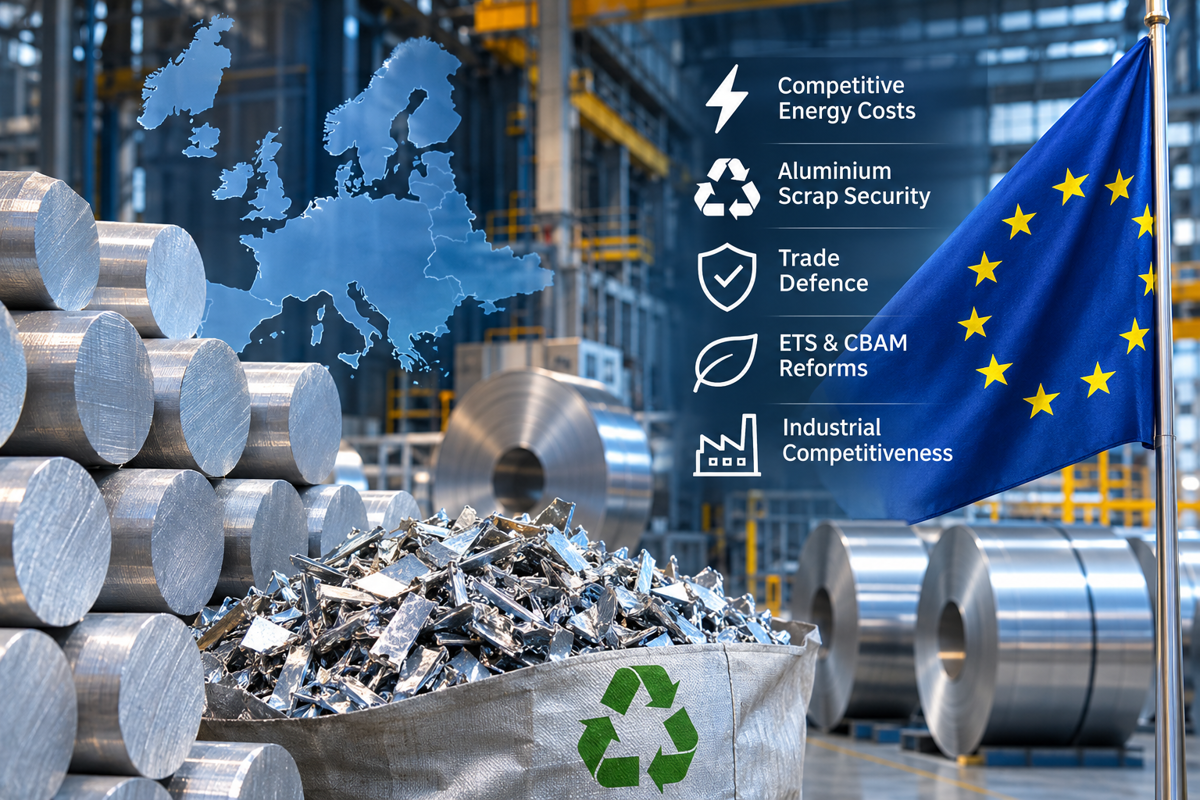
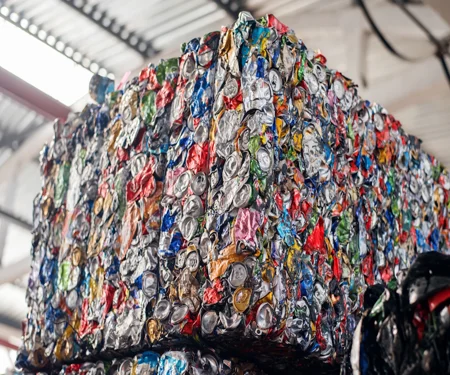
The image used in this article is generated with an AI tool and does not depict any real-time moment
European industry is facing a difficult balancing act of maintaining global competitiveness while accelerating decarbonisation, securing critical raw materials and managing persistent energy-cost pressures. Against this backdrop, 15 European Union (EU) member states have endorsed the Warsaw Declaration 2026, calling for a stronger industrial policy that places competitiveness, economic security and manufacturing resilience at its core.
Adopted following the 9th Friends of Industry Ministerial Conference in Warsaw on October 26, the declaration outlines a coordinated approach to protecting Europe's industrial base. Its priorities include affordable energy, reliable access to secondary raw materials, stronger trade defence mechanisms, technological sovereignty and reforms to the EU's carbon market framework.
The declaration has also received a positive response from European Aluminium, which welcomed its focus on reducing the structural energy-cost gap with global competitors, strengthening critical raw material security and addressing global overcapacity and unfair trade practices.
The industry association particularly highlighted the recognition of aluminium scrap as a strategic secondary raw material, stressing the importance of retaining it within Europe to support domestic recycling capacity and circular economy ambitions. It also backed the call for maintaining free ETS allowances until CBAM is demonstrably effective in preventing carbon leakage, extending indirect ETS cost compensation beyond 2030 and establishing clear European-origin and low-carbon requirements under the Industrial Accelerator Act.
Join the fourth edition of webinar "Hedging for recyclers - Become an expert in 6 hours" by Jorge Dyszel.
European industrial competitiveness faces growing pressure
The Warsaw Declaration comes amid increasing concerns about Europe's ability to retain energy-intensive manufacturing and compete with major global industrial economies.
The signatories argue that industrial competitiveness should become a fundamental consideration in EU policymaking rather than an objective addressed separately by individual policy initiatives. They want competitiveness to be incorporated into the design of regulations, trade policies and investment frameworks from the outset.
The declaration also calls for the full potential of the EU Single Market to be realised by removing major barriers to cross-border business activity and preventing additional national regulatory requirements from creating unnecessary costs for manufacturers.
The wider ministerial conference brought together representatives from 21 EU member states and European Commission Executive Vice-President Stéphane Séjourné. Discussions focused on protecting Europe's existing industrial capabilities while creating conditions for new investments, innovation and manufacturing expansion.
Energy affordability remains critical for aluminium producers
One of the declaration's most important priorities is reducing the structural gap between European industrial energy costs and those faced by global competitors.
The participating countries advocate investment in electricity generation, transmission networks and energy storage, alongside measures to reduce the overall cost burden on industrial consumers. They also call for a technology-neutral approach that allows different energy sources to contribute to Europe's industrial transition.
The urgency of this agenda is reinforced by the continuing investment deficit in Europe's energy transition.
According to a June 2026 assessment of European climate investment requirements, investment across energy, buildings, transport and clean technology manufacturing reached EUR 534 billion in 2025. However, the amount required annually to meet the EU's 2030 climate objectives was estimated at EUR 878 billion, leaving a shortfall of EUR 344 billion.
The investment challenge extends to infrastructure. Electricity grid investment covered only 78 per cent of identified requirements, while wind energy investment met just 25 per cent of estimated needs. Investment in renewable and nuclear energy also declined by 9 per cent during the year.
The energy-price challenge is not confined to industrial consumers. A UK parliamentary briefing published in August 2026 found that household electricity prices in the UK were 18 per cent above the EU average during the second half of 2025, although household gas prices were 34 per cent lower. While these comparisons do not represent industrial tariffs, they illustrate the uneven energy-cost environment across European markets.
To keep your aluminium operations running efficiently, explore essential consumables and connect with global suppliers on AL Biz.
Aluminium scrap security and recycling gain strategic importance
The declaration places considerable emphasis on strengthening Europe's access to critical raw materials and valuable secondary resources.
The signatories want the EU to expand domestic extraction, processing and recycling capabilities, diversify supply sources and ensure that materials recovered through recycling remain available to European manufacturers.
This approach is particularly relevant to aluminium, where secondary production can support lower-carbon manufacturing and reduce dependence on primary metal supplies.
The declaration also highlights the need to strengthen European secondary raw material value chains and address the risk of valuable materials leaving the region before they can be processed domestically. Metal scrap and black mass are among the materials identified in this context.
For aluminium recyclers and downstream manufacturers, greater availability of domestically recovered scrap could support feedstock security, investment in recycling infrastructure and the development of circular manufacturing models.
However, the declaration sets out policy priorities rather than introducing an immediate export prohibition or a new aluminium scrap export duty. Its significance lies in strengthening the political case for measures that retain and develop secondary raw material processing capabilities within Europe.
Trade defence measures to address global overcapacity
Another major priority is strengthening Europe's response to unfair international competition.
The declaration calls for modernising trade defence instruments to enable faster and more proactive action against global production overcapacity, unfair subsidies and trade practices that disrupt European manufacturing.
The participating countries want protection to extend beyond individual products and address disruptions across entire industrial sectors and value chains.
The proposed approach also supports proportionate European-origin requirements under the Industrial Accelerator Act, while maintaining the integrity of the Single Market.
For the aluminium industry, this could have implications across primary metal production, semi-finished products and downstream manufacturing. However, the declaration does not announce new aluminium-specific anti-dumping duties or import restrictions.
The emphasis is on creating a more responsive trade policy framework that protects European production without overlooking the competitiveness requirements of businesses further along the value chain.
ETS and CBAM reforms to balance decarbonisation and competitiveness
The declaration calls for a closer alignment between Europe's decarbonisation policies and its industrial competitiveness objectives, particularly through reviews of the EU Emissions Trading System (ETS) and Carbon Border Adjustment Mechanism (CBAM).
The signatories want both frameworks to provide predictable investment conditions and effective protection against carbon leakage.
A key proposal concerns maintaining free emissions allowances while considering CBAM's actual effectiveness when determining the pace of their eventual phase-out. The countries also want carbon-related measures affecting access to the Single Market to ensure fair competition while recognising differences in the energy-transition progress of individual member states.
Additionally, the declaration advocates simplifying requirements for renewable fuels of non-biological origin (RFNBO) in industry and allowing greater flexibility in implementing the Renewable Energy Directive (RED III), without abandoning the objectives of existing legislation.
These demands are relevant to aluminium producers navigating the cost implications of carbon pricing, energy transition investments and changing trade requirements. Greater regulatory predictability could help companies assess long-term investments in low-carbon smelting, recycling and downstream production.
Showcase your brand, aluminium recycling initiatives and sustainability vision in our upcoming magazine - Sustainability & Recycling: Aluminium’s Commitment 2026.
Technological sovereignty and industrial AI feature in policy priorities
Beyond energy and raw materials, the Warsaw Declaration identifies technological sovereignty as another requirement for strengthening European manufacturing.
The signatories want Europe to develop its own critical technologies and reduce excessive dependence on external suppliers. Industrial artificial intelligence (AI) is identified as an important capability that should be developed across the EU.
The proposals also seek to ensure that businesses across member states can participate in technological development and benefit from industrial innovation.
For aluminium manufacturers, these priorities align with the growing importance of automation, digital manufacturing, predictive maintenance and resource-efficient production processes.
From policy commitments to industrial implementation
The declaration also calls for a shift from introducing additional regulatory initiatives towards implementing existing commitments more effectively.
Shorter administrative procedures, simpler legislation and reduced compliance burdens are among the proposed measures. The signatories argue that European manufacturers need predictable regulatory conditions to make long-term investment decisions and expand production capabilities.
The declaration does not introduce binding legislation or immediately change existing ETS, CBAM or trade defence requirements. Instead, it provides a coordinated set of recommendations intended to influence the European Commission's future industrial policy direction.
The extent to which these priorities translate into concrete policy measures will determine how effectively Europe can strengthen its aluminium value chain while maintaining its position in an increasingly competitive global market.
Egypt’s Misr Aluminium to receive solar power from 569 MWp Dandara project
Next articleAluminium and green energy: Chinese investors eye manufacturing project in Bintulu, Malaysia
Grow with
AL Circle