Better anodes, lower emissions: R&D Carbon puts testing at the centre of aluminium smelting
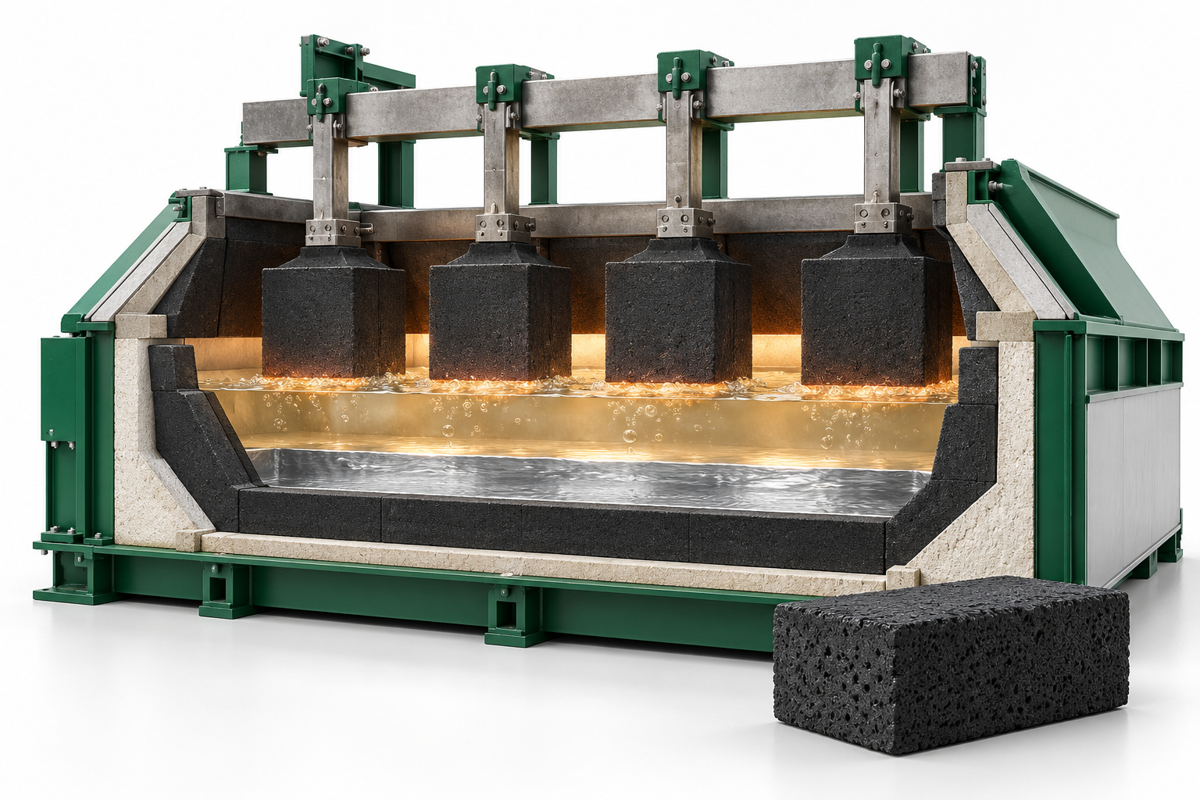
The image used in this article is generated with an AI tool and does not depict any real-time moment
Aluminium’s decarbonisation challenge extends beyond the electricity powering its smelters. Inside the reduction cell, electrode quality influences how efficiently that electricity is used, how much carbon is consumed and how consistently the process performs. Improving electrodes therefore offers producers a practical opportunity to address operating costs and emissions together.
For Switzerland-based R&D Carbon, understanding the relationship between raw materials, electrode quality and industrial performance has been a focus for four decades. Founded in 1986 by Werner K. Fischer, the company built on carbon research previously undertaken at Swiss Aluminium Ltd., or Alusuisse. Today, it operates from Granges, near Sierre, with a team of 30 specialists serving more than 150 customers worldwide.
The technical challenge begins with the demands of aluminium electrolysis. In the Hall–Héroult process, alumina is dissolved in a molten cryolite-based electrolyte. Direct current drives the reduction reaction, producing liquid aluminium at the cathode while oxygen from the alumina reacts with the carbon anode, forming predominantly carbon dioxide. The anode is consequently both an electrical conductor and a consumable material that requires replacement.
Conventional prebaked anodes are manufactured using calcined petroleum coke, recycled anode butts and a pitch binder. Their performance depends on the interaction between feedstock properties and manufacturing conditions. Testing helps producers examine these relationships before changes in materials or processing translate into problems in the reduction cell. Research into anode manufacturing identifies raw-material selection and production parameters as important factors in net carbon consumption.
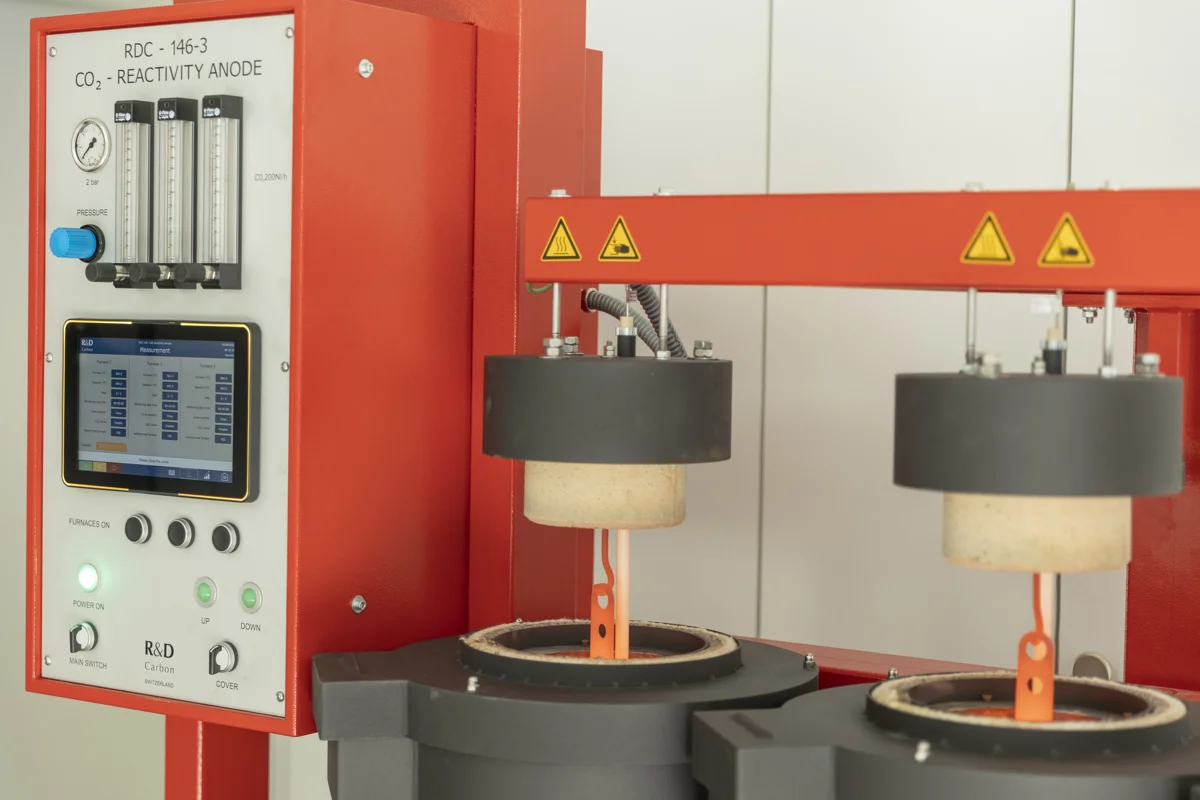
This is where quality control becomes an environmental issue as well as a production concern. Carbon consumed beyond the requirements of the electrochemical reaction increases material use. Reactions between the anode and air or carbon dioxide increase net anode consumption; the resulting carbon dust can also affect bath conditions and current efficiency. Measuring reactivity provides a basis for investigating and controlling these losses.
Electrical resistivity is another critical consideration. At a given current and geometry, lower anode resistance reduces the voltage drop and electrical losses within the anode. The resulting opportunity to reduce electricity use also has implications for indirect emissions, depending on the smelter’s power supply. Density, thermal conductivity and mechanical properties must be considered alongside resistivity: improving anode performance requires a balanced assessment of properties rather than reliance on a single specification.
Anode quality also affects metal purity. Impurities in coke and pitch, such as vanadium, nickel, iron and silicon, are largely transferred to the aluminium as the anode is consumed. Characterising raw materials before use helps producers control these contaminants and meet increasingly demanding metal specifications.
R&D Carbon’s proposition is to make that assessment measurable. Its range comprises more than 50 instrument types for coke, pitch, anodes and cathodes. The equipment portfolio covers density, electrical resistivity, air and carbon dioxide reactivity, thermal conductivity and mechanical properties, with instruments supporting relevant ISO and ASTM test methods. Applications extend from evaluating new raw-material sources and optimising process parameters to routine laboratory quality control.
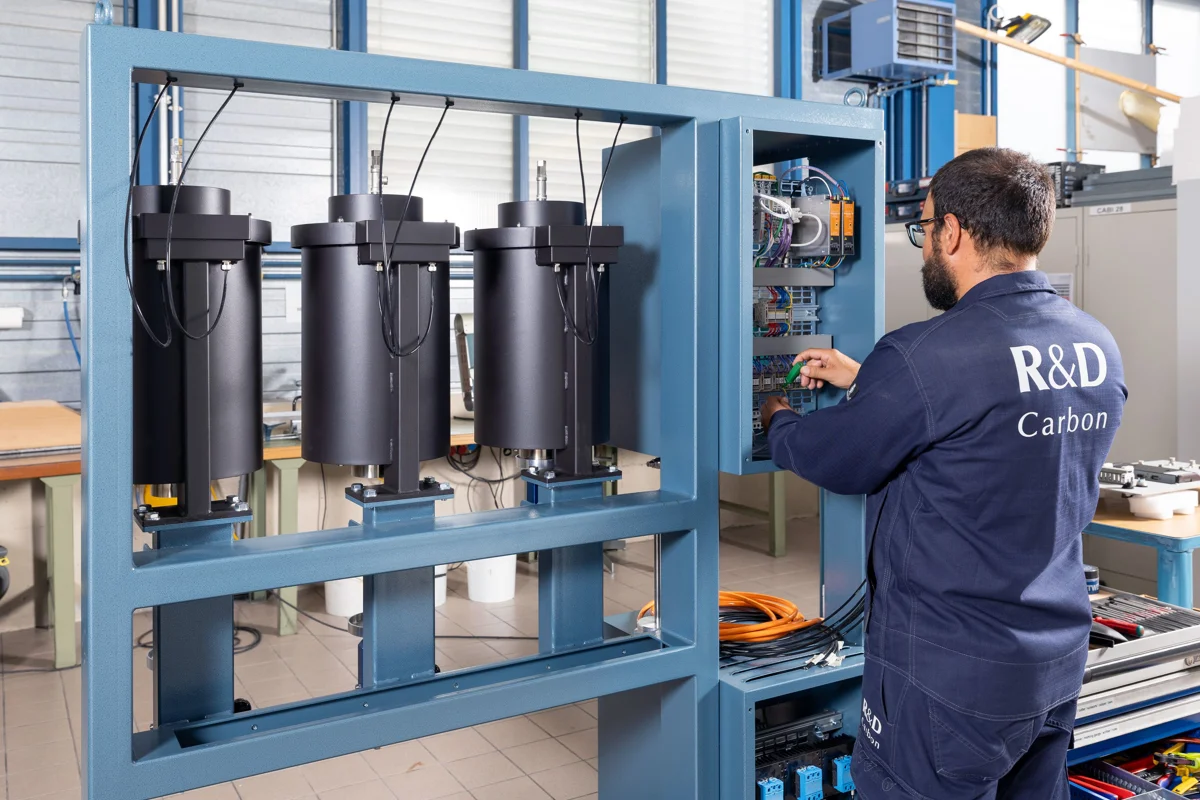
Certified reference materials, consumables and spare parts complement the equipment range. These support the calibration and continuing operation of laboratory instruments, helping producers maintain the measurement capability on which their quality decisions depend.
The company also connects laboratory work with industrial investigation. Its research facilities and pilot plant support material evaluation and process development, while technical audits, benchmarking and continuing support examine performance from raw materials through to pot operation. The objective is to turn analytical results into informed production decisions.
R&D Carbon’s Swiss-made instruments are designed and built in Granges and validated in its own laboratory. Maintenance, repair, equipment retrofits and training extend R&D Carbon’s support beyond installation, helping customers sustain testing capability as equipment and operational requirements evolve. Details of this maintenance, calibration, retrofit and training services are available at www.rd-carbon.com.Insert 4 Photo Retrofit – Extend Lifetime of your R&D Carbon Test Equipment
Testing is where improvement starts: it gives producers the evidence needed to select materials, adjust processes and confirm that improvements deliver results in operation. Through its test equipment, laboratory services, technical assistance and training, R&D Carbon helps producers reduce CO2 emissions, improve metal quality and lower energy consumption.
R&D Carbon will participate in ICSOBA 2026 in Bengaluru, taking place from November 15 to 20. Visitors can meet the team at booth 01 to discuss carbon testing, laboratory requirements and electrode performance.
Grow with
AL Circle