AlCircle News Edited By "Pratyusha Chatterjee"

A writer with 5+ years of experience in the communication industry, Pratyusha Chatterjee has indulged in content from the business, lifestyle, travel industries and more. Apart from news and content, Pratyusha is immensely fond of participating in cultural events and managing them.
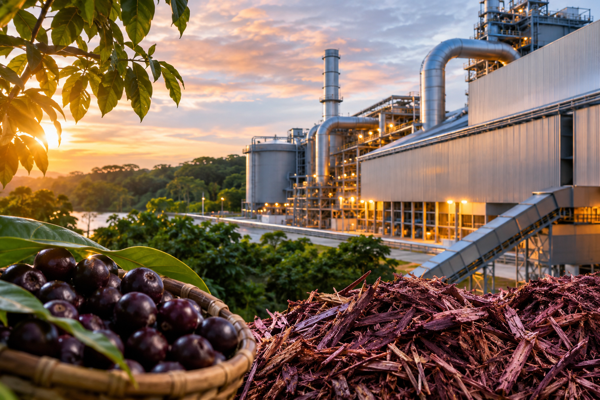
Hydro converts 279,000 tonnes of açaí waste into industrial fuel to reduce coal use at Alunorte alumina refinery
Hydro is turning an agricultural waste challenge into an industrial energy opportunity in Brazil, using discarded açaí pits as biomass fuel to reduce coal consumption at its Alunorte alumina refinery. The initiative, developed in partnership with the Federal University of Pará (UFPA), is creating a new link between the Amazon's agricultural economy and the aluminum industry's decarbonization efforts. Since its introduction, the project has processed approximately 279,000 metric tonnes of açaí pits, transforming a material traditionally treated as waste into an alternative source of thermal energy. The initiative also supports local businesses involved in biomass collection and processing, demonstrating how regional agricultural resources can contribute to more sustainable alumina...
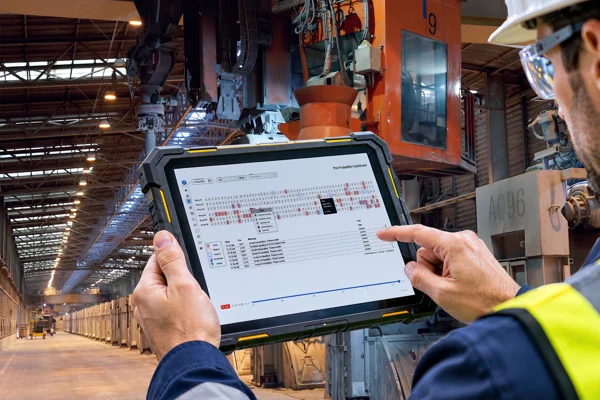
Can predictive AI give aluminium smelters a wider window to act?
In the aluminium industry, pots rarely go from normal operation to failure without warning signs. Changes in electrical behaviour, thermal conditions, and metal or bath chemistry provide indications of changes and developing problems. The difficulty is recognising what these changes mean and how significant they are, particularly when no individual parameter appears sufficiently abnormal to trigger concern. This is a familiar operational challenge for Reduction teams as a potline contains hundreds of individual units, each with its own operating history and evolving conditions. Keeping track of them requires continuous monitoring, considerable process knowledge, and the ability to distinguish routine variations from signs of deterioration. Conventional monitoring systems and alarm...
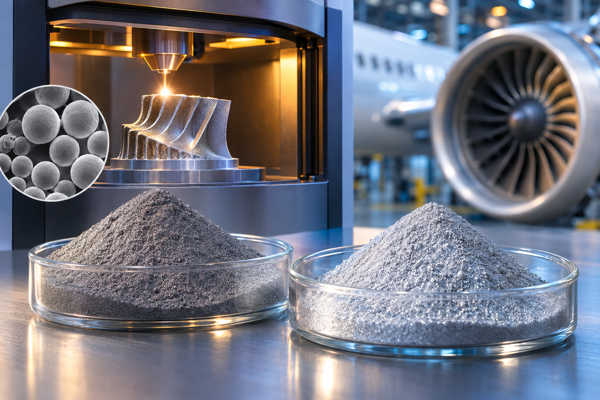
Tekna and Safran sign long-term deal for titanium and aluminum powders as 25% of future engine parts target 3D printing
Tekna Holding ASA takes another step forward in the aerospace additive manufacturing supply chain as the Canada-based company signs a long-term supply agreement with French aerospace group Safran for titanium and aluminum alloy powders. The partnership builds on nearly a decade of collaboration and is expected to support the industrialization of metal 3D printing across aerospace and defense applications. Under the agreement, Tekna will supply Safran with two specialized metal powder grades: titanium alloy Ti-6Al-4V and aluminum alloy AlSi7Mg. Both materials will support Safran's existing manufacturing operations and its broader adoption of additive manufacturing technologies. The agreement also incorporates a demand-forecasting protocol, enabling Tekna to anticipate Safran's material...
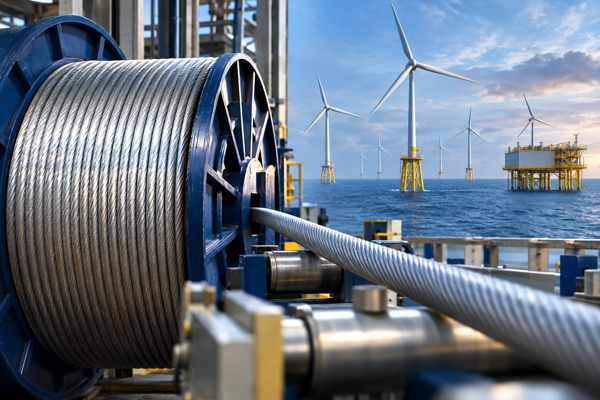
NKT Begins HVDC cable production for 2 GW IJmuiden Ver Beta offshore wind project using Hydro’s low-carbon aluminium
NKT has started manufacturing high-voltage direct current (HVDC) power cable systems for the Netherlands’ IJmuiden Ver Beta offshore grid connection, incorporating low-carbon aluminium wire rods supplied by Hydro. The cable systems are being manufactured for TenneT, the Dutch-German transmission system operator responsible for developing the IJmuiden Ver Beta offshore grid connection. The aluminium wire rods used in production are supplied by Hydro under a long-term agreement signed in 2024. To know the world's future aluminium recycling market and its growing trends, download our report: World Recycled ALuminium Market Analysis Industry Forecast Produced under Hydro’s REDUXA brand, the aluminium wire rod has a reported carbon footprint of 3.7 kg CO₂e per kg, approximately 40 per cent...

Jupiter Wagons, South Korea’s Woojin sign 80:20 JV to manufacture metro trains, aluminium car bodies in India
India’s railway manufacturing sector is moving further up the technology value chain as Kolkata-based Jupiter Wagons Limited (JWL) joins hands with South Korea’s Woojin Industrial Systems Co., Ltd. to enter the metro coach and railway propulsion markets. The partnership combines domestic manufacturing capabilities with Korean railway technology, opening a new avenue for locally manufactured metro trains, aluminium car bodies and advanced propulsion systems. Under the proposed joint venture, Jupiter Wagons will hold an 80 per cent stake, while Woojin will own the remaining 20 per cent. Jupiter Wagons expands into metro coaches and propulsion systems The partnership marks Jupiter Wagons' entry into two technology-intensive segments of the rolling stock industry: complete metro coaches and...
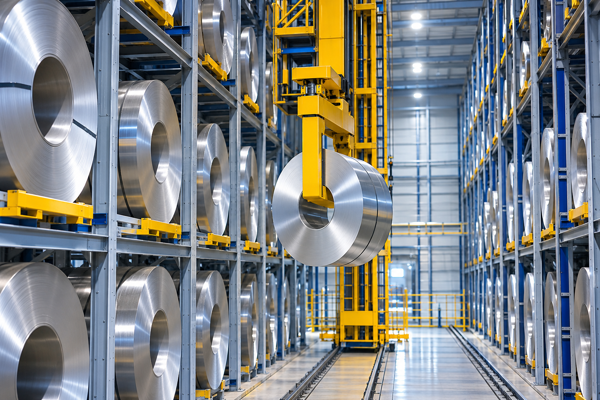
Here’s how automated coil storage emerges as a critical link in aluminium manufacturing efficiency
As rolling mills expand their capacities and product portfolios become more demanding, the movement and storage of aluminium coils have become important considerations in plant design. These coils are not only heavy but can also retain considerable heat after rolling, making their handling a complex engineering exercise. Limited warehouse space, rising operating costs and the need to maintain uninterrupted production add further pressure on manufacturers to rethink conventional storage and material-handling practices. This is where automated intralogistics is gaining importance. Instead of relying on forklifts and other manually operated equipment, manufacturers are increasingly considering integrated systems that can transport, store, retrieve and deliver coils between production stages...
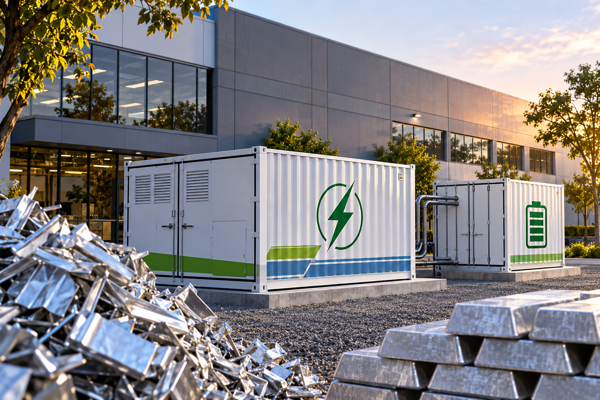
Voya Energy secures 27,900-SqFt Hayward site for aluminum-fueled power pilot
Voya Energy is moving its aluminum-based power generation technology closer to commercial deployment after securing a new headquarters and pilot-production facility in Hayward, California. The development marks a step forward for the company’s plan to use aluminum as an alternative fuel for generating electricity, particularly for data centers and industrial facilities facing constraints in accessing reliable grid power. The facility will bring Voya’s corporate and technical operations together, providing the infrastructure needed to advance engineering, system integration, testing and pilot manufacturing. Hayward facility to support pilot production and testing Voya Energy has signed a lease for a property at 24540 Clawiter Road in Hayward, with plans to move into the premises in...

Tianshan Aluminum to distribute RMB 1.37 billion in 2026 interim dividend
Tianshan Aluminum Group is set to distribute a cash dividend to its shareholders for the first half of 2026, with the payout scheduled for 27 November. The distribution follows approval by shareholders at the company's general meeting held on 13 November, completing the formal approval process for the interim reward. Investors registered as shareholders at the close of trading on 26 November will be eligible for the payment. Under the approved plan, eligible shareholders will receive RMB 0.30 per share before tax. The distribution will be made entirely in cash, with no bonus shares issued and no conversion of capital reserves into share capital. Explore: The most comprehensive and forward-looking industry-focused report – Global Bauxite & Alumina Market Forecast to 2036: Supply–Demand,...
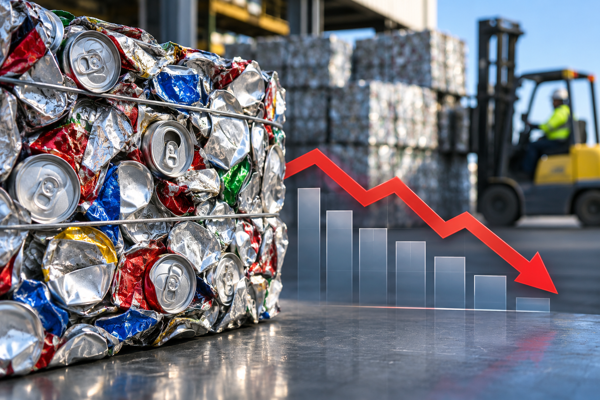
US aluminum can scrap falls 0.66% to $2,636/t as Midwest premium futures weaken
The US aluminum scrap market is showing signs of cooling as falling Midwest premium expectations and weaker primary aluminum prices put pressure on used beverage can (UBC) scrap values. The latest decline highlights how closely recycled aluminum pricing in the United States is tied to regional trade premiums, rather than movements on the London Metal Exchange (LME) alone. The LME's US UBC scrap contract, which settles against a mill-grade delivered price index, closed at $2,635.63 per metric ton on November 18, marking a daily decline of 0.66%. The downward movement reflects growing pressure across the US aluminum pricing structure, with both the underlying metal benchmark and regional premium losing momentum. US UBC scrap prices retreat as November weakness builds The latest movement...
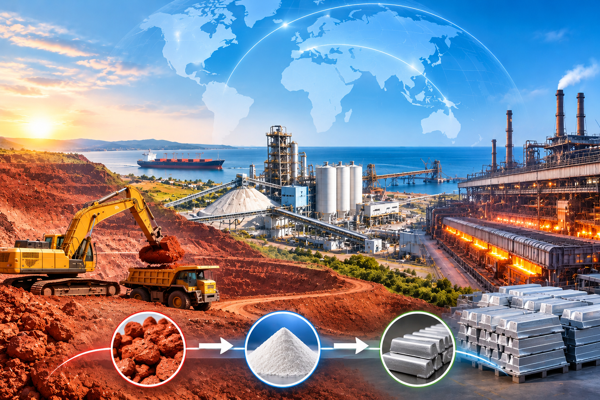
AL Circle Analysis: Guinea’s 183Mt bauxite output, China's 46Mt aluminium push & Indonesia’s 2.77bt reserves rewrite global supply scene
The global aluminium industry is facing an interesting contradiction, with bauxite production expanding, countries racing to establish domestic alumina refining capabilities, and China heading towards another record year of primary aluminium production. Yet, higher output does not necessarily translate into stronger pricing power, secure raw material availability or better market access. And evidently, the tension is becoming rippling across the entire aluminium value chain. Today we are going to connect the dots across the global bauxite, alumina and primary aluminium markets to examine how these developments may be today maybe five years from now intertwine into a singular market volatility. Bauxite supply: Guinea's pricing ambitions meet Ghana's processing plans Guinea produced almost...
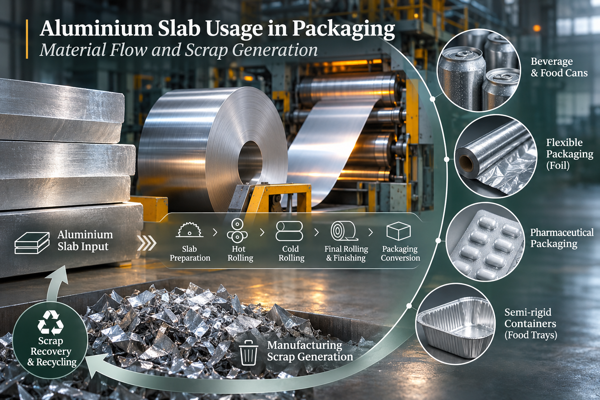
Trace aluminium from slab to packaging, examining conversion yield, manufacturing scrap recovery and regional demand
A beverage can, a pharmaceutical blister pack and a semi-rigid aluminium food tray may all originate from the same broad category of rolled aluminium, but their manufacturing requirements are far from identical. The difference lies in the thickness, alloy composition, surface quality and formability demanded by each application. AL Circle’s material-flow estimates place aluminium slab usage in packaging at approximately 20.64 million tonnes, alongside manufacturing scrap generation of 4.13 million tonnes. The estimated conversion yield is around 78%-82%, indicating that a sizeable proportion of the incoming metal is removed during the production and finishing stages. This distinction matters because packaging demand is not simply a question of how much aluminium leaves a canmaking or...
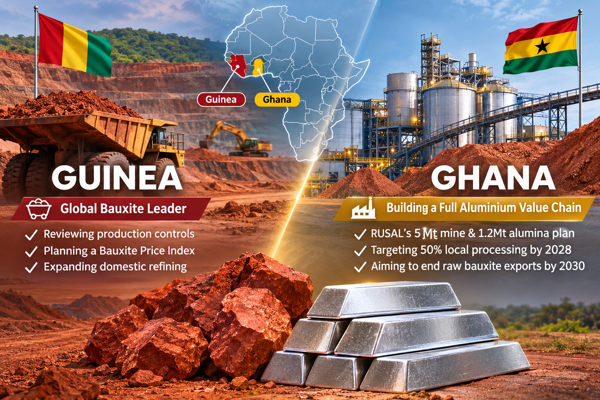
Guinea’s 183Mt bauxite trade vs RUSAL’s 5Mt Ghana mine plan: A gesture towards two paths for West Africa in 2026
Guinea and Ghana are approaching the global bauxite market from very different positions. While Guinea has established itself as the powerhouse of international bauxite supply, its growing export volumes are creating a new challenge of maintaining prices and protecting the economic returns from its mineral wealth. Ghana, meanwhile, is looking beyond raw ore exports, pursuing foreign investment, domestic alumina refining and stronger integration across its aluminium industry. The contrast is becoming increasingly momentous, with Guinea considering production controls and a national bauxite pricing mechanism to strengthen its influence over the market. Au contraire, Ghana is attracting international companies, including Russia’s RUSAL, to develop its largely untapped deposits and establish...
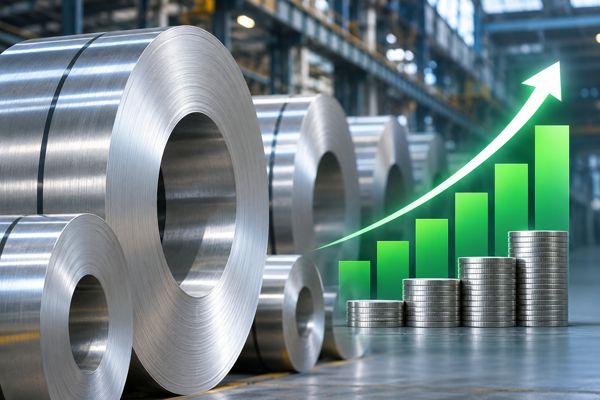
Manaksia Aluminium Q2 FY27 net profit jumps 21.7% to INR 13.5 million despite revenue decline
Manaksia Aluminium Company Limited reported a year-on-year increase in net profit for the second quarter of FY2026-27, supported by an improvement in pre-tax earnings despite lower revenue. The Kolkata-based aluminium manufacturer also disclosed developments concerning a substantial GST demand, which it is contesting through an appeal. Manaksia Aluminium records higher profitability in Q2 FY27 For the quarter ended September 30, 2026, Manaksia Aluminium posted a net profit after tax (PAT) of INR 13.5 million (USD 140,000), compared with INR 11.1 million (USD 119,000) in the corresponding quarter of the previous financial year. The increase stands at a 21.7 per cent year-on-year improvement in profitability. However, the company’s revenue from operations declined to INR 1.248 billion (USD...
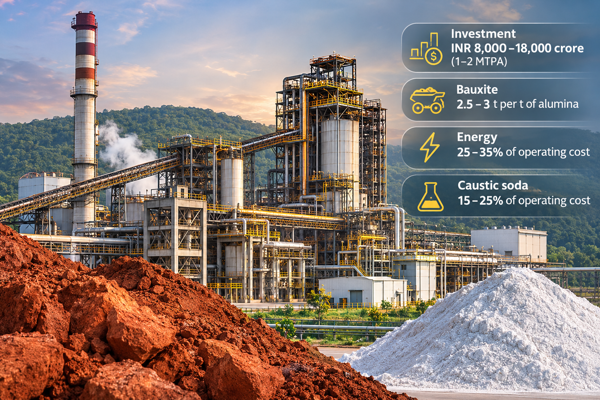
India’s alumina refinery investment landscape: What does it really cost to build a competitive refinery?
India’s alumina refining industry is expanding, but establishing a commercially competitive refinery involves considerably more than securing bauxite and installing processing equipment. Raw material quality, energy availability, chemical consumption, logistics and environmental compliance all influence the economics of a project. The scale of the opportunity is evident from India's aluminium production base. The country produced approximately 4.2 million tonnes of primary aluminium in FY 2024-25, alongside 24.7 million tonnes of bauxite, according to the Ministry of Mines. However, having access to domestic bauxite does not automatically translate into competitively priced alumina. With established producers expanding their refining capacities, the question for prospective investors is...
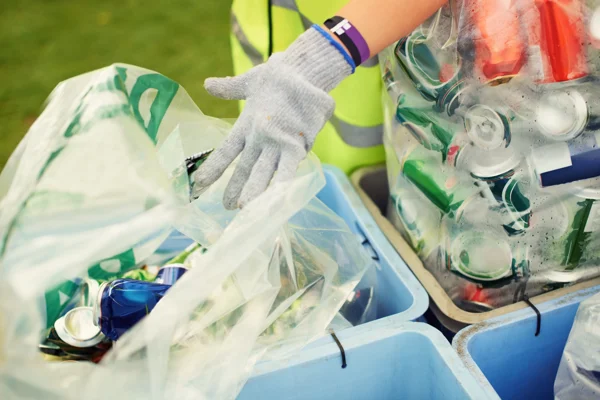
Greece approves DRS Hellas’ €260 million collection project, targets 5 billion containers annually
Greece is preparing to give aluminium cans and 3plastic bottles a new economic value, with consumers set to receive their deposits back when they return used beverage containers for recycling. The initiative marks a significant step towards strengthening the country's packaging recovery infrastructure, while creating a more organised supply of recyclable materials for the packaging industry. The nationwide Deposit Return System (DRS), approved by the Hellenic Recycling Agency for DRS Hellas, is expected to begin operations in 2027. The initiative will introduce a nationwide collection network, with the potential to handle approximately 5 billion beverage containers annually. DRS Hellas to establish 8,700 collection points across Greece DRS Hellas plans to develop a network of 8,700...
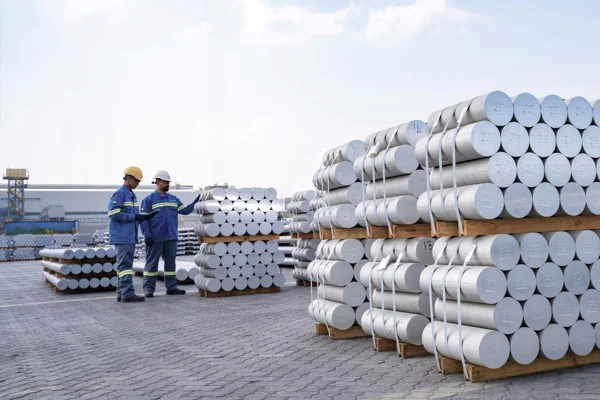
EGA raises EBITDA margin to 30% despite Al Taweelah disruption, while targeting full smelter recovery by Q1 2027
Emirates Global Aluminium (EGA) has strengthened its profitability despite a challenging nine-month period marked by operational disruptions, constrained exports and reduced aluminium production. The UAE-based producer reported an improved adjusted EBITDA margin for the first nine months of 2026, supported by higher realised aluminium prices, a stronger value-added product mix and cost-control measures. Meanwhile, the company is progressing with the restoration of its Al Taweelah facilities, expanding its international recycling footprint and advancing its global smelting technology partnerships. EGA recorded adjusted earnings before interest, tax, depreciation and amortisation (EBITDA) of USD 1.572 billion (AED 5.773 billion) during January-September 2026, compared with USD 1.738 billion...

All about how permanent-magnet engineering is tackling more than one aluminum casthouse challenge
Aluminum casthouses are facing a growing operational challenge of increasing the use of recycled metal without compromising melt quality, recovery rates or production efficiency. As manufacturers look to incorporate more post-consumer recycled (PCR) aluminum, processing lightweight scrap, machining chips and other low-density materials has become increasingly important. Such materials are difficult to introduce into conventional melting furnaces, making efficient scrap feeding and submergence essential to improving recycling performance. The challenge extends beyond scrap preparation. Maintaining consistent temperature and chemical composition throughout the molten metal bath is critical to producing specification-compliant aluminum. Equipment used for circulation and stirring must...

Global alumina production remains below 2025 levels despite a Q3 rebound, reaching 114 million tonnes in 9M2026
The third quarter brought a clear improvement in global alumina production. It did not, however, bring production back to the level recorded a year earlier. Global alumina output has reached 114.625 million tonnes in the first nine months of 2026, down 330,000 tonnes or 0.29% (114.955 million tonnes in 2025) year-on-year. China's estimated production increased, but declines across most other reporting regions erased that gain. The quarterly sequence reveals how the production gap has developed. In the July to September 2026 quarter, alumina output reached 39.396 million tonnes, an increase of 5.54% over the preceding quarter. Yet the same quarter in 2025 had delivered 39.675 million tonnes. The latest production total was therefore 279,000 tonnes lower Y-o-Y. The first quarter of 2026...

