AL Circle Analysis: Guinea’s 183Mt bauxite output, China's 46Mt aluminium push & Indonesia’s 2.77bt reserves rewrite global supply scene
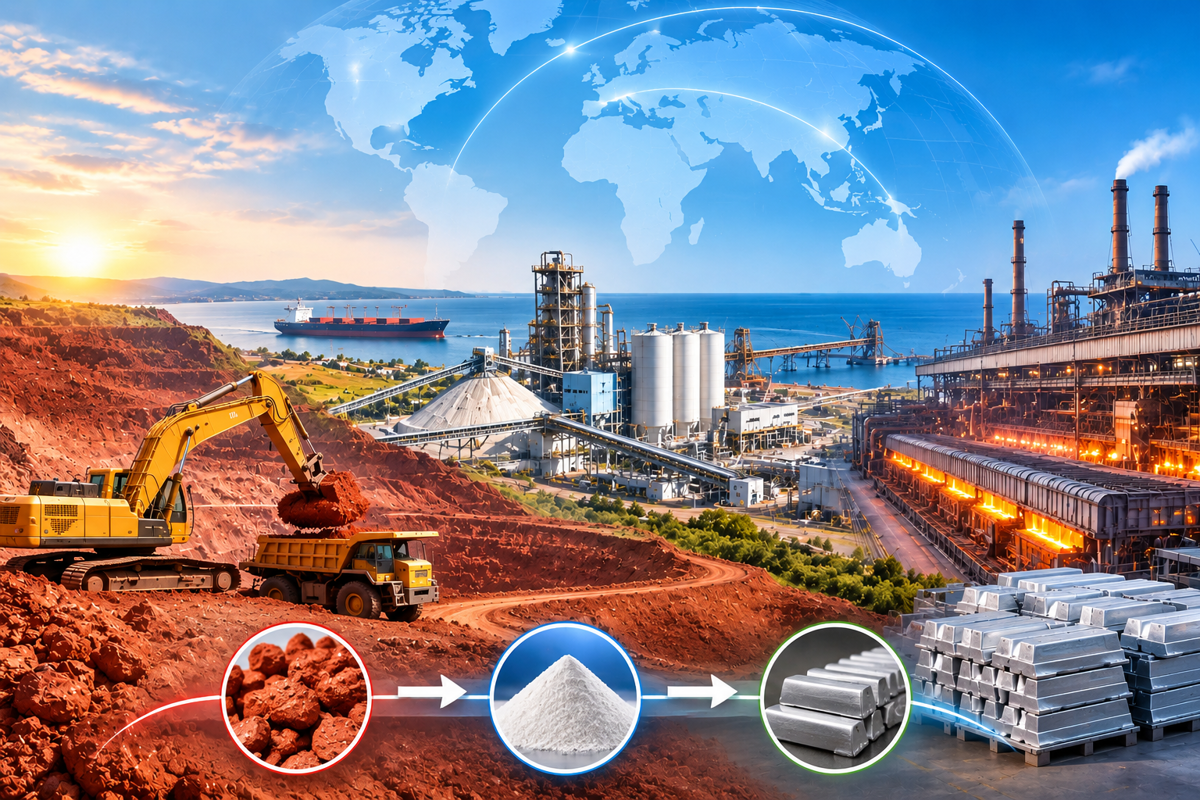
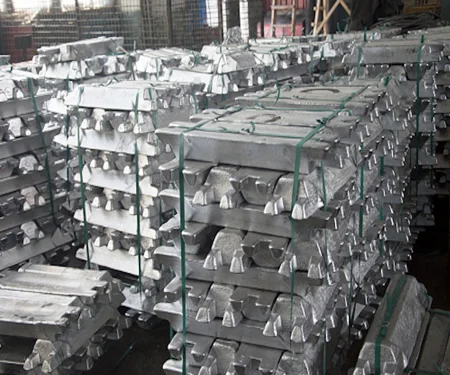
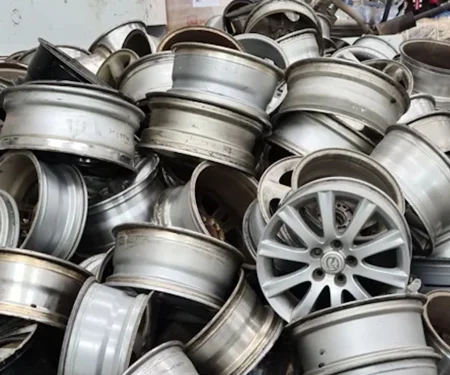
The image used in this article is generated with an AI tool and does not depict any real-time moment
The global aluminium industry is facing an interesting contradiction, with bauxite production expanding, countries racing to establish domestic alumina refining capabilities, and China heading towards another record year of primary aluminium production. Yet, higher output does not necessarily translate into stronger pricing power, secure raw material availability or better market access.
And evidently, the tension is becoming rippling across the entire aluminium value chain.
Today we are going to connect the dots across the global bauxite, alumina and primary aluminium markets to examine how these developments may be today maybe five years from now intertwine into a singular market volatility.
Bauxite supply: Guinea's pricing ambitions meet Ghana's processing plans
Guinea produced almost 183 million tonnes of bauxite in 2025, while exports increased by 25 per cent during the year, with China receiving 74 per cent of shipments. Yet, higher supply has coincided with weaker ore prices, as rising inventories in China and pressure across alumina markets have weighed on producer margins.
In April 2026, free-on-board Guinea bauxite prices reportedly fell to USD 32-38 per tonne, their lowest level in four years.
The country is now considering production regulations and a proposed Guinea Bauxite Index (GBX), potentially launching in 2027. Unlike aluminium and copper, bauxite does not have a widely recognised international exchange benchmark. Transactions are largely negotiated through individual contracts, making transparent price discovery difficult.
So, the proposed index could improve pricing transparency and strengthen Guinea’s negotiating position with international buyers.
Simultaneously, the Ghana government has announced a USD 1.5 billion mineral-processing programme, targeting domestic processing of bauxite, manganese, lithium and gold. Ghana aims to process at least 50 per cent of its bauxite and manganese locally by the end of 2028, moving towards complete domestic processing by 2030.
The proposed transformation is receiving support from international investment interest. Russia’s RUSAL has signed an agreement with the Ghana Integrated Aluminium Development Corporation (GIADEC) to develop the Nyinahin bauxite deposit, with planned mining capacity of up to 5 million tonnes annually.
The second phase involves a proposed alumina refinery with annual capacity of 1.2 million tonnes. GIADEC estimates the refinery's development cost at more than USD 1.5 billion, with construction expected to take approximately 36 months.
Explore the production, demand and consumption forecasts of bauxite and alumina in our report: "Global Bauxite & Alumina Market Forecast to 2036: Supply–Demand, Trade Flows & Price Outlook"
The project will alter the notion of Ghana not yet having a domestic alumina refinery and currently importing alumina to supply its Volta Aluminium Company (VALCO) smelter.
Key takeaways
- Guinea’s proposed GBX could change how ore quality, logistics and supply conditions are reflected in commercial negotiations.
- Production regulations in Guinea could influence export availability and procurement strategies.
- Ghana offers opportunities in mining and alumina refining, but infrastructure, energy availability and project execution remain critical.
- Greater domestic processing in Ghana will potentially uplift West Africa’s position in international bauxite and alumina trade.
Bauxite-to-alumina supply chains: Indonesia expands while China deepens its sourcing concentration
Indonesia is positioning itself as a major alumina refining and primary aluminium production centre outside China. Its reported bauxite reserves stand at approximately 2.77 billion wet metric tonnes (WMT), supported by total resources of around 7.28 billion WMT.
West Kalimantan dominates the resource base, holding approximately 2.31 billion WMT of reserves.
Following its June 2023 bauxite export ban, Indonesia has been encouraging domestic processing rather than allowing the mineral to leave the country as raw ore. Its smelter-grade alumina capacity is projected to increase from 7 million tonnes annually in 2025 to 32.5 million tonnes by 2030.
However, the expansion presents a resource-security challenge. Annual bauxite requirements could increase from approximately 14 million tonnes to 65 million tonnes over the same period. The Centre for Research on Energy and Clean Air has warned that proven reserves of approximately one billion tonnes could be depleted in less than 12 years under the planned expansion trajectory.
The country's refining ambitions therefore depend on more than investment approvals. Long-term bauxite availability will determine how sustainably the additional capacity can operate.
Australia ships 70.8% of its bauxite exports to China
China's dependence on imported bauxite remains another important part of this equation.
Australia exported 51.44 million tonnes of bauxite during January-October 2026, with China accounting for 70.8 per cent, or 36.41 million tonnes.
Intriguingly, total Australian exports declined by 4.8 per cent year-on-year, while China-bound shipments increased by 2.7 per cent. Shipments to destinations outside China fell by 19.1 per cent.
Key takeaways
- Expanding refinery capacity must be balanced against long-term resource availability.
- China's increasing share of shipments highlights the importance of maintaining access to its refining market.
- Concentration of raw material sourcing creates greater exposure to changes in major supplier markets.
- Indonesia's refinery expansion offers opportunities, but raw material security will remain a major determinant of project economics.
Alumina refining: India's investment opportunity comes with a high price tag
India's alumina refining ambitions highlight another important question for the upstream industry — how much does it actually cost to establish a competitive processing facility?
The country produced approximately 24.7 million tonnes of bauxite and 4.2 million tonnes of primary aluminium in FY2024-25. However, developing a competitive alumina refinery requires considerably more than access to domestic ore.
Indicative investment estimates suggest that a smelter-grade alumina refinery with annual capacity of 1-2 million tonnes could require INR 80 billion (USD 863.44 million) to INR 180 billion (USD 1.94 billion). Smaller speciality and chemical-grade alumina facilities could involve investments of INR 1.5 billion (USD 16.2 million) to INR 10 billion (USD 107.9 million).
Looking for alumina refinery raw materials? Compare grades, explore sourcing options, and connect with global suppliers on AL Biz.
Key takeaways
- Assess the complete project cost, including infrastructure, utilities and residue management, rather than relying solely on processing plant estimates.
- Ore quality, transportation distance and consistency will influence refinery procurement decisions.
- Expanding established facilities may offer different investment economics from developing greenfield refineries.
- Competitive domestic alumina production will depend on raw material security and operational efficiency.
Primary aluminium: China's 46Mt production trajectory meets a changing trade environment
China's primary aluminium production continues to gather pace. During January–October 2026, output increased 3.5 per cent year on year to 38.85 million tonnes.
October production stood at 3.85 million tonnes, compared with 3.91 million tonnes in September. Despite the monthly slowdown, cumulative output indicates that China's annual production could exceed 46 million tonnes in 2026.
The country has maintained its annual aluminium smelting capacity ceiling of approximately 45 million tonnes since 2017. However, its 2025 production had already reached 45.02 million tonnes.
The latest trajectory suggests that the country's production is moving further beyond that stipulated ceiling. With limited scope for domestic capacity additions, Chinese producers are also exploring overseas investments, including in Indonesia, Kazakhstan, Angola and Saudi Arabia.
While China is expanding production, the composition of available metal in London Metal Exchange (LME) warehouses is raising another concern for international buyers.
Russian-origin aluminium accounted for 99.98 per cent of available LME aluminium stocks at the end of October, with Indian-origin metal representing the remaining 50 tonnes.
Total available inventories declined by 4 per cent month on month to 216,950 tonnes, their lowest level since March 2025. Russian stocks also fell by 9,725 tonnes to 216,900 tonnes.
However, their overwhelming share of available inventories remained virtually unchanged. Russian aluminium produced before April 13, 2024, remains eligible for LME trading, while subsequent production is excluded under the exchange's rules.
Key takeaways
- China’s production trajectory reinforces its influence over global metal supply and trade flows.
- The concentration of Russian-origin metal in LME warehouses makes inventory origin an important commercial consideration.
- Assess available inventory volumes alongside origin, exchange eligibility and physical delivery requirements.
- Monitor overseas Chinese smelting investments as producers explore capacity opportunities beyond the domestic ceiling.
Aluminium trade: Europe and Canada navigate different supply pressures
Europe's aluminium market is experiencing a different kind of supply challenge. An unusually sharp backwardation in LME prices encouraged stockholders to liquidate inventories, putting pressure on physical premiums.
The Rotterdam duty-paid aluminium P1020A premium declined to USD 470-500 per tonne on November 13, down 12.6 per cent from USD 540-570 per tonne on November 10.
The LME cash-to-three-month spread reached a backwardation of USD 176.80 per tonne earlier in the week before narrowing to USD 137.75 per tonne.
The extreme market structure encouraged inventory holders to release available metal rather than maintain their positions. However, cautious buyers and low physical market liquidity continued to complicate trading conditions.
Kazakhstan's aluminium exports to the European Union reached 110,184 tonnes in 2025, generating EUR 274 million in revenue. Europe's share of the country's total aluminium exports increased from approximately 6 per cent to 54 per cent.
However, the EU's Carbon Border Adjustment Mechanism (CBAM), effective from January 1, 2026, is introducing additional compliance requirements for aluminium exporters.
Importers must account for embedded carbon emissions, with the associated cost linked to the EU Emissions Trading System (ETS). The first annual CBAM declaration covering 2026 must be submitted by September 30, 2027.
Across North America, Canada has expanded tariff exemptions on selected Chinese aluminium imports, adding nine aluminium tariff items to its relief framework and extending the exemptions through 2028.
The measures cover products that are insufficiently available or unavailable in Canada's domestic market, allowing manufacturers greater flexibility in sourcing essential metal inputs.
However, Canada's wider 25 per cent surtax on specified Chinese aluminium imports remains in place. The latest arrangement is therefore a targeted response to domestic supply constraints rather than a complete rollback of trade restrictions.
Key takeaways
- Monitor LME spreads and physical premiums together when evaluating inventory positions.
- Strengthen emissions monitoring and verification systems to prepare for CBAM compliance.
- Maintaining European market access will increasingly depend on carbon competitiveness.
- Review the expanded tariff exemptions for sourcing opportunities while monitoring the wider trade restrictions.
Unlock key insights from leading companies and experts across the aluminium ecosystem with our e-Magazine - Mine to Market: Aluminium Producers & Manufacturers 2026
Grow with
AL Circle












_md.webp)
_md.webp)
_md.webp)