Guinea targets 2027 bauxite index as production reaches 183m tonnes
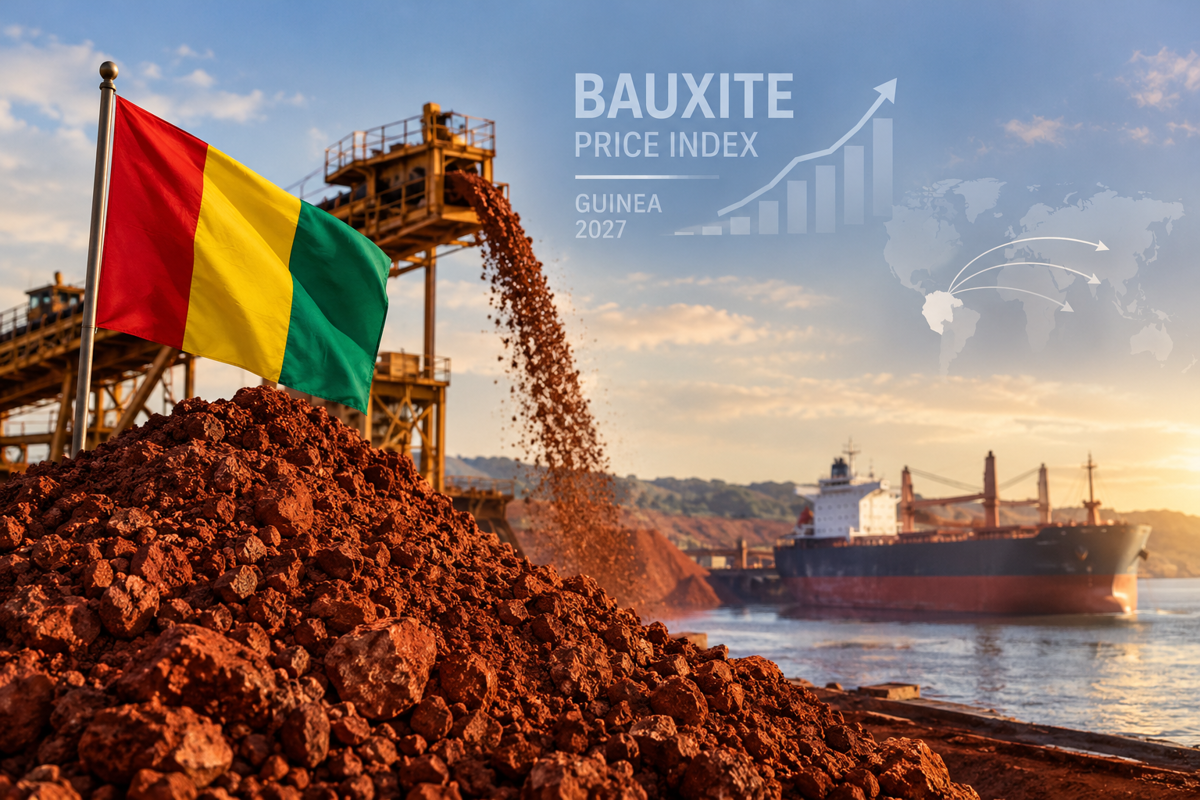
The image used in this article is generated with an AI tool and does not depict any real-time moment
Guinea, the world's largest bauxite exporter, is looking to translate its dominance in the global market into greater pricing power, with plans to introduce a national bauxite price index as early as 2027. The proposed Guinea Bauxite Index (GBX) aims to improve pricing transparency, support higher ore prices and strengthen government revenues from the country's vast mineral resources.
Mining and Geology Minister Bouna Sylla announced the latest timeline during remarks to reporters in Conakry, as reported by Bloomberg. The index is expected to establish a more transparent pricing mechanism for Guinean bauxite, most of which is exported to China for alumina production.
The initiative forms part of a broader effort by Conakry to increase its influence over the country's bauxite trade while securing greater economic returns from its mining sector.
Guinea seeks transparency in bauxite pricing
Unlike commodities such as gold and copper, bauxite does not have a globally recognised benchmark price. Transactions involving Guinean ore are frequently negotiated through individual contracts and affiliated companies, making it difficult to establish representative market prices.
Anthony Everiss, a principal analyst at commodities consultancy CRU, previously told Ecofin Agency that a workable pricing index would need to account for differences in alumina content, reactive silica levels and logistics costs. Regular publication of transparent and verifiable prices would also be essential.
Guinean bauxite's relatively low reactive silica content makes it particularly suitable for China's low-temperature alumina refineries. A pricing mechanism that reflects ore quality could therefore help producers secure more representative returns for their material.
Previous attempts to establish a bauxite benchmark, including an initiative by CRU, faced difficulties because reliable market information was limited. The earlier efforts relied partly on customs data and achieved limited adoption.
For the GBX to gain credibility, participation from mining companies, Chinese joint ventures, Asian alumina refineries and commodity traders will be important. Regular transactions and broader market participation would help establish the index as a meaningful reference for buyers and sellers.
Explore the production, demand and consumption forecasts of bauxite and alumina in our report: "Global Bauxite & Alumina Market Forecast to 2036: Supply–Demand, Trade Flows & Price Outlook"
World's largest bauxite exporter seeks better returns
Guinea's push for a national pricing index comes as the country seeks to strengthen its position in a market where its production scale has not necessarily translated into equivalent pricing influence.
The country produced almost 183 million tonnes of bauxite in 2025, according to Fastmarkets, retaining its position as the world's largest producer. However, prices have faced pressure from rising output and increasing inventories in China.
Fastmarkets reported that bauxite prices had moved towards estimated break-even levels of USD 20-30 per tonne on a free-on-board (FOB) basis, putting pressure on producers' returns.
China remains the dominant destination for Guinean bauxite. Its imports of the ore from Guinea increased by 41.9 per cent year on year to 66.34 million tonnes between January and May 2025, accounting for 77.8 per cent of China's total bauxite imports during the period, according to figures from the General Administration of Customs cited by Mysteel.
For Guinea, improving price transparency is also a way to strengthen public finances. Sylla previously said in July 2025 that the GBX would improve cooperation between mining companies and the tax administration, potentially supporting higher government revenues.
Bauxite pricing index forms part of wider mining reforms
The proposed index is one element of Guinea's broader efforts to increase state participation in its mining industry, improve control over exports and encourage domestic mineral processing.
Rather than imposing a blanket restriction on bauxite exports, the government is seeking to align companies' actual production and export volumes with the commitments made in their original feasibility studies. Compliance is being linked to licensing and export approvals, alongside commitments relating to alumina refining and infrastructure development.
The country's wider measures include:
State marketing: Guinea claims the right to market 15 per cent of each mining company's production under its mining code.
Shipping requirements: At least 50 per cent of output is targeted to be transported on Guinean-flagged vessels through the state-backed company GUITRAM.
Domestic refining: The government aims to establish 6 million tonnes of alumina production capacity by 2030, with projects involving SPIC and Winning Consortium Alumina Guinea targeting operations in 2027 and 2028.
These initiatives fall under the country's Simandou 2040 development programme, which seeks to strengthen the domestic economic benefits of Guinea's mineral resources.
The proposed approach differs from Indonesia's use of outright export bans to encourage domestic processing. Guinea is instead seeking to use existing mining commitments, export controls and state participation to influence how its mineral resources are produced and marketed.
Unlock key insights from leading companies and experts across the aluminium ecosystem with our e-Magazine - Mine to Market: Aluminium Producers & Manufacturers 2026
Delayed timeline raises questions over implementation
Despite the government's ambitions, the proposed bauxite index has already experienced delays. Sylla first announced the GBX in July 2025, indicating that it would become operational in the coming months. The latest timeline now points to a possible launch in 2027.
The government has yet to publish a definitive methodology or confirm a firm launch date. Implementing the wider mining reforms also presents challenges, particularly in monitoring production and export commitments across a large and complex mining sector.
Fastmarkets has reported that authorities remain engaged in gathering and cross-checking company data against export figures, highlighting the administrative demands involved in enforcing the measures.
For the proposed index, the central challenge will be securing sufficient participation from producers, refiners and traders to establish a reliable market reference. Without regular transactions and transparent pricing information, the GBX could struggle to gain widespread acceptance.
If successfully implemented, the index could give Guinea a stronger basis for negotiating bauxite prices while improving transparency across its export market. Its effectiveness, however, will depend on whether the industry adopts it as a credible pricing reference rather than simply another government initiative.
Looking for alumina refinery raw materials? Compare grades, explore sourcing options, and connect with global suppliers on AL Biz.
Grow with
AL Circle












_md.webp)
_md.webp)
_md.webp)