Can aluminium industry waste help build better roads? China tests treated bauxite residue as an alternative road construction material
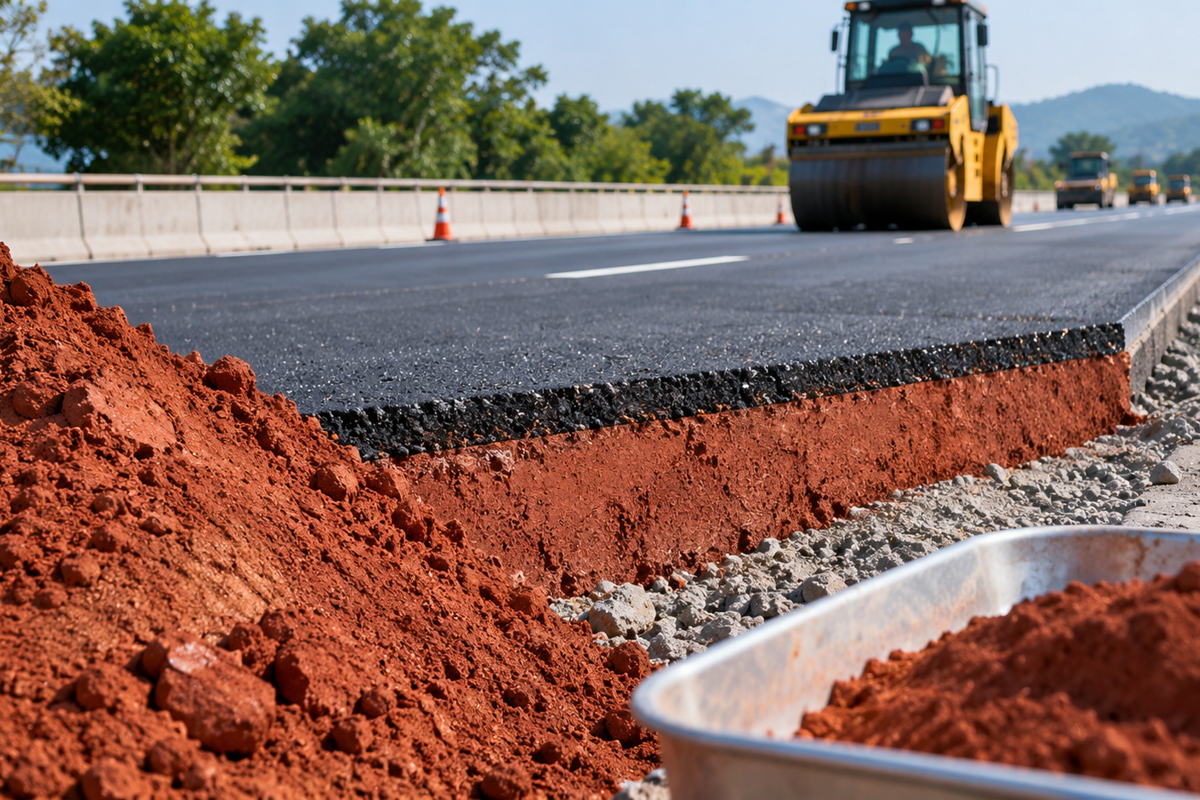
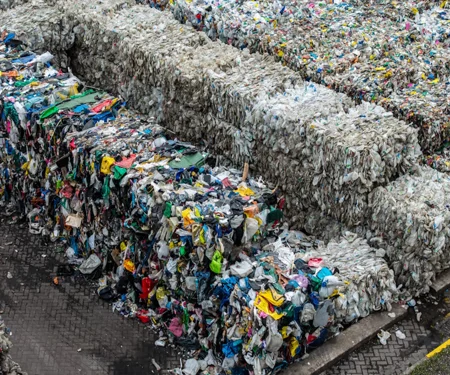
The image used in this article is generated with an AI tool and does not depict any real-time moment
China's highway construction sector has demonstrated a potential new application for red mud, a major waste byproduct of alumina production, after researchers used chemically modified bauxite residue to replace a conventional soil layer along a 4.9km section of the Ji-Qing Expressway in Shandong Province. Field testing found that the treated material achieved a resilient modulus above 90 MPa at all but one measurement point, while core samples recorded an average unconfined compressive strength of 2.4 MPa.
The road section was reconstructed in 2015 as part of a project to widen the existing four-lane expressway to eight lanes to accommodate increasing traffic volumes. The demonstration involved replacing a 20cm-thick layer of lime-stabilised soil with modified red mud, offering an example of how aluminium industry waste could be repurposed for infrastructure applications.
The findings, published in the journal Coatings and associated with the Shandong Transportation Research Institute, highlight the potential of treated bauxite residue as an alternative construction material when its physical and chemical properties are properly addressed.
Explore the production, demand and consumption forecasts of bauxite and alumina in our report: "Global Bauxite & Alumina Market Forecast to 2036: Supply–Demand, Trade Flows & Price Outlook"
Chemical treatment makes red mud suitable for road applications
Red mud, also known as bauxite residue, is generated during alumina extraction from bauxite through the Bayer process. It contains several metal oxides, including iron oxide, aluminium oxide and silicon dioxide. The study estimates that between 1 and 1.8 tonnes of red mud are produced for every tonne of alumina manufactured.
Despite its potential for reuse, untreated red mud presents challenges for direct application in road construction. Its high moisture content, fine particle size, limited water stability and high alkalinity raise concerns about material performance and the possible transfer of potentially harmful substances into the surrounding environment.
To address these limitations, researchers developed a chemical modification method using cement, phosphogypsum and a polymer stabiliser. The treatment was designed to bind the fine particles, improve material strength and restrict the transfer of potentially hazardous substances.
Different treatment dosages, ranging from 4 to 12 per cent of the red mud's weight, were evaluated. The researchers identified approximately 8 per cent as the optimal dosage, with laboratory testing showing that the modified material could achieve a compressive strength of 3 MPa after three days of curing.
A 4.9 km expressway section tests modified bauxite residue
The material was subsequently used in the reconstruction and widening of the Ji-Qing Expressway in Shandong. The demonstration section extended from K289+090.5 to K294+385, covering approximately 4,900 metres. It was 11 metres wide, with the modified red mud forming a 20cm-thick layer beneath the road.
Rather than being treated directly at the construction site, the red mud mixture was prepared at a central plant and transported to the project location. It was then spread over the prepared surface, compacted using vibrating equipment and allowed to cure before the next construction layer was installed.
Maintaining consistent material quality was an important part of the process, as variations in moisture content and stabiliser dosage could affect the strength of the treated residue. Construction requirements also stipulated that the mixture had to be compacted within four hours of mixing. The surface needed to be covered or watered during curing to maintain appropriate conditions.
Following seven days of moist curing, the roadbed underwent bearing plate testing, portable falling-weight device testing and falling-weight deflectometer measurements.
The results showed that all but one measurement point recorded a resilient modulus above 90 MPa. The dynamic deformation modulus exceeded 140 MPa, while measured deflection remained below 100 units of 0.01 millimetres. These findings indicated that the treated material could provide sufficient support for the road structure.
Further testing of samples collected from the completed section recorded an average unconfined compressive strength of 2.4 MPa. Individual results ranged from 2.06 MPa to 2.77 MPa, with the measurements falling within the estimated 95 per cent confidence interval.
Unlock key insights from leading companies and experts across the aluminium ecosystem with our e-Magazine - Mine to Market: Aluminium Producers & Manufacturers 2026
Groundwater monitoring and cost savings highlight reuse potential
Environmental monitoring was also incorporated into the demonstration to assess the potential impact of the modified material on surrounding groundwater. Four monitoring wells were installed around the test sections, with water samples collected both before and after construction.
The monitored groundwater eventually maintained a pH between 7 and 8, while concentrations of various potentially harmful substances remained below the applicable limits. The study reported no deviation associated with the red mud section.
The findings are consistent with wider research into the use of treated industrial residues in infrastructure. A review published in Minerals also examined the application of modified red mud in road construction, including its potential to meet earthworks requirements as an alternative to ordinary soil and other natural materials.
The Shandong study also identified an economic benefit. Using locally treated red mud in compacted earthworks was estimated to save approximately CNY 10 per tonne compared with conventional lime- and cement-stabilised soil, under the study's specified conditions and transport distance of 15–20km.
The findings demonstrate how appropriately treated aluminium industry waste could offer an alternative material for certain road construction applications while potentially reducing reliance on conventional earthworks materials. However, the results do not establish that untreated red mud can be used directly in highways. Its chemical composition, stability and environmental effects require careful assessment, with appropriate treatment, construction controls and groundwater monitoring remaining essential to its application.
Looking for alumina refinery raw materials? Compare grades, explore sourcing options, and connect with global suppliers on AL Biz.
Grow with
AL Circle












_md.webp)
_md.webp)
_md.webp)