Red Mud
Red mud-based concrete cuts carbon footprint by up to 79.8% in Trinity College Dublin study
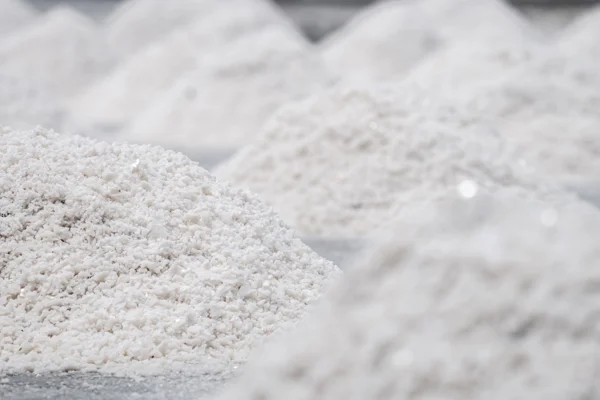
Researchers at Trinity College Dublin are testing a new type of concrete made using red mud, a residue from alumina refining. The project, supported by Enterprise Ireland and carried out with Gannon Eco and McGrath Quarries, has progressed from laboratory research to trials using industrial batching equipment. The university reported on 22 October that the geopolymer concrete formulations reduced the carbon footprint by 67.8–79.8 per cent against a CEM II-A/L cement reference. The comparison included raw material supply, transport and manufacturing. To know the futuristic market and value proposition of red mud, explore the report " A Comprehensive Analysis of Bauxite Residue (Red Mud): Sustainability, Resource Recovery and Strategic Recommendations " Laboratory tests also found that the...
MRD’s 94.9% gallium recovery puts bauxite back in the critical minerals spotlight
Mount Ridley Mines has reported 94.9 per cent gallium recovery from a third-party bauxite sample using its patent-pending Selectro process, alongside recoveries of 92 per cent aluminium and 97 per cent iron in a single low-temperature leach. The test also produced a silica-rich residue instead of conventional red mud, highlighting the technology’s potential to recover multiple metals from bauxite through one processing route. The sample was provided by Australian Silica Quartz Group from its Darling Range bauxite project in Western Australia. It comprised material collected from 16 vacuum drill samples across four holes at the Athena and Ceres prospects. Containing 80 parts per million of gallium, the sample yielded an extraction rate of 94.9 per cent into solution. Mount Ridley said this...
Grow with
AL Circle
Price
→Events

Business Cards
A report that reveals where the aluminium casting industry is heading and how businesses can act.
LEARN MORE
A report that reveals where the aluminium casting industry is heading and how businesses can act.
LEARN MOREIndia’s alumina refinery investment landscape: What does it really cost to build a competitive refinery?
AL Circle Analysis: Scrap in EU, Thailand, 25%Trimet CO₂ cut, India’s 16.3tCO2 gap draw aluminium supply chain
From scrap recovery to precision processing: Five OEMs shaping aluminium manufacturing
AL Circle Analysis: 278% China-US FRP rise, $692m Germany-France FRP trade, India’s 300m-can gap draw aluminium map
AL Circle Analysis: Alumina prices fall 22%, Ghana advances bauxite projects & global aluminium production rises 2.1%
News

Red mud waste to stronger cement: Sulphate activation delivers 7.33 MPa compressive strength
China’s growing red mud waste problem could offer an opportunity for the construction industry, as new research has demonstrated how aluminium industry residue can be converted into stronger cementitious materials. The study found that sulphate activation using flue gas desulphurisation gypsum achieved a compressive strength of 7.33 megapascals (MPa), more than double that of untreated mixtures. Researchers also identified the fractal geometry of microscopic pores as a potential indicator of material strength. The findings could support efforts to develop low-carbon construction materials from industrial waste, including red mud generated during alumina refining. However, the results also highlight a key engineering trade-off: the activation method that delivered the highest compressive...

Carbonation curing could extend the field life of red mud-based backfill, new study suggests
Chinese researchers show that a few extra hours of CO2 curing can roughly double the wet-dry service life of red mud–CFB ash–MgO backfill, while keeping leaching of hazardous elements low even after weeks of exposure to alkaline red mud liquor. Red mud remains one of the aluminium industry’s largest unresolved waste streams. Global bauxite residue generation has been running well above 175 million tonnes a year, against roughly 140-155 million tonnes of alumina output, and only a small fraction of that residue, commonly cited at around 2-5 per cent, is currently converted into a saleable by-product. The rest continues to swell tailings dams that, by some industry estimates, already hold more than 4 billion tonnes of accumulated material worldwide. Turning red mud into cemented backfill...

Brazil’s alumina ambition leaves a 13Mt red mud challenge: How effective is residue handling? The story behind one of aluminium's largest residues
Every year, Brazil produces more than 13 million tonnes of red mud, making it one of the world's largest generators of the aluminium industry's biggest industrial residue. Created during alumina refining, red mud is unavoidable-but the amount produced is never determined by the residue itself. It depends on everything that happens much earlier, from the quality of bauxite entering a refinery to how efficiently alumina is extracted. In 2025, Brazil mined 33 million tonnes of bauxite. Around 27 million tonnes of that ore was refined domestically, producing 10.86 million tonnes of alumina and ultimately generating around 13.5 million tonnes of red mud. The numbers appear straightforward, showing stable red mud generation alongside rising bauxite production. The explanation begins long before...

FAST Metals raises $4.3 million and commercialises its critical mineral recovery technology
FAST Metals, the mining technology company recovering base and rare materials from red mud (bauxite tailings) and other iron-rich waste, has raised USD 4.3 million in pre-seed funding and announced its first commercial customer, Metalox Mineral Corporation. Under a strategic partnership, FAST Metals will process one ton of red mud & other iron bearing waste feed stock per week at Metalox’s Florida facility, confirming the commercial viability of its technology. Having additional MOUs signed with trading partners, FAST Metals’ early-stage investment is led by New Climate Ventures with backing from mining and tech authorities such as Azolla Ventures, Astor Swiss (a family office in Switzerland with Glencore roots) and Rio Tinto, via its mining tech accelerator with Founders Factory. Global...

Enervoxa eyes Indian rare earths plant from red mud, seeks Vedanta, Hindalco, NALCO tie-ups
Canadian climate technology company Enervoxa is planning to establish a commercial-scale rare earth processing plant in India that would recover critical minerals from red mud, the aluminium waste residue generated during alumina refining. The company is exploring partnerships with Vedanta Aluminium, Hindalco Industries and state-run National Aluminium Company Limited (NALCO) for the project. According to Vandit Verma, Enervoxa Chief Executive Officer, the proposed facility would require an investment worth USD 250 million to USD 350 million, developed in eastern India, through a mix of strategic equity and project financing. To know the futuristic market and value proposition of red mud, explore the report A Comprehensive Analysis of Bauxite Residue (Red Mud): Sustainability, Resource...

Green metallurgy and cement production key to unlocking full value of red mud
Red mud, the highly alkaline by-product generated during alumina production, could become a valuable source of iron and low-carbon construction materials if processed through an integrated recovery route, according to a new review examining advances in green metallurgy and sustainable cement technologies. The study argues that coupling iron extraction with the production of cementitious materials offers a practical pathway for reducing waste, lowering carbon emissions and improving resource efficiency across the aluminium industry. Aluminium industry's waste challenge continues to grow The review notes that global red mud (RM) stockpiles have now exceeded 4 billion tonnes, with the production of every tonne of alumina generating roughly one to two tonnes of the residue. China alone...












Interviews
→


Blog
LATEST POSTS




Turn marketplace visibility into more relevant buyer enquiries.
View Priority Plans
Turn marketplace visibility into more relevant buyer enquiries.
View Priority Plans
