From scrap recovery to precision processing: Five OEMs shaping aluminium manufacturing
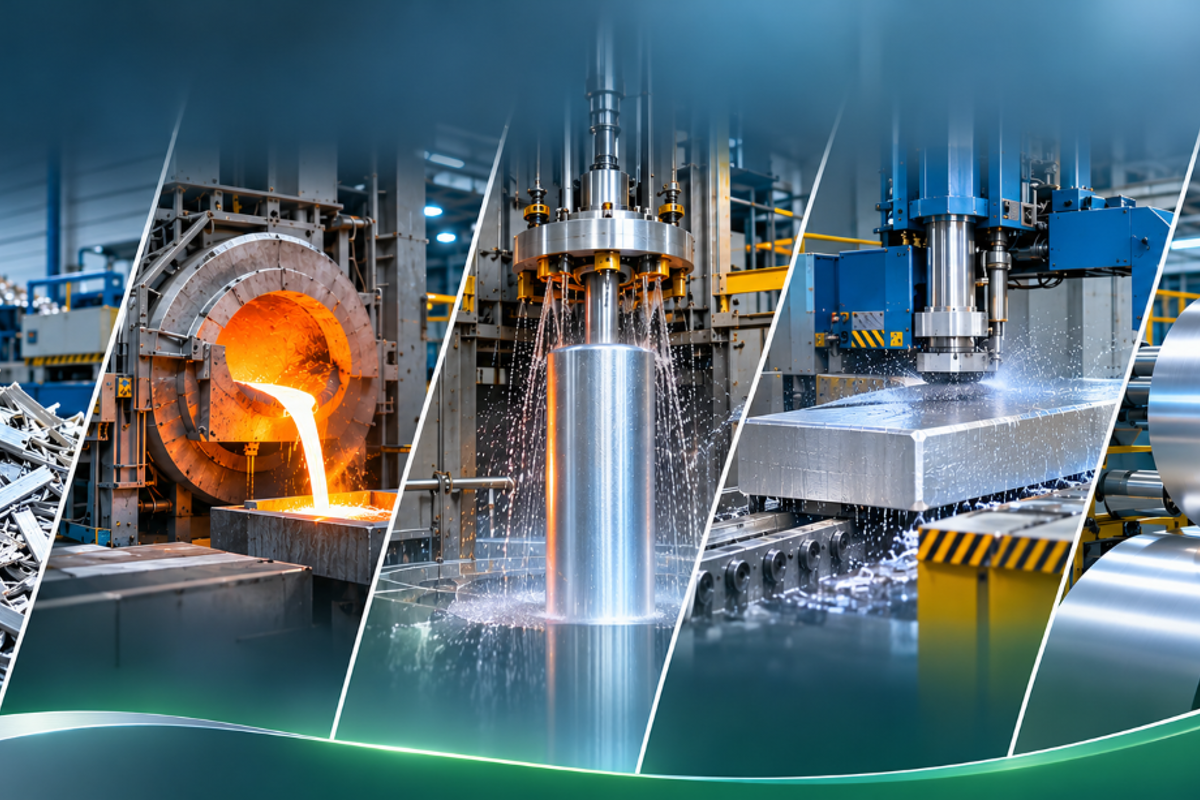
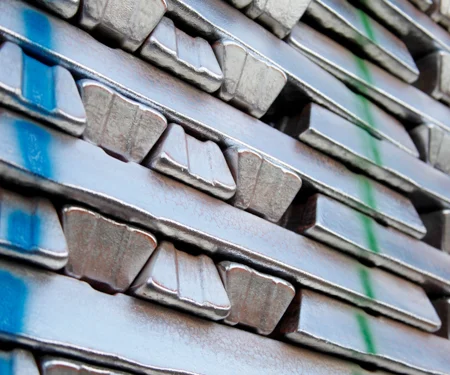
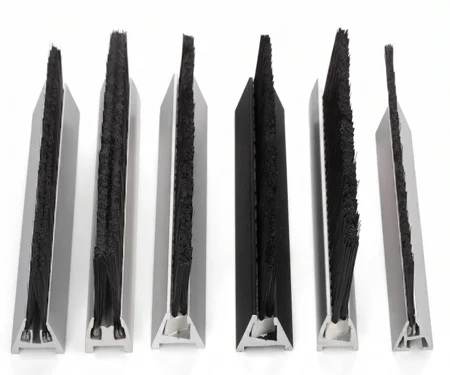
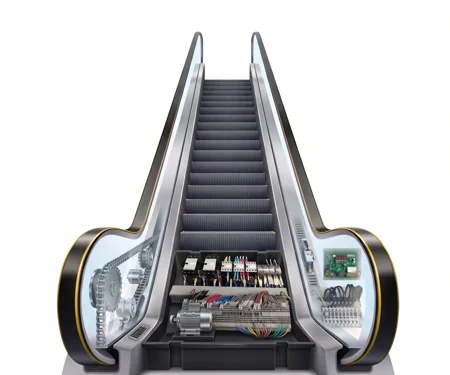
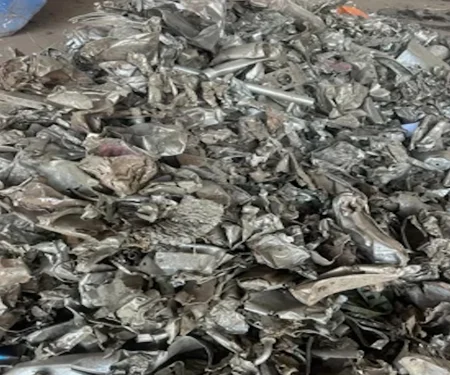
The image used in this article is generated with an AI tool and does not depict any real-time moment
Aluminium manufacturers are facing a challenge that extends across the entire production chain: improving output and product quality while making better use of raw materials, energy and existing equipment. From recovering metal from complex scrap to controlling billet solidification and achieving precision in rolled products, every stage presents technical demands that influence the efficiency and economics of the final operation.
Addressing these demands requires more than conventional machinery. Equipment manufacturers are developing specialised technologies to tackle problems such as low scrap recovery, surface segregation, casting defects, unnecessary metal removal and inconsistent strip flatness. Increasingly, the focus is on improving process control, reducing production losses and making individual operations work more effectively as part of an integrated manufacturing system.
These developments form the focus of Aluminium’s Frontline: OEM Edition 2026, which examines the engineering innovations and equipment solutions shaping the aluminium industry. This feature explores five companies – Insertec, Rodabell, Hertwich Engineering, SMS group and FIMI Group – and how their technologies are addressing distinct challenges, from scrap recycling and billet casting to ingot preparation and coil processing.
Insertec: Making scrap selection and recovery part of the technology equation
For aluminium recyclers, production economics are often determined before scrap reaches the furnace. A lower purchase price may appear attractive, but the actual value of a consignment depends on how much saleable metal can be recovered and the cost of processing the remaining material. Scrap with identical weights can deliver different quantities of aluminium depending on metallic content, oxidation, contamination and preparation requirements.
Insertec, an international industrial group established in 1980, addresses this challenge through its two business lines: Thermal Engineering Solutions and Refractory Solutions. The company develops solutions for industrial heating, melting and material treatment, with digitalisation, electrification and automation forming part of its approach.
Its central principle is that different scrap streams require different preparation and melting technologies. Clean pre-consumer scrap, including extrusion offcuts, rolling scrap and manufacturing returns, generally has high metallic content, known alloy chemistry and limited contamination. Such material can be processed through reverberatory or sidewell melting systems. Although its purchase price may be higher, lower preparation requirements, improved furnace productivity and reduced dross generation can support better overall economics.
Post-consumer scrap, including used beverage cans and painted aluminium profiles, requires more extensive preparation. Shredding, magnetic separation, eddy-current separation and sensor sorting help remove unwanted materials, while thermal decoating through pyrolysis removes organic coatings before melting. Insertec identifies scrap pretreatment and thermal decoating as important elements in processing these materials.
Highly contaminated scrap, including oily materials, drosses, shavings, slags and low-grade residues, presents another challenge. Insertec's Tilting Rotary Furnace (TRF) offers flexibility for processing cans, shavings, slags and drosses without prior decoating. However, salt flux consumption, cycle times and refractory wear must be considered when assessing its economics.
The impact of recovery yield is significant. A hypothetical plant targeting 100,000 tonnes of recovered aluminium annually would require approximately 105,000 tonnes of scrap at 95 per cent recovery, 143,000 tonnes at 70 per cent and 167,000 tonnes at 60 per cent. Lower recovery therefore increases the requirements for scrap yards, shredders, furnaces, material handling and off-gas treatment.
Insertec also illustrates the economics through a comparison between clean scrap costing EUR 1,600 per tonne at 95 per cent recovery and contaminated scrap costing EUR 1,000 per tonne at 65 per cent recovery. The simplified recovered-metal costs are approximately EUR 1,684 and EUR 1,538 per tonne, respectively. However, additional preparation, energy, fluxes, emissions treatment, maintenance and capital expenditure can change the comparison.
The energy advantage of recycling remains substantial. According to the International Aluminium Institute, recycled aluminium requires approximately 8.3 gigajoules of primary energy per tonne, against around 186 gigajoules for primary aluminium from mining to the cast house – a difference of approximately 95 per cent. For Insertec, capturing this advantage requires an integrated flowsheet connecting scrap reception, sorting, shredding, decoating, melting, refining and casting. Ultimately, profitability depends on the margin per tonne of saleable aluminium, not simply the purchase price of scrap.
To know the aluminium casting demand forecast in the transportation sector, explore our report "Global Aluminium Casting Market 2026-2032: Plant Economics, Alloy Segmentation, Pricing Intelligence, Supply Chain Analysis & Strategic Recommendations"
Rodabell: Controlling billet solidification with AirDrift technology
Once scrap has been prepared and melted, converting it into billets with consistent surface and internal quality becomes the next challenge. Casting conditions influence grain structure, surface defects and the behaviour of billets during subsequent extrusion.
Spanish industrial group Rodabell, based in San Ciprián, Lugo, has developed its AirDrift mould technology to address these requirements. With more than 40 years of experience, the company designs and supplies billet and slab casting systems, aluminium melting equipment, molten-metal transfer and treatment solutions, alongside manufacturing, engineering and maintenance services.
In September 2025, Rodabell commissioned an integrated vertical direct chill (VDC) billet casting line at a new recycling facility in Spain. The installation combines a 50-tonne casting machine with degassing and filtration equipment rated at 60 tonnes per hour, a dedicated launder system and grain refiner rod feeding.
AirDrift uses a short-mould configuration in which aluminium begins solidifying under controlled air-and-oil lubrication. Precise regulation of metal level, cooling conditions, casting speed and air/oil supply helps maintain consistent shell formation while limiting surface defects and inverse segregation.
Commissioning results showed an inverse segregation layer below 150 micrometres, against a specified maximum of 200 micrometres. Grain size remained below 85 micrometres, compared with a maximum of 165 micrometres. These results, alongside improved surface finish, are important for maintaining consistency during extrusion.
The line produces billets in five diameters, ranging from 6 to 12 inches, and lengths of up to 7,300 mm. Production primarily focuses on 6063 alloy, alongside 6005 and 6082. Establishing suitable operating parameters for each alloy and billet diameter requires adjustments to metal temperature, casting speed, cooling conditions, air and oil supply, and metal level.
Rodabell has also integrated the casting line with upstream scrap fragmentation and sorting, delacquering, melting, holding and molten-metal treatment. Its automation architecture coordinates metal availability, transfer, filtration and casting sequences, reducing manual intervention and operator-dependent variations. Depending on the selected format, production can range from 36 to 108 billets per cast.
According to Alejandro Rellán García, CEO of Rodabell, the facility has a planned annual capacity of 100,000 tonnes and reached an annualised production level of approximately 60,000 tonnes after around one year of operation. The integrated approach is designed to maintain consistent conditions from metal preparation through casting and homogenising.
Hertwich Engineering: Counter Pressure Casting addresses inverse segregation
A billet with an acceptable surface appearance can still carry metallurgical problems beneath it. During conventional vertical direct chill casting, shrinkage, convection and pressure effects can cause alloying elements to accumulate near the surface, creating an enriched outer layer known as inverse segregation.
This can affect subsequent homogenisation and extrusion. Low-melting phases may partially remelt during homogenisation, potentially causing discolouration, microporosity and deposits on downstream equipment. During extrusion, the enriched outer region can enter the profile towards the end of the stroke, increasing butt discards and metal losses.
Hertwich Engineering addresses this through Counter Pressure Casting (CPC). According to Leon Hensel, Sales Manager, and Guenther Wimroither, Area Sales Manager at HERTWICH, the technology builds on gas-assisted VDC casting with hot-top moulds but introduces controlled counter pressure below the casting table, in the mould exit region.
Conventional gas-assisted casting reduces friction and limits segregation around the mould meniscus, but its influence becomes more limited further down the solidification zone. CPC compensates for the metallostatic pressure of the liquid-metal column through controlled counter pressure, reducing pressure-driven segregation and stabilising the solidifying shell.
This produces a shallower and weaker inverse segregation layer, improving billet surface quality and reducing the risk of local remelting during homogenisation. It can also create scope for higher homogenisation temperatures and shorter processing cycles, potentially improving furnace productivity.
The technology enables steady-state surface quality to be established earlier during casting and can reduce billet butt cut-offs by up to 30 per cent compared with conventional gas-assisted VDC casting. Improved shell stability also provides additional protection against bleed-outs, which can cause production interruptions, scrap generation and safety risks.
CPC creates opportunities for larger-diameter billets using hot-top and gas-assisted mould technology, with improved quality compared with open-top mould casting. Hertwich has also observed promising results with challenging alloys containing elevated levels of lead, bismuth, zirconium and zinc.
Despite its different pressure-control principle, CPC retains operational simplicity. It requires neither vertical movement of the casting table nor flexible launder systems. Mould inlets remain visible and accessible, while continuous, redundant level measurements automatically adjust casting pit pressure. The system is also compatible with Hertwich's Cast Monitoring System, which uses machine vision to supervise mould inlets and strengthen process monitoring and safety.
SMS group: Precision scalping improves ingot preparation for hot rolling
Before aluminium ingots enter hot rolling, surface imperfections and inconsistent geometry must be addressed. Poor preparation can affect thickness tolerances, flatness and process stability, particularly for high-strength 7000-series aerospace alloys and 5000-series alloys used in structural components and electric vehicle batteries.
SMS group has developed next-generation ingot scalping technology around this requirement, offering single-head (SH) systems and configurations with additional side and edge scalpers (SHE) for ingots weighing up to 40 tonnes. According to Hansjörg Hoppe, Sales Director Aluminium Processing Machines at SMS group, ingot quality directly influences performance throughout hot and cold rolling.
An integrated 3D laser measurement system captures the complete ingot geometry and surface topography. The data enables the control system to determine the required scalping depth and positioning, avoiding excessive metal removal while improving surface parallelism. Optimised clamping stabilises ingots of varying heights and geometries, while a heavy-duty turning device handles ingots weighing up to 40 tonnes, allowing both main surfaces to be machined sequentially.
The single-head systems offer scalping depths of up to 44 mm. Scalping heads can reach diameters of 2,700 mm and accommodate up to 20 indexable inserts. Optimised drive technology enables higher cutting speeds without increasing specific energy consumption. Side and edge scalping, integrated into the main machine or installed separately, removes near-surface casting imperfections and creates defined edges to reduce cracking risks during hot rolling.
The machining process can generate up to 40 tonnes of chips per hour. SMS group's chip management system uses alloy-specific information from the manufacturing execution system (MES) to classify and separate chips into designated containers, supporting more effective material recovery.
Maintenance and energy efficiency are also addressed. Redesigned scalping heads reduce cutting-insert replacement time from more than one hour to less than ten minutes. With connected loads of up to 3,000 kVA, frequency-controlled drives regulate power and cutting speeds, while energy generated during deceleration and tool changes can be returned to the internal supply network.
The enclosed machine design reduces noise levels below 80 dB(A), while integrated extraction collects chips and dust and a dedusting plant cleans exhaust air. SMS group's Digital Base Package includes Remote Access, SMS Metrics, Smart Alarm and Maintenance Advisor, providing production and energy data, alarm prioritisation, condition-based maintenance and remote technical assistance. Automatically applied heat-resistant codes remain legible through heat treatment, preserving ingot traceability even if MES connectivity is interrupted.
FIMI Group: Flexible processing lines move towards connected production
Further downstream, aluminium coil and strip processors must handle a wider combination of alloys, tempers, gauges, widths and surface specifications, often in smaller order quantities. Faster changeovers, automatic settings and consistent quality across batches are becoming increasingly important.
Italian equipment manufacturer FIMI Group addresses these requirements through three specialised divisions: FIMI Machinery, FIMI Automation and FIMI Service. According to Mario Colombo, Sales Director, investment appetite remains present but has become more selective. Customers increasingly prioritise projects that improve surface quality, reduce scrap, lower operating costs or resolve production bottlenecks. Large rolling companies tend to focus on long-term efficiency, while service centres and downstream processors place greater emphasis on flexibility.
One of FIMI's proprietary technologies is its patented Proflexroll® system, a variable-profile roll integrated with tension levellers. Its profile can be adjusted to address different flatness defects, allowing thin materials to be levelled at high speeds. This gives processors greater control over strip flatness across varying material specifications.
FIMI's approach also incorporates Industry 4.0 solutions. Connected monitoring and diagnostic systems improve production visibility, help identify abnormal equipment behaviour and enable faster remote support. Their effectiveness, however, depends on reliable plant data, connectivity, cybersecurity and operator training.
Alongside new installations, targeted revamping is gaining importance. Existing lines may remain mechanically sound even when their electrical systems, drives, automation and safety functions have become outdated. Through FIMI Automation and FIMI Service, the company supports equipment upgrades and integration with modern control systems.
Interoperability remains a major challenge when older machinery must communicate with modern production-management platforms. Colombo highlights the need to assess existing controls, sensors, drives and networks before integration begins. Material handling, levelling, slitting, surface preparation, quality inspection and finished-product logistics must also operate as a coordinated production flow, since bottlenecks can emerge between processes rather than within individual machines.
Regionally, India and the Middle East are among the more dynamic investment markets, while European projects place greater emphasis on modernisation and extending the productive life of existing assets. For FIMI, combining specialised machinery, proprietary technology, automation and after-sales support is central to delivering more flexible and connected processing lines.
Grow with
AL Circle












_md.webp)