EGA raises EBITDA margin to 30% despite Al Taweelah disruption, while targeting full smelter recovery by Q1 2027
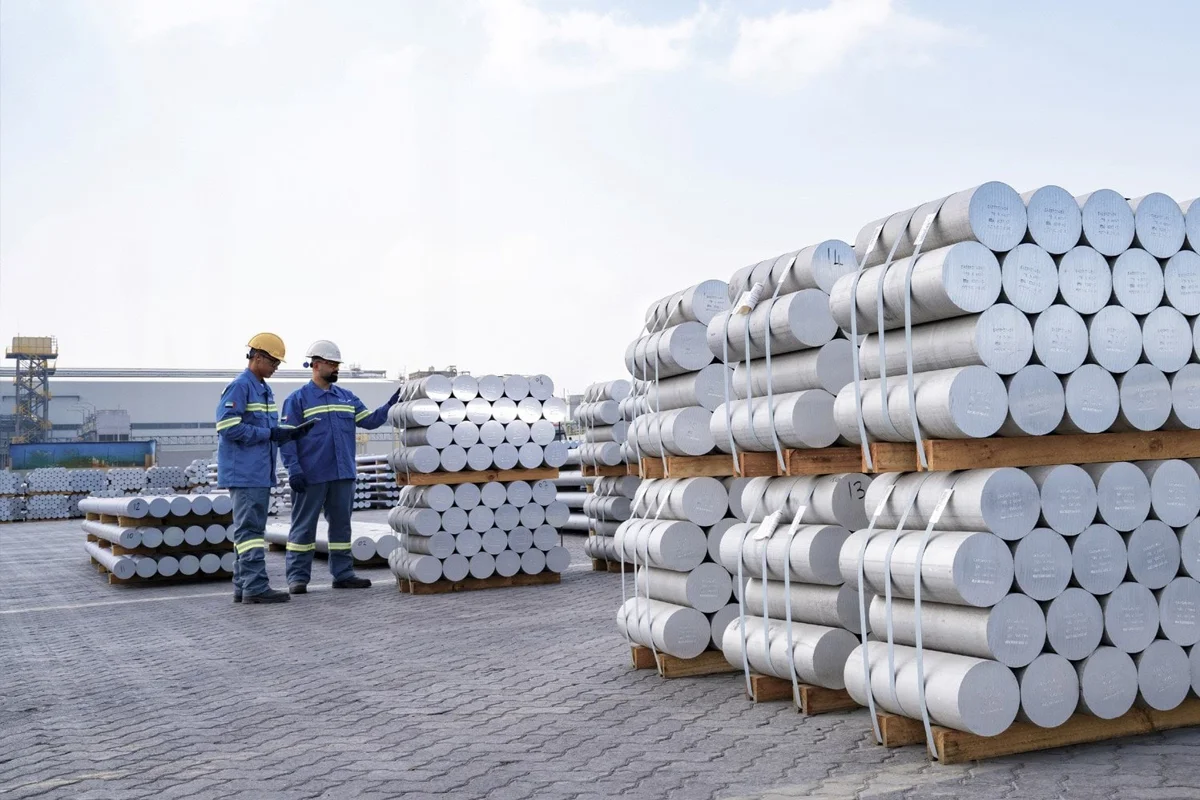
Image obtained from official press release
Emirates Global Aluminium (EGA) has strengthened its profitability despite a challenging nine-month period marked by operational disruptions, constrained exports and reduced aluminium production. The UAE-based producer reported an improved adjusted EBITDA margin for the first nine months of 2026, supported by higher realised aluminium prices, a stronger value-added product mix and cost-control measures. Meanwhile, the company is progressing with the restoration of its Al Taweelah facilities, expanding its international recycling footprint and advancing its global smelting technology partnerships.
EGA recorded adjusted earnings before interest, tax, depreciation and amortisation (EBITDA) of USD 1.572 billion (AED 5.773 billion) during January-September 2026, compared with USD 1.738 billion (AED 6.383 billion) in the corresponding period of 2025. Although adjusted EBITDA declined year-on-year, the margin improved to 29.8 per cent, against 27.7 per cent previously.
The company's revenue stood at USD 5.282 billion (AED 19.398 billion), down from USD 6.279 billion (AED 23.060 billion) a year earlier. The decline reflected lower aluminium sales volumes, which outweighed the benefits of higher realised prices and an improved value-added product mix.
Adjusted net profit decreased to USD 744 million (AED 2.734 billion), compared with USD 817 million (AED 3 billion) in the previous corresponding period. After accounting for the financial impact of the incident at Khalifa Economic Zone Abu Dhabi (KEZAD), reported net profit was USD 547 million (AED 2.009 billion).
Explore the production, demand and consumption forecasts of bauxite and alumina in our report: "Global Bauxite & Alumina Market Forecast to 2036: Supply–Demand, Trade Flows & Price Outlook"
Al Taweelah recovery gathers pace after March disruption
The operational challenges followed an Iranian attack on KEZAD on 28 March 2026, which resulted in an emergency shutdown of all Al Taweelah facilities. EGA recognised a USD 53 million (AED 195 million) impact on reported EBITDA associated with the incident.
The disruption significantly affected the company's production and sales performance. Cast metal production reached 1.376 million tonnes during the nine-month period, compared with 2.126 million tonnes in the corresponding period of 2025. Total aluminium sales amounted to 1.327 million tonnes, against 2.083 million tonnes previously.
Operations at Jebel Ali and EGA's international recycling facilities, however, remained uninterrupted throughout the period.
The restoration of the Al Taweelah smelter is progressing through the gradual restart of its reduction cells. Of the 1,262 cells requiring recommissioning, 766 had been restarted by the reporting date, representing 61 per cent of the total. EGA expects to complete the restart programme during the first quarter of 2027, with hot metal production increasing as additional cells return to operation.
The company estimates that restoring Al Taweelah's production will require capital expenditure of approximately USD 400 million (AED 1.5 billion), with most of the spending expected in 2026 and the remainder in 2027.
The alumina refinery at Al Taweelah has also resumed operations. Following its restart in early July, the facility initially operated at approximately 50 per cent capacity before reaching around 70 per cent in early September. Its further ramp-up will depend on supply chain considerations and the optimisation of EGA's alumina sourcing strategy.
Meanwhile, the new Al Taweelah recycling plant resumed its production ramp-up in May after the disruption. Its casting stations are currently operating at 50 per cent capacity, primarily using primary hot metal from the smelter. Full production is now expected in the second half of 2027, following commissioning delays involving certain equipment.
EGA strengthens aluminium export routes and bauxite security
The disruption also exposed logistical vulnerabilities in the UAE's aluminium export network. Following the temporary suspension of new outbound shipments from the country in March, EGA established alternative export corridors connecting its operations with ports outside the Strait of Hormuz.
The company is now pursuing further diversification of its export infrastructure through a strategic agreement signed with Gulftainer in September. Under the arrangement, EGA will route up to 250,000 tonnes of aluminium through the UAE's East Coast during the first year, increasing to as much as 300,000 tonnes in the second year. The agreement also provides scope for further increases, while Gulftainer will develop its port capabilities to accommodate the producer's requirements.
On the raw material procurement side, EGA has diversified inbound supply routes across alternative regional ports and corridors to maintain the availability of essential materials for its smelter and alumina refinery.
The company has also renewed its long-term bauxite supply agreement with Compagnie des Bauxites de Guinée (CBG), securing supplies of up to 4.9 million tonnes annually until 2044. The first shipment under the renewed agreement, comprising approximately 66,000 tonnes of Guinean bauxite, arrived in October.
Looking for unwrought aluminium business opportunities? Explore potential leads of primary aluminium on AL Biz
Recycling expansion takes EGA's global capacity beyond 400,000 tonnes
Alongside restoring its primary aluminium operations, EGA is strengthening its position in the secondary aluminium market through international acquisitions and capacity expansion.
In September, the company completed the acquisition of an 80 per cent stake in Italian aluminium recycler Eco Green, establishing a stronger presence in Europe's aluminium scrap market. The acquisition provides access to an established supplier network, with Eco Green sourcing scrap directly from more than 350 suppliers and maintaining relationships with over 60 customers.
Eco Green is also investing approximately USD 8 million in expanding its Nogara di Verona facility, which will add 20,000 tonnes per year of recycled aluminium capacity.
The acquisition increases EGA's total recycling capacity across the UAE, Europe and the US to more than 400,000 tonnes per year, with another 200,000 tonnes under development across Europe and the US.
The company markets its recycled aluminium under the RevivAL brand. Sales of this product reached 71,000 tonnes during the reporting period, compared with 68,000 tonnes a year earlier.
EGA also recorded sales of 68,000 tonnes of low-carbon primary aluminium, comprising solar-powered CelestiAL products and nuclear-powered MinimAL products. This compared with 76,000 tonnes in the corresponding period of 2025.
EGA advances US aluminium project and technology partnerships in India
EGA's international expansion strategy continues beyond recycling, with progress on its proposed US primary aluminium project and the commercialisation of its proprietary smelting technologies.
The company's US project is advancing through several workstreams, supported by its joint development agreement with Century Aluminum. A bankable feasibility study led by Bechtel is progressing, while discussions on power supply and financing arrangements are also advancing.
However, the project faces a local regulatory challenge. In September 2026, the Inola Town Council extended its existing moratorium on primary aluminium smelting until 7 April 2027. The matter is being pursued through the courts, although other development activities are continuing.
In India, EGA is strengthening its technology presence through an agreement with National Aluminium Company (NALCO), signed in September. Under the agreement, EGA will license its DX+ Ultra smelting technology for NALCO's proposed 500,000-tonne-per-year brownfield smelter expansion in Odisha. The arrangement includes the provision of technology, technical expertise and project support.
EGA is also advancing its proprietary E40 technology, an upgrade of its existing DX technology. A pilot programme is underway across 13 reduction cells at Al Taweelah. If successful, the technology could be deployed across 808 DX cells, potentially enabling the addition of 52 cells within the existing power supply infrastructure.
The proposed upgrade could increase hot metal production by up to 67,000 tonnes annually while reducing net specific energy consumption and associated carbon dioxide emissions from power generation by approximately 6 per cent per tonne of metal produced.
In parallel, the company is exploring carbon capture as a potential solution for addressing emissions that are difficult to eliminate from aluminium smelting. Installation and commissioning activities for a pilot plant at the Jebel Ali fume treatment facility were underway during the reporting period.
Cost optimisation delivers USD 213 million in value
With operational recovery and international growth requiring substantial financial discipline, EGA has continued to implement its efficiency and cash-preservation programmes.
The second phase of its improvement initiative, Najah 2.0, generated USD 153 million (AED 562 million) in improvements during the nine-month period against its 2024 baseline. These gains came from alumina refinery improvements, operational efficiency and procurement savings. EGA aims to achieve annual improvements of USD 440 million (AED 1.6 billion) by 2030.
Separately, a dedicated cash-preservation programme introduced in response to regional uncertainty generated savings of USD 60 million (AED 220 million). The initiative focuses on reducing discretionary expenditure and strengthening cash generation.
Combined, the two programmes delivered USD 213 million in value creation during the period.
EGA maintained a net debt-to-adjusted EBITDA ratio of 1.5 times. Its total liquidity stood at USD 2.93 billion, comprising USD 1.93 billion in cash and term deposits and an undrawn revolving credit facility of USD 1 billion. Total debt reached USD 4.9 billion, compared with USD 3.5 billion in the previous corresponding period.
Cash generated from operating activities amounted to USD 613 million, against USD 1.422 billion a year earlier. The decline reflected lower EBITDA generation and higher working capital requirements, including increased finished metal inventories and strategic raw material stockpiling to strengthen supply chain resilience.
EGA expects working capital to be progressively released as production at Al Taweelah and export capacity recover.
Showcase your brand, aluminum recycling initiatives and sustainability vision in our upcoming magazine: Sustainability & Recycling: Aluminium’s Commitment 2026.
Higher aluminium prices support EGA's financial performance
Market conditions provided an important cushion against the company's operational challenges. The average London Metal Exchange (LME) aluminium price increased to USD 3,328 per tonne during the first nine months of 2026, compared with USD 2,566 per tonne in the corresponding period of 2025.
Regional aluminium premiums also strengthened considerably. Japan's MJP premium averaged approximately USD 294 per tonne, compared with USD 135 per tonne previously. Europe's MB premium reached an average of USD 429 per tonne, against USD 192 per tonne, while the US Midwest premium climbed to around USD 2,409 per tonne from USD 1,100 per tonne.
Commenting on the company's performance, Abdulnasser Bin Kalban, Chief Executive Officer of Emirates Global Aluminium, said: “In the first nine months of 2026, EGA has been tested like never before. These results demonstrate our deep operational expertise, our people’s resilience and adaptability, and the fundamental strength of our business. During this challenging period of recovery, we have continued our focus on delivering long-term growth.
While challenges remain ahead of us, across EGA we share determination and full confidence that EGA will come back stronger than ever.”
Pål Kildemo, Chief Financial Officer of Emirates Global Aluminium, reflected through his words, “We have acted decisively to protect EGA’s financial strength. Najah 2.0 and our dedicated cash preservation programme together delivered $213 million of value in the first nine months, and we are strengthening Najah further to embed lasting improvements in cost and performance,” adding, “Our robust balance sheet and strong liquidity allow us to complete the restoration of Al Taweelah while continuing to pursue disciplined strategic growth, from the acquisition of Eco Green to the licensing of our technology to NALCO. While the aluminium market remains undersupplied today, we expect it to move towards a more balanced position in 2027, and our focus on cost discipline and cash generation will ensure EGA is well prepared for that environment.”
Grow with
AL Circle












_md.webp)