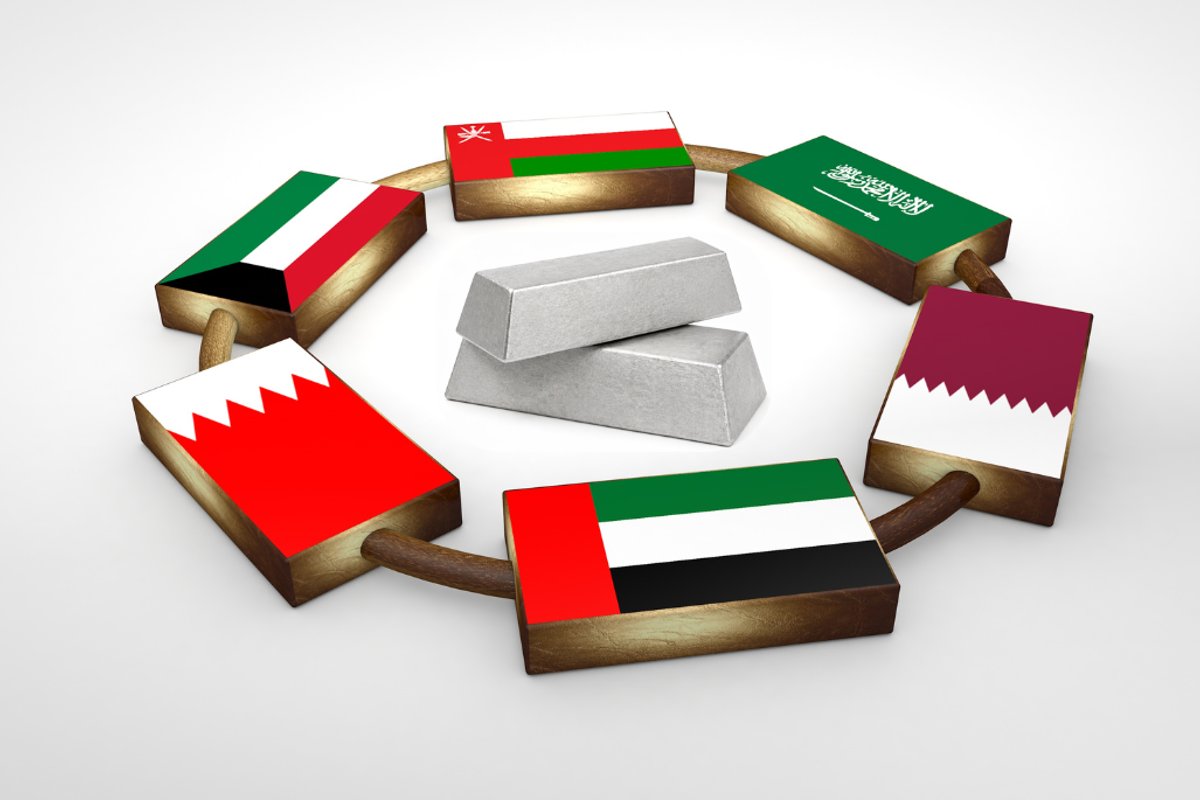
Global aluminium production and supply is considerably driven by the Gulf Cooperation Council (GCC), which contributes around 9 per cent of aluminium to the supply chain. Every year, the GCC produces and supplies approximately 6 to 6.5 million tonnes and 5 to 5.5 million tonnes of aluminium, respectively. However, 2026 is proving to be an exception owing to the ongoing Middle East conflict, as the impact of the geopolitical tensions clearly reflect on the aluminium production of the region in the January-March quarter (Q1) of 2026.
Explore- Most accurate data to drive business decisions with Global ALuminium Industry Outlook 2026 across the value chain
Aluminium production and supply have been strained for nearly two months since the end of February and the beginning of the Middle East conflict between the US-Israel and Iran. Aluminium prices on the London Metal Exchange have shot up 13.67 per cent as the aluminium production in the Gulf region remains exposed to the direct impact of the geopolitical tensions, resulting in substantial production cuts that can potentially topple the supply chain balance across the globe.
Aluminium production volume in the Gulf region, as recorded by the International Aluminium Institute, depicts that the GCC region has produced 1.49 million tonnes of primary aluminium in Q1 2026, the lowest in the past four years.
Production in January and February 2026 remained stable with average daily output of around 169,000 and 170,000 tonnes, respectively. Supply disruption was evident as average daily output went down about 5.88 per cent to 160,000 tonnes in March, thereby affecting the Q1 production volume.
Comparing quarter-on-quarter, production declined in the range of 540,000 to 570,000 tonnes or about 3.7 per cent, slipping from 1.55 million tonnes in the October-December quarter (Q4) in 2025 to 1.49 million tonnes in Q1 2026.
Going year-on-year, production has lowered 28,000 tonnes or 1.84 per cent, down from 1.52 million tonnes in Q1 2025. The quarterly results of 2025 have reflected a strong and consistent upward trend, accumulating to 6.16 million tonnes.
By contrast, Q1 2026 arrives with a sudden drop in production, compounded by several factors linked to the ongoing Middle East conflict that is currently running through the second week of the ceasefire.
Don't miss out- Buyers are looking for your products on our B2B platform
Why the depleted aluminium production?
The significant drop in GCC’s Q1 production has resulted from the collateral damage caused by the Middle East conflict.
The first roadblock in the pathway of production was the blocked trade corridor of the Strait of Hormuz, causing shipping disruptions, compelling Aluminium Bahrain (Alba) to invoke force majeure on certain products from early March. Soon after, it was followed by a controlled shutdown of Alba’s potlines 1, 2 and 3, thereby cutting off 19 per cent or 308,369 tonnes of Alba’s total annual production capacity of 1.62 million tonnes.
The situation was compounded by the controlled shutdown of Qatar’s Qatalum smelter from March 3 due to gas supply disruptions, further tightening availability. The situation prevailed for roughly ten days till Norsk Hydro’s announcement, approving Qatalum, its joint venture with the Qatar Aluminum Manufacturing Company QPSC (QAMCO), will continue manufacturing at around 60 per cent of its total capacity of about 640,000 tonnes, thereby cutting off approximately 256,000 tonnes.
On March 28, Iran launched drone and missile attacks on the facilities of Emirates Global Aluminium (EGA) and Alba, leading to “significant damage” sustained by the EGA plant, with Alba assessing the intensity of damage caused.
Owing to the Iranian strikes, the Al Taweelah smelter, with an annual production capacity of 1.6 million tonnes, has reached a total production. EGA’s other smelter, the Jebel Ali facility, has a nameplate capacity of 1 million tonnes per year, is operating with restrictions and has resources to sustain for 10-12 days.
As a response to the unprecedented production halt, EGA announced force majeure on certain aluminium deliveries around the second week of April.
Combining the deficit volumes in Q1, i.e., 308,369 tonnes from Alba, 1.6 million tonnes from EGA’s Al Taweelah smelter and 256,000 tonnes from Qatalum, the total volume of annual production cut stands around 2.16 million tonnes. Hence, an estimated quarterly production cut appears to be 541,092 tonnes.
Must read: Key industry individuals share their thoughts on the trending topics
If the geopolitical tensions continue to persist, production cuts are expected to prevail, with Q2 to yield a similar performance with an output deficit of approximately 539,609 tonnes. Thus, the reduced volume for Q2 2026 appears to be approximately 10,12,391 tonnes, which marks a staggering Q-o-Q decline of 32.28 per cent.
With the Q1 and Q2 volumes combined, a Y-o-Y comparison depicts the aluminium production decreasing 17.98 per cent, reduced from 30,57,000 tonnes in H1 2025 to 25,07,391 tonnes in H1 2026.
Summing up, the Middle East conflict has largely disrupted GCC aluminium output, tightening global supply and driving price volatility. With key smelters impacted and logistics constrained, prolonged tensions could deepen deficits and reshape supply dynamics.
Trading aluminium across borders? Find out the exact cost you need to bear for the embedded carbon in the product by using this CBAM calculator.













_md.webp)








