Aluminium as a ‘Critical Mineral’ – how much is it catching up with the label given in the US, EU, UK, Canada and Africa?
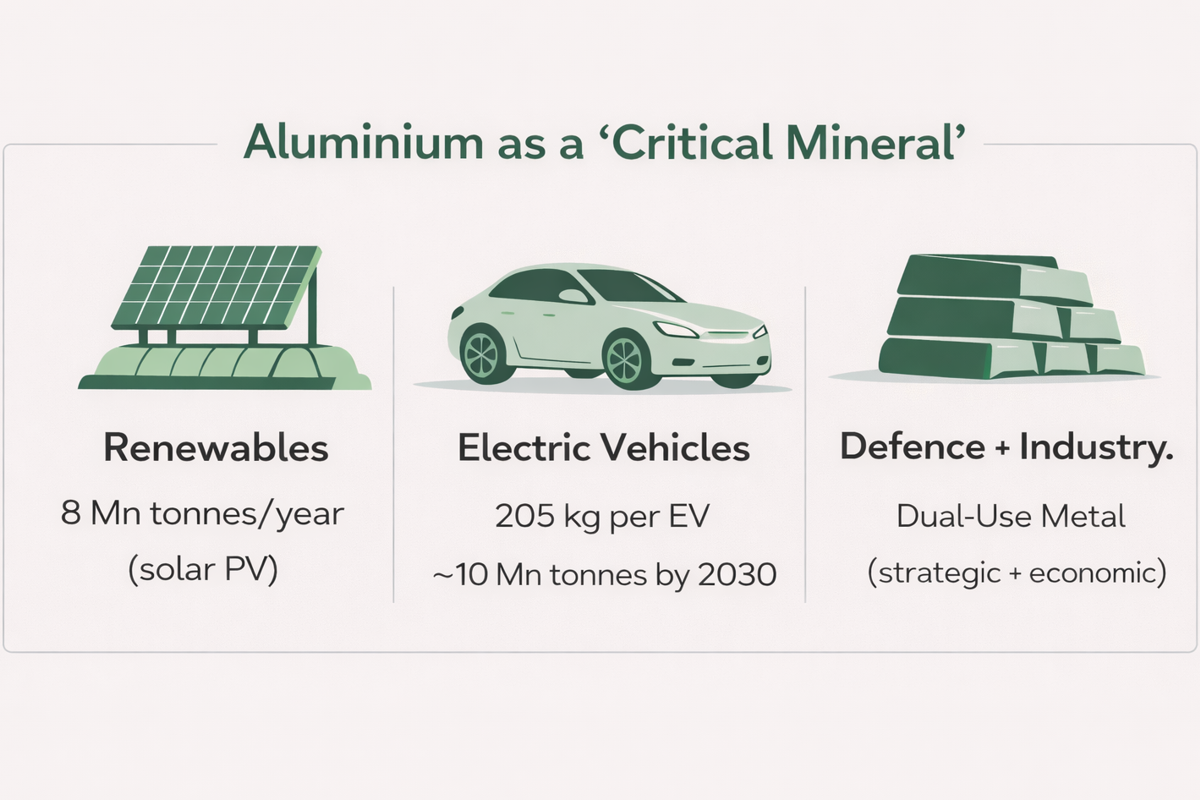
Across major economies – from the United States and European Union to the United Kingdom, Canada, and Africa, aluminium has formally entered the league of critical minerals – not because the metal is rare but it is indispensable for economic and environmental growth. Aluminium, over the period of time, has made itself a non-substitutable element in modern economies through critical applications in industrial growth, defence capability, and decarbonisation. It is also the metal that has built direct relation with global economic structures; hence, any disruption in its supply chain affects employment, trade balances, and industrial output.
Economic contribution – a mature industry with strategic weight
To all these regions stated above, the aluminium industry supports a substantial share of employment and GDP growth. In the United States, the aluminium sector makes a room for 400,000 American jobs and contributes USD 228 billion in total economic impact, which is nearly 1 per cent of the GDP. The industry in the United Kingdom contributes GBP 2.97 billion (approx.) in Gross Value Added (GVA) and directly employs around 37,000 individuals. Even the Canadian aluminium industry makes a significant value-added contribution to Quebec . The value of primary aluminium exported from Canada is USD 10 billion and the total employment across the industry is over 11,000.
Unlock full access – sign up for FREE.
Key benefits
Risk of supply-side disruptions in the Middle East, continued divergence in the price spread between domestic and overseas markets and inventory structure
Next articleThe rise of global aluminium hubs outside China
Grow with
AL Circle