AL Circle Analysis: Guinea’s 150Mt bauxite cap, China’s import swings, US tariffs draw aluminium Q4’26

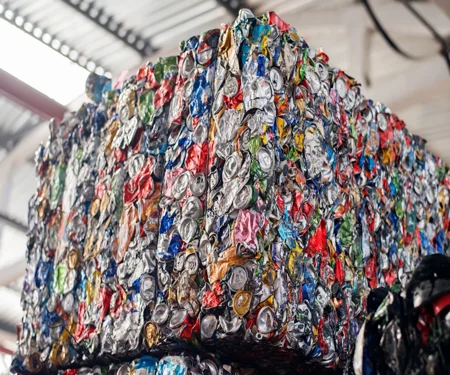
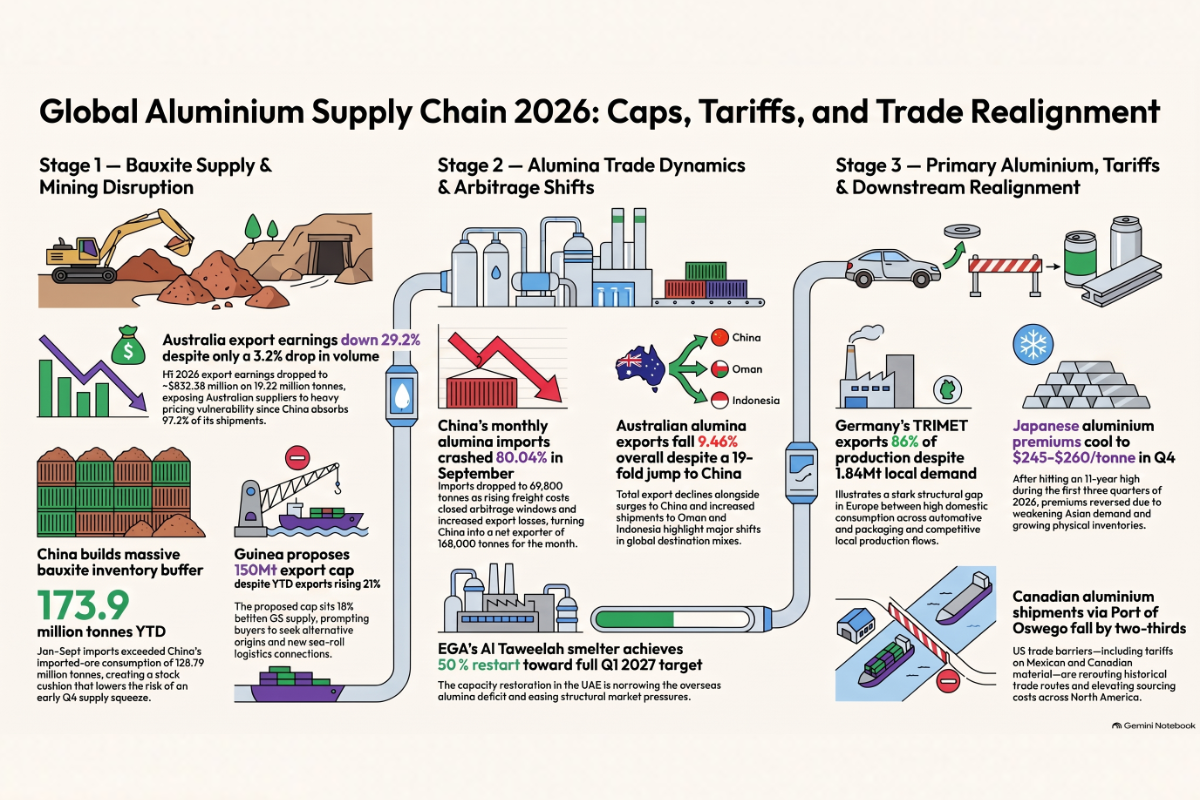
The image used in this article is generated with an AI tool and does not depict any real-time moment
The global aluminium supply chain is facing a series of changes that extend from bauxite mines and alumina refineries to smelters, regional premiums and finished-metal trade. In 2026, the market’s direction is being shaped not only by production volumes but also by freight costs, export restrictions, shifting Chinese demand and tariffs. Developments across Guinea, Australia, China, Europe and North America point to a market where access to supply is increasingly as important as the availability of raw materials.
Bauxite supply: Guinea’s cap meets a well-stocked China, but is it stable?
Guinea remains central to the seaborne bauxite market, with its shipment connections to China demonstrating the importance of reliable logistics. A new sea-rail route has enabled a Guinea bauxite shipment to reach China, highlighting efforts to develop alternative logistics connections between the West African mining hub and its major customer. The development brings transport efficiency and route diversification into focus, with the shipping disruptions of seaborne bauxite.
At the same time, Australia’s H1 2026 figures reveal the financial pressure on suppliers. Export value declined 29.2 per cent to approximately USD 832.38 million, while volume fell just 3.2 per cent to 19.22 million tonnes. With China taking about 97.2 per cent of Australian shipments, the country’s export earnings are highly exposed to pricing decisions in a single market.
To know the future market and value proposition of red mud, explore the report "A Comprehensive Analysis of Bauxite Residue (Red Mud): Sustainability, Resource Recovery and Strategic Recommendations"
China’s September bauxite imports rose 18.7 per cent month-on-month, taking January–September to 173.9 million tonnes, but higher freight costs continued to affect non-mainstream suppliers. Against this backdrop, Guinea’s proposed 150-million-tonne export cap could tighten fourth-quarter (Q4) supply and alter buying patterns. The actual effect will depend on implementation, available inventories and the extent to which buyers can switch origins.
Meanwhile, Ghana is being encouraged to expand bauxite export opportunities through stronger commercial engagement with China and the African Continental Free Trade Area (AfCFTA). Market access, infrastructure and domestic processing will determine whether Ghana can capture more value from its mineral resources.
Key takeaways
- Australia’s 29.2 per cent fall in export value against a 3.2 per cent volume decline highlights the gap between shipment performance and export earnings.
- China’s 173.9-million-tonne imports exceed imported-ore consumption (128.79 million tonnes). That stock cushion makes an early Q4 squeeze unlikely.
- Guinea’s cap is 18 per cent below 2025, but exports are 21 per cent up year-to-date.
- Ghana: Broader market access is an opportunity; domestic refining and value addition are the routes to retaining more economic value.
Alumina: trade flows turn as arbitrage shuts and sanctions loom
The alumina market depicts how quickly trade can respond when the cost of moving material change. Australia’s exports fell 9.46 per cent, despite a reported 19-fold surge in Chinese imports of Australian alumina. Higher shipments to Indonesia and Oman suggest a changing destination mix rather than a uniform shift in demand.
Then the window closed. China’s September alumina imports fell 80.04 per cent M-o-M to 69,800 tonnes. Exports slid 44.05 per cent to 237,800 tonnes because freight widened export losses, leaving a net export of 168,000 tonnes for the month. The nine-month position is still a net import of 486,400 tonnes. The 50-per-cent restart of EGA’s Al Taweelah smelter with full production targeted in Q1 2027 are narrowing the overseas deficit and taking some pressure off the market.
Policy adds a new layer of uncertainty. Aughinish Alumina’s omission from the proposed draft of EU’s 22nd sanctions package retains attention on the relationship between industrial supply security and restrictions on trade linked to Russia. For the alumina sector, regulatory decisions can affect not only direct shipments but also the availability of feedstock to downstream smelters.
The broader implication is that supply volumes alone are an incomplete guide to market direction. Import and export data must be read alongside freight rates, domestic stocks, price spreads and policy developments.
Key takeaways
- Australia’s 9.46 per cent export decline alongside sharply higher Chinese imports of Australian material highlights the importance of destination-level data.
- China’s 80.04 per cent monthly fall in alumina imports shows how quickly trade can reverse when arbitrage closes and freight costs rise.
- Aughinish Alumina carries a low-probability but high-impact risk: 475 jobs and a 27-state unanimity requirement.
Explore alumina and other essential inputs in the right grades from global suppliers on AL Biz
Aluminium and trade: premiums cool, tariffs bite, capital moves
Primary aluminium market is experiencing a different set of pressures. In Germany, TRIMET exports 86 per cent of its production despite a domestic demand of 1.84 million tonnes across automotive, packaging and extrusion industries. The contrast raises a question for European industry: how much of domestic demand can be supplied competitively by local production?
In Asia, Japan’s aluminium premiums climbed during the first three quarters of 2026, touching an 11-year high, before declining to USD 245–260 per tonne in Q4. The reversal points to a change in physical-market conditions and a weak Asian demand with rising stocks. Malaysia’s attraction of Chinese investor interest in Sarawak suggests that capital continues to seek manufacturing opportunities across Southeast Asia.
Meanwhile, the US is trying to rebuild. The country produced 339,000 tonnes of aluminium in H1 2026, keeping attention on whether new projects can meaningfully strengthen domestic supply. Mt Holly’s return to full capacity in April adds about 10 per cent, and the proposed Oklahoma smelter would be a step change.
Trade barriers remain a significant obstacle. Mexico is pushing for lower US aluminium and steel tariffs before year-end as negotiations continue, while Canadian aluminium shipments through the Port of Oswego have reportedly fallen by two-thirds under US tariffs. These developments show how duties can redirect material flows, weaken established logistics links and alter sourcing decisions even where industrial demand persists.
The central challenge is to convert investment into competitive output while ensuring that trade policy does not make supply chains more expensive or less reliable.
Unlock key insights from leading companies and experts across the aluminium ecosystem with our e-Magazine - Mine to Market: Aluminium Producers & Manufacturers 2026
Key takeaways
- Germany-based TRIMET’s 86 per cent export share, despite 1.84 million tonnes of domestic demand, highlights the gap between local consumption and production flows.
- Japan’s Q4 premium decline indicates a change in physical-market conditions after increases during the first three quarters.
- The US’ H1 output of 339,000 tonnes of aluminium makes project delivery and additional capacity important to the domestic outlook.
- A 50 per cent tariff on Mexican aluminium and a two-thirds drop at Oswego show tariffs rerouting flows more than adding supply.

Grow with
AL Circle