US produced 339kt aluminum in H1 2026: Can new projects change the outlook?
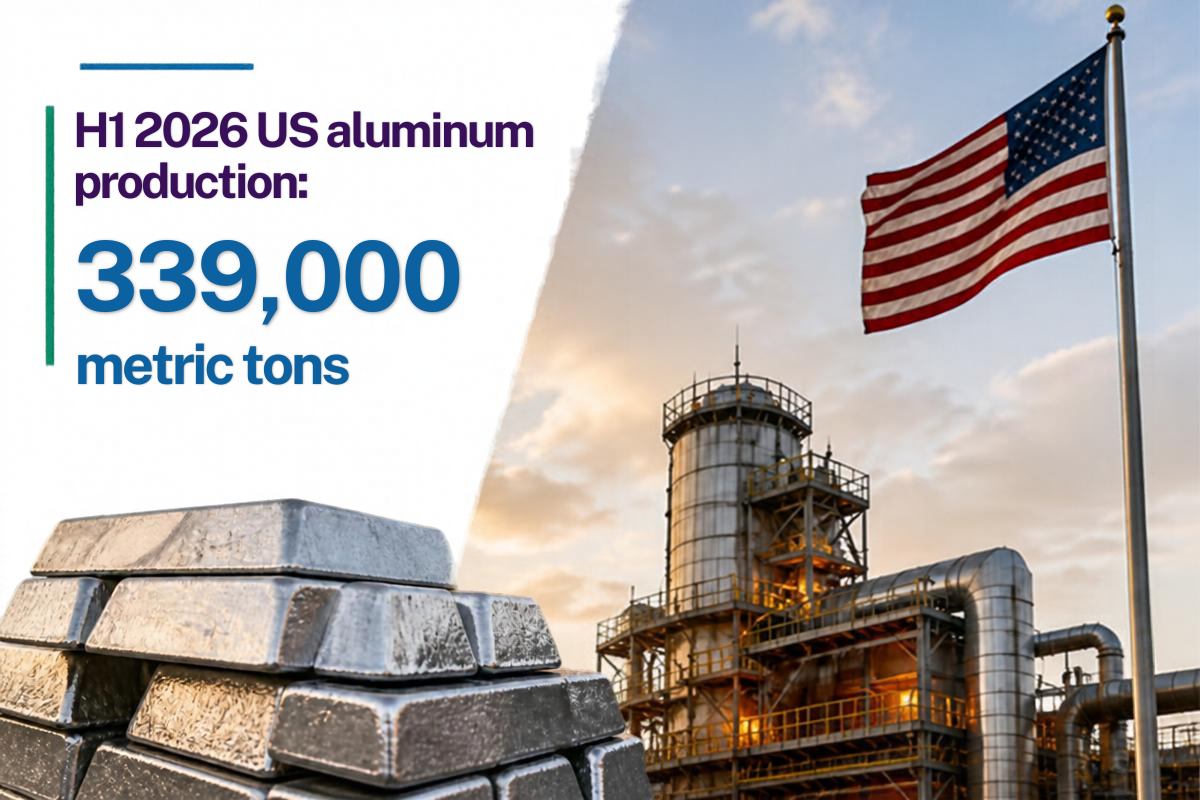
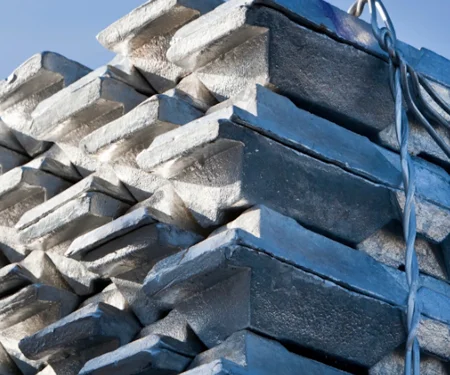
The image used in this article is generated with an AI tool and does not depict any real-time moment
The US aluminum industry, through its troubled journey over the past four decades, has been holding on to its remaining active smelters to maintain domestic aluminum production. However, its production figures reveal how little ground it has regained. Stability has been a strong suit, with 339,000 metric tons produced in H1 2026, yet matching the volume recorded in H1 2024.
With domestic primary production still constrained, the focus is shifting to whether the Century Aluminum’s Mt Holly restart and the proposed Oklahoma primary aluminum smelter can turn modest gains into a sustained supply revival.
Explore the production, demand and consumption forecasts of bauxite and alumina in our report: “Global Bauxite & Alumina Market Forecast to 2036: Supply–Demand, Trade Flows & Price Outlook”
H1 US aluminum production: 2026 vs 2025 vs 2024
The H1 2026 Us aluminum production figures reflect a year-on-year growth over H1 2025:
- 2026 vs 2025 – 339,000 metric tons, up 1.8% Y-o-Y from 333,000 metric tons in H1 2025
- 2025 vs 2024 – 333,000 metric tons, down 1.77% Y-o-Y from 339,000 metric tons in H1 2024
While a recovery can be recorded in H1 2026, the figures registered mirror the same aluminum production volume of H1 2024, implying that no notable surge in production volume has occurred.
The quarter-on-quarter flow
The first quarter (Q1) and the second quarter (Q2) reflect year-on-year recovery:
- Q2 2026: 172,000 metric tons, up 2.99% Y-o-Y from 167,000 metric tons in Q2 2025
- Q1 2026: 167,000 metric tons, up 0.6% Y-o-Y from 166,000 metric tons in Q2 2024
Although reporting a substantial surge over the previous year, the figures have equalled the 2024 production volumes.
Explore primary aluminum suppliers, product listings and trade opportunities on AL Biz
Upcoming projects to support the US aluminum industry?
Century Aluminum’s Mt Holly smelter in South Carolina returned to full capacity in April 2026, providing a near-term boost the national primary aluminum production. The restart is expected to add 10% primary aluminum output of the US. The impact is already visible in the company’s second-quarter performance as it lifted the company’s Q2 earnings and its Q2 shipments by 6% to 131,000 metric tons.
If the additional capacity is sustained, Mt Holly could help lift domestic output beyond the levels seen in recent years, and therefore can act as a potential pipeline for boosting the US primary production the next year onwards.
For more in-depth insights and exclusive analysis on the global aluminum industry, explore the e-Magazine - Mine to Market: ALuminium Producers & Manufacturers 2026
The larger potential shift lies in the proposed Century Aluminum–Emirates Global Aluminium (EGA) joint venture in Inola, Oklahoma. Announced in January, the $4 billion project of a 750,000-metric-ton-per-year primary aluminum smelter remains in the pipeline. If completed, it would be the first new US primary smelter in almost 50 years and could more than double current domestic primary production.
However, administrative roadblocks remain, along with the possibility of the facility’s location change, rendering the completion timeline uncertain. Until these are resolved, the project stands as a future potential rather than secured additional capacity to support the rebuilding of the US aluminum industry as well as contributing $49 billion to the state’s economy through 2060.
US aluminum production has recovered, but not yet expanded beyond its 2024 level. Mt Holly offers an immediate boost and the proposed Oklahoma smelter could deliver a structural shift. The key test is whether planned capacity can translate into sustained domestic output.
Note: This is exclusive coverage by AL Circle and may not be reproduced, republished or shared without prior permission.
Grow with
AL Circle