
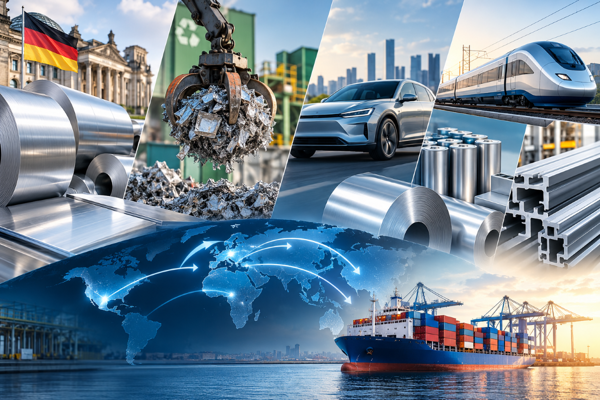
AL Circle analysis: Germany’s aluminium trade surplus, Novelis’ US expansion, Asia’s EV demand & India’s underutilised downstream capacity
Aluminium’s next growth phase is increasingly being shaped by downstream processing, supply-chain resilience and demand from specialised applications. Germany continues to generate a substantial trade surplus in flat-rolled products despite a shrinking primary aluminium base, while North America is investing in recycling and rolling. Across Asia, new manufacturing capabilities and growing demand from electric vehicles, railways and batteries are creating further opportunities. However, declining exports, underutilised capacity and uneven profitability show that investment alone does not guarantee success. For industry leaders, the challenge is to identify where demand is shifting, develop products that meet customer requirements and ensure that new investments translate into sustainable...
AL Circle Analysis: From Guinea to Gulf, how bauxite, tariffs and logistics redraw aluminium map
Aluminium markets in late 2026 are being shaped by more than the headline LME aluminium price. Bauxite security, alumina availability, geopolitical disruptions, tariff negotiations, logistics diversification and regional premiums are increasingly determining where metal moves and what buyers pay. From RUSAL reassessing Caribbean assets and Vedanta securing Odisha bauxite to Brazil extending mine life and EGA rebuilding its Guinea supply chain, producers are strengthening control over critical raw materials. At the same time, the US remains heavily dependent on imported bauxite and alumina, while Europe and Asia are experiencing sharply different premium dynamics. These developments point to a market where physical availability is becoming a regional factor even as aluminium itself remains...
Grow with
AL Circle

Scrap export tax: European Aluminium advocates for the litmus test in aluminium policy
As Brussels pushes forward with the Carbon Border Adjustment Mechanism (CBAM) and doubles down on its climate ambitions, the European aluminium sector is sounding the alarm on another missing piece in the policy puzzle: aluminium scrap. The call is not new, but it is urgent. As downstream manufacturers and industry veterans univocally demand expanded inclusion of goods into CBAM framework, the European Aluminium has advocated for scrap export taxation. Also read: EU top export destinations: Aluminium tube export rebalance as US slump & Norway-Türkiye rise European Aluminium, the industry’s leading voice, argues that without a scrap export tax, Europe risks squandering its strongest competitive lever in the race for decarbonisation — its recycling base. The recycling paradox Recycling is...

Rare earth magnet shortage hits India: China’s export curbs threaten auto output
India’s automobile sector is on alert as supplies of rare earth magnets from China remain suspended, two weeks after Beijing promised to ease export restrictions. Despite high-level talks between the two countries, automakers and component suppliers say little has changed on the ground, and concerns are mounting that production could be disrupted during the upcoming festive season, when demand typically spikes. Why Beijing tightened the screws? The trouble dates back to April 2025, when China’s Ministry of Commerce issued Announcement No. 18. The directive imposed new licensing rules and export controls on seven key rare earth elements, including dysprosium, terbium, and samarium. These materials are indispensable for electric vehicle motors, wind turbines, defence hardware, aerospace...

South32 profit soars 75% on alumina price surge, but misses estimates
Australia’s South32 has reported a 75 per cent rise in annual profit, lifted by strong alumina operations and higher prices across its portfolio, though the result fell short of analyst forecasts. For the year ended June 30, underlying earnings came in at USD 666 million, up from USD380 million a year earlier but just a bit less from USD697.7 million that was expected by Visible Alpha. Shares slipped 2.1 per cent to AUD 2.85 in early trade, even as the broader index was little changed. Alumina was the standout performer, benefitting from a near 45 per cent surge in prices. That alone boosted divisional operating earnings by USD 714 million to USD 1.08 billion. The aluminium unit also enjoyed stronger prices, supported by supply tightness and higher costs across the sector. Copper and...

Arrow Minerals halts operations amid Guinea’s regulatory shifts, following EGA’s move
Arrow Minerals, the West Africa-focused bauxite explorer, has announced that it's putting a hold on operations at its Niagara bauxite project in Guinea. The reason is the ongoing dispute about whether its mining permits are valid. The Australian miner reported this in its September 8 half-year update. The Guinean military-led government annulled 129 mineral exploration licenses to reclaim inactive permits and transfer rights to more active investors. The licenses were cancelled without prior discussion to tighten government control over resources. The move may shut down idle projects, cause losses for inactive license holders, and shift the regional mining investment landscape, creating opportunities for operators that actively engage and meet local development expectations. First EGA,...

Deepfakes and aluminium: Warning mock-up of a new risk in a metal-heavy world
The aluminium industry has spent years wrestling with geopolitical turbulence, energy volatility, and erratic trade regimes. In the same breath, it has leaned on technology and artificial intelligence to squeeze out efficiencies and carve a path toward a greener future. But the same digital tools that promised opportunity are now breeding a new, more insidious risk: deepfakes. Synthetic media — doctored video, cloned voices, AI-fabricated documents — may not move molten metal, but they can sway markets, fracture trust, and throw supply chains off balance. For a sector as global and strategically critical as aluminium, the threat is far from abstract. Image for referential purposes only Also read: Indian brands to slash prices: Almost all AL-inclusive goods are cheaper with 'GST 2.0'...

Aluminium sheet market reshaped in 2025: China on top, Italy rising, US losing ground
The global aluminium plates, sheets, and strips trade has undergone a reshuffle in the first half of 2025 compared with the same period in 2024. While China still towers above everyone else in export value, but several traditional exporters have slipped, and a new entrant, Italy has made its way into the top ranks. The reshuffling reflects a mix of policy changes in Beijing, energy and raw material costs in Europe and the US, shifting demand patterns, and rising competition from newer players. China holds the crown China remains the world’s largest supplier. Exports in H1 2025 were valued at USD 5 billion, up slightly from USD 4.9 billion a year earlier. Yet the volume tells another story: shipments slipped from 1.6 million tonnes to 1.5 million tonnes. That decline is tied directly to...

Recycled aluminium powers BMW’s iX3 Neue Klasse E-SUV
The German multinational manufacturer of luxury vehicles, BMW has officially taken the wraps off its much-anticipated 2026 BMW iX3 “Neue Klasse” all-electric SUV, delivering a blend of strong performance and a 20 per cent boost in driving range. And this time, the company has doubled down on renewable energy and recycled materials like aluminium to make the all-new iX3 not only faster but also cleaner than any BEV it has built before. The automotive aluminium market is on the fast track to growth. Valued at USD 97.86 billion in 2024, AL Circle projects it will almost double to USD 205.24 billion by 2032, accelerating at a strong CAGR of 9.7 per cent from 2025 onward. What’s fuelling this rise? Automakers worldwide are racing to integrate lightweight, durable, and endlessly recyclable...

ALUMEX India 2025 – Beyond the hype, what the industry hopes to achieve
September 10, 2025, New Delhi: India’s first-ever exhibition dedicated solely to aluminium extrusions ‘ALUMEX India 2025’, organised by ALEMAI (Aluminium Extrusion Manufacturers Association of India), has begun at the Bharat Mandapam Convention Centre in the capital city of India and will continue to host more than 200 exhibitors and thousands of business visitors until September 13. Through this four-day event, ALEMAI aims to showcase and position India’s highly promising aluminium extrusion industry at the forefront. Currently, India has 3 million tonnes of aluminium extrusion production capacity, which by 2047 is expected to grow six-fold, as underlined by Rajiv Kumar, CEO of Vedanta Aluminium, during the inauguration today. But despite having an installed capacity of 3 million tonnes,...

Australia’s energy crunch: South 32 and other miners along with government, push renewables solutions
At present, the Australian electricity sector is under a lot of pressure, especially after the surging risk of renewable energy curtailment, creating a force to reduce the electricity output. The major reason behind this is the transmission, storage constraints and technicalities. According to the Australian Energy Market Operator, definitive solar projects taking place in South Australia and Victoria are subject to 35 to 65 per cent of curtailment. Current energy crisis in Australia The Australian Energy Market Operator (AEMO) has raised a red flag, indicating that by 2027, major solar farms in southeast Australia might have to cut back more than a third of their energy production due to delays in transmission infrastructure. These issues pose a serious threat to the financial viability...

GST 2.0 simplifies IGST and Cess, keeps luxury goods under heavy tax
India’s indirect tax system is on the verge of a major shift with the introduction of GST 2.0 from September 22, 2025. At the centre of this overhaul are two pillars—Integrated GST (IGST) and Cess—that decide how imported goods, inter-state supplies, and luxury products are taxed. IGST has long been used as a balancing tool to treat imports and domestic goods equally, while Cess worked as an extra duty on luxury and demerit products. Under the upcoming system, these two will be folded into a more straightforward slab arrangement. The intent is to simplify compliance while keeping the overall tax pressure on premium products largely the same. GST, which replaced a tangle of older indirect levies, comes in three parts. CGST goes to the Centre on sales within a state. SGST is the state’s...

Indian brands to slash prices: Almost all AL-inclusive goods are cheaper with 'GST 2.0' revised rates
Goods and Services Tax, rather commonly known as GST, was first introduced in India by Prime Minister Narendra Modi and Finance Minister Arun Jaitley on July 1, 2017. It was said to have replaced a complex web of central and state taxes such as excise duty, service tax, VAT, octroi, and entry tax, unifying them under a single Goods and Services Tax (GST) framework. 8 years later, present Finance Minister of India has introduced ‘GST 2.0’ slashing previous five slab structure into a more concise 4 slab distribution. Image source: https://www.iasexpress.net/ Also read: Electricity behind aluminium’s price tag? Then, why does Europe’s “green” metal costs so much? When it rolled out in July 2017, the tax system was dressed in five different slabs of 0 per cent, 5 per cent, 12 per cent, 18 per...
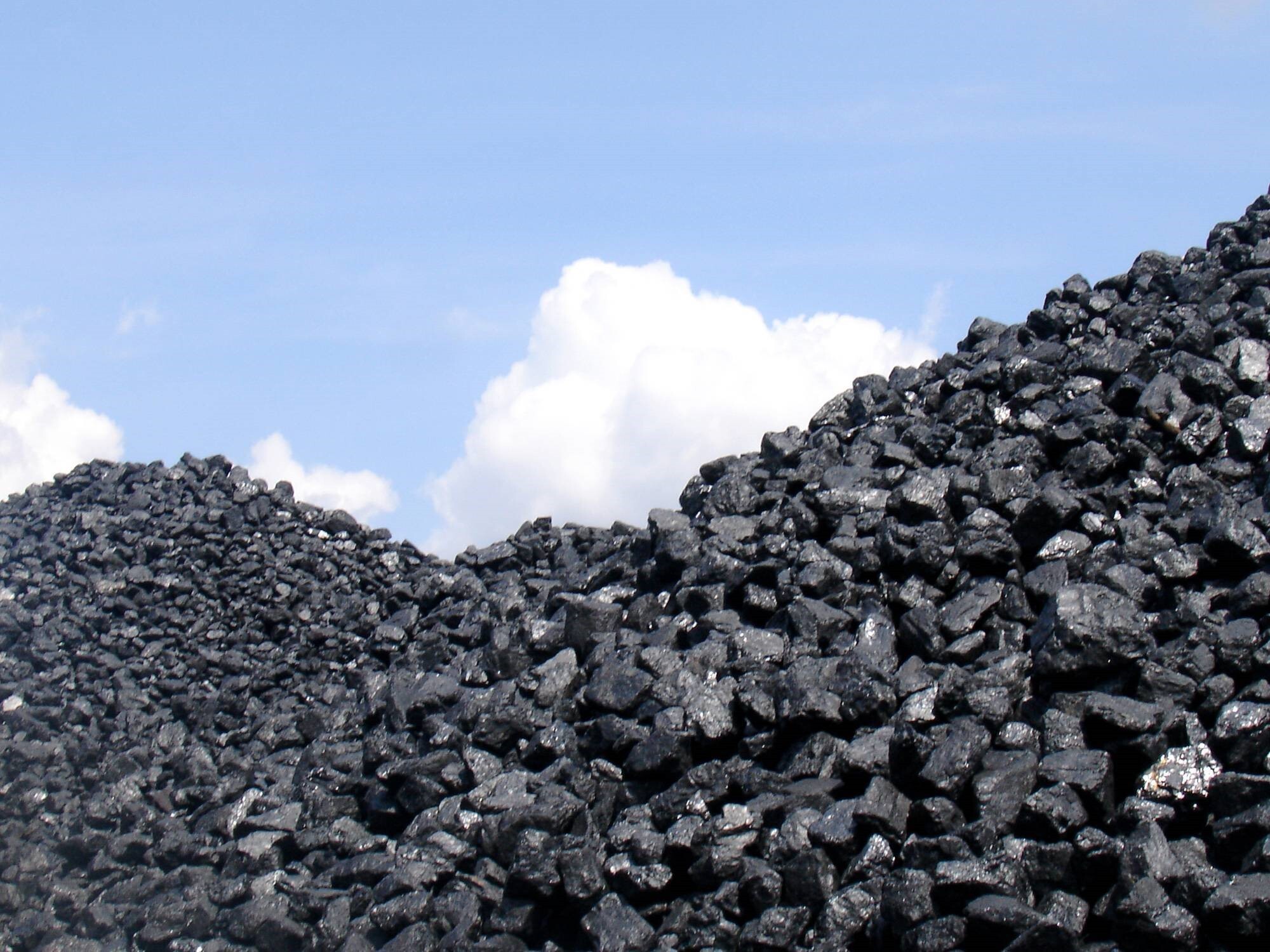
WEEKLY: China's thermal coal decline deepens; imported prices stabilise
China's domestic thermal coal prices declined last week (September 1-5), extending the downward trend for the second consecutive week, as cooler weather dented power demand and coal consumption, industry sources said. At northern transfer ports, coal trading remained at a standstill as utilities held back from spot purchases. Sources said most buyers focused on meeting long-term contract obligations, supplemented by occasional imports of seaborne thermal coal. With coal consumption falling on cooler weather, utilities saw little need to seek additional cargoes from the domestic market. As of Friday, Mysteel assessed 5,500 kcal per kg NAR thermal coal at RMB 686 per tonne (USD 96.2 per tonne), FOB northern ports with VAT, down by RMB 9 per tonne from a week earlier, adding the total...

Odisha – A Capital of Indian Aluminium Industry (Part 2)
Odisha has three large alumina refineries at present; and they are the backbone for the primary metal production in the country. Photo Caption: Damanjodi Alumina Refinery Damanjodi Alumina Refinery (NALCO) The Alumina Refinery is located at Damanjodi, Koraput district in Odisha, approximately 14 km from the bauxite mine at Panchpatmali and started its operation in 1986. The mined-out bauxite is transported from captive mine to refinery by a 14.6 km long single-flight multi-curve 1800 tonnes per hour (TPH) capacity cable belt conveyor. The alumina produced is transported to aluminium smelter at Angul (Odisha) and to Vizag (Andhra Pradesh) port by rail. The present capacity of Alumina Refinery is 2.3 million tonnes per annum (Mtpa). The Salient Features are as follow: Atmospheric pressure...

From waste to wealth: how AI robots can recover $6.5B a year and transform recycling’s future
In America’s ongoing battle with climate change and mounting waste, the recycling line is becoming the stage for an unexpected revolution. Despite decades of effort to sort plastics, papers, and metals, the country’s recycling system remains deeply inefficient. Each year, about USD 6.5 billion worth of recyclable materials is lost to landfills, as a result of outdated processes, contamination, and an overstretched workforce. Image for representational purpose The solution may not be more people on the sorting line but a new kind of worker: robots powered by artificial intelligence. With high-speed cameras, sensors, and nimble robotic arms, these machines are beginning to transform how recyclables are recovered, cleaned, and put back into circulation. Why the system is under strain? Inside...

Odisha – A capital of Indian aluminium industry (Part 1)
Odisha has emerged as the cornerstone of India’s aluminium industry, accounting for 59 per cent of the country’s bauxite reserves, primarily located in the Eastern Ghats. The state hosts integrated operations encompassing bauxite mining, alumina refining , and aluminium smelting, led by major players such as NALCO, VEDANTA, and HINDALCO. The predominance of gibbsitic bauxite enables efficient extraction under low temperature and pressure conditions, enhancing economic viability. The large aluminium smelters are also located in the Jharsuguda and Angul industrial belts of this state. Odisha's industrial growth is further supported by robust infrastructure, dedicated industrial zones, and proactive government policies. With planned capacity expansions, renewable energy integration, and...

WEEKLY: China's alumina supply remains loose despite output fall
The 44 Chinese alumina producers under Mysteel's regular tracking produced 1.82 million tonnes of metallurgical-grade alumina over the week of August 29-September 4, down by 1.4 per cent from a week earlier, according to the results of Mysteel's latest survey. This marked the second consecutive weekly decline and was sharper than the prior week's 0.3 per cent dip, Mysteel Global noted. Last week's output drop was largely the result of short-term production cuts lasting one to two days at some refineries in Hebei, Shandong, and Henan provinces around September 3, according to market watchers. In addition, one refinery in Shanxi province reduced production on its 500,000 tonnes per year line during the same week due to tight domestic bauxite supplies. Production and deliveries of the ore...

India leads aluminium scrap imports with $1.96B as China drops 76% and US rises to $980M
Global aluminium scrap trade is undergoing a major reshuffle, with shifting demand patterns, tariff pressures, and regional recycling dynamics driving sharp changes in import rankings . Latest UN Comtrade data for the first half of 2025 shows India rising to the top as the largest importer, while China’s share has fallen dramatically. Image used for representational purpose The US has surged into second place on the back of tariff-driven demand, Germany has held steady despite industry headwinds, and Thailand has entered the top five, displacing South Korea. India leads the market India imported aluminium scrap worth USD 1,961 million in the first six months of 2025. That compares with USD 1,589 million during the same period in 2024. The increase of more than 23 per cent lifted India’s...

China’s aluminium trade contradiction: Export peaks but import grows, too!
China’s aluminium story has always been a study in contradictions. On paper, the country dominates the industry. It produced nearly 43 million tonnes of primary aluminium in 2024, more than half the world’s supply. Yet in the same year, it imported over 3 million tonnes of primary aluminium, largely from Russia. Even more puzzling, China simultaneously exported about 6 million tonnes of semi-manufactured aluminium products, making it the world’s largest exporter of value-added aluminium. Image source: https://www.omfif.org/ Watch exclusively on AL Circle: Aluminium and Other Base Metals: Understanding Risk Management and Hedging by Jorge Eduardo Dyszel The paradox raises pressing questions as to why the world’s biggest producer and consumer of aluminium needs to import. Why does it...

