North American aluminum Zorba-Zurik scrap trade: Leading exporters and a shift in processing
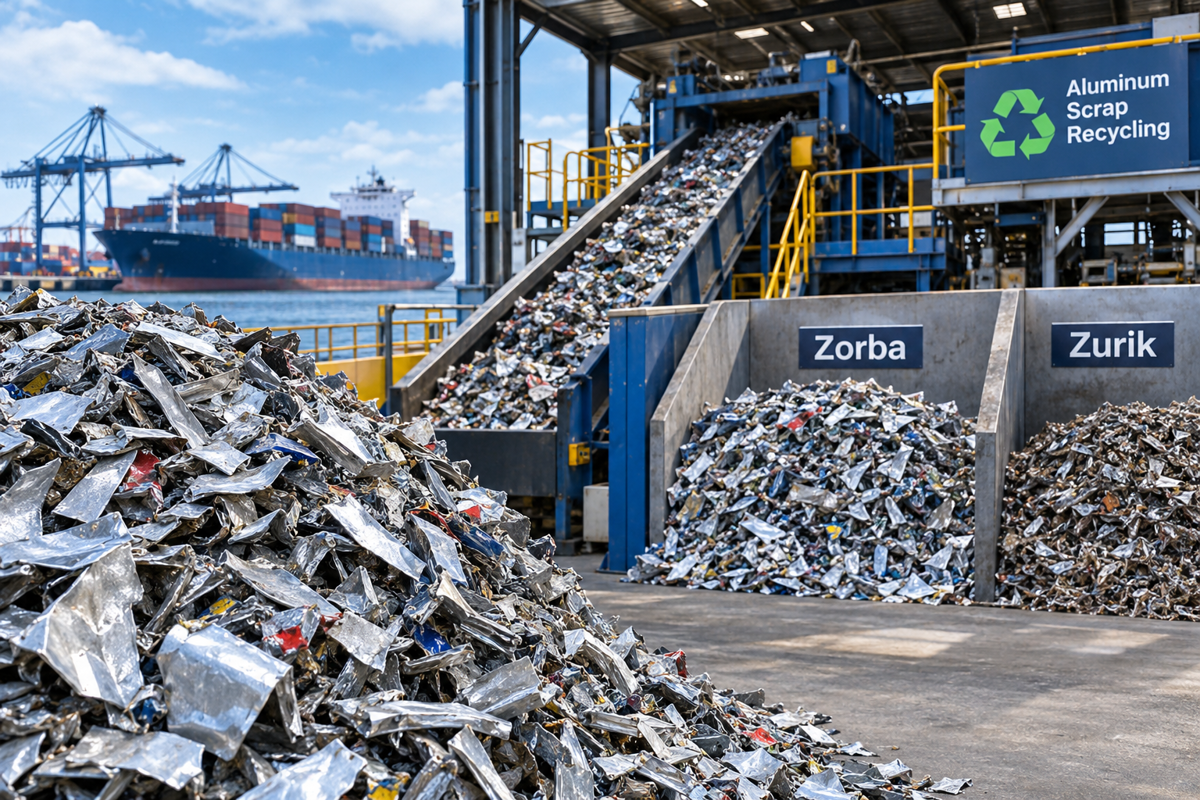
The image used in this article is generated with an AI tool and does not depict any real-time moment
North America's aluminium Zorba-Zurik scrap trade is evolving as major recyclers invest in advanced metal recovery technologies and international buyers seek consistent supplies of specification-compliant non-ferrous scrap.
From established exporters such as CMR America, GP Harmon Recycling, and Sims Global Commodities to traders offering different Zorba grades and shipment volumes, the market is increasingly shaped by material quality, processing capabilities, and global demand.
While India and Southeast Asia remain important destinations for North American scrap, the region’s leading processors are also expanding domestic sorting operations to produce higher-purity, furnace-ready materials. This dual approach is reshaping the competitive landscape for aluminum scrap exporters and downstream recyclers.
CMR America, GP Harmon and Sims feature among major exporters
Exporter records identify CMR America LLC, GP Harmon Recycling LLC, SeaLink International Inc, and General Logistics International Inc among the most frequently listed companies in the North American Zorba and Zurik scrap trade.
The leading companies by recorded shipment frequency include:
| Company | Recorded shipments |
|---|---|
| CMR America LLC | 72 |
| GP Harmon Recycling LLC | 61 |
| SeaLink International Inc | 50 |
| General Logistics International Inc | 47 |
| Sims Global Commodities Pte Ltd | 46 |
| Commercial Metals Company | 40 |
| Daiki International Trading Corporation | 34 |
| Eagle Trans Shipping Logistics LLC | 24 |
| EMR USA Holdings Inc | 23 |
| Radius Recycling Inc | 18 |
The exporter records also highlight the scale of material movement. CMR America LLC recorded approximately 5,142 tonnes of shipments, followed by Sims Global Commodities at around 4,973 tonnes. Daiki International Trading Corporation recorded approximately 3,423 tonnes.
Other companies featured in the records include OmniSource LLC, The David J. Joseph Company, PADNOS, Huron Valley Steel Corporation, and Mervis Industries.
Join the fourth edition of webinar "Hedging for recyclers - Become an expert in 6 hours" by Jorge Dyszel.
North American Zorba scrap offers span multiple grades and shipment sizes
Commercial selling leads from the United States highlight the range of Zorba scrap specifications available to international buyers, with offers covering different aluminum contents, impurity levels, and shipment quantities.
One Portland-based offer for 96/2 shredded aluminum scrap specifies a material composition of 93.37% aluminum, 1.01% copper, 1.00% zinc, and 4.09% waste and other materials. The offer covers 10 loads, with particle sizes ranging from 0.5 inches to 5 inches.
Another US-origin offer lists 95/4 Zorba scrap in a quantity of 100 tonnes, equivalent to five 40-foot containers carrying an average of 22 tonnes each. The material specification includes 5% impurities and 4% red and yellow metals, with particle sizes predominantly between 20 mm and 150 mm.
The market also includes traders offering Zorba sourced from the United States and Italy. One selling lead indicates a monthly supply capacity of approximately 500–1,000 tonnes, covering grades such as 93/8 and 97/3.
These commercial offers illustrate the importance of grade-specific specifications in the North American Zorba trade. Aluminum content, residual copper and other metals, non-metallic impurities, particle size, and shipment volumes all influence the suitability of material for downstream processing.
Radius Recycling expands advanced metal recovery capabilities
Radius Recycling, formerly Schnitzer Steel Industries, is one of North America's major recycling operators, headquartered in Portland, Oregon.
The company operates a network of deepwater port facilities and large-scale shredders, supporting the recovery and processing of ferrous and non-ferrous metals from end-of-life vehicles, appliances, and other scrap sources.
A major component of its downstream strategy is the deployment of Advanced Metal Recovery (AMR) technology. The company has invested $130 million in this initiative, integrating X-ray transmission, optical sorting, and density separation technologies across its port facilities.
These systems enable the recovery of higher-value non-ferrous materials from mixed shredder residues, including aluminum, copper, brass, stainless steel, and zinc.
The resulting material streams can be marketed to domestic consumers and international buyers, allowing the company to move beyond the sale of unrefined mixed scrap.
Radius also operates a Third-Party Recycling (3PR) service division, combining industrial scrap management with bulk port logistics to serve customers across Asia and Europe.
Sims and SA Recycling strengthen North American export infrastructure
Sims Limited maintains a substantial presence in the North American scrap market through its regional operations and its 50% ownership stake in SA Recycling.
SA Recycling operates an extensive network of scrap processing yards, shredders, and port terminals across the US West Coast, Gulf Coast, and Southeast. Its infrastructure supports the recovery and export of non-ferrous materials, including Zorba and Zurik.
The combined operations of Sims and SA Recycling represent an important channel for North American scrap exports, supplying secondary refiners in India and Southeast Asia while expanding domestic sorting capabilities.
Sims Lifecycle Services (SLS) also processes complex electronic waste and data center IT assets, recovering non-ferrous fractions that can feed into downstream separation operations.
Looking for secondary aluminium? Explore a wide range of aluminium scrap and recycled aluminium products from global suppliers on AL Biz
PADNOS and OmniSource focus on specialized processing
North American processors are developing capabilities that support the production of cleaner and more specialized scrap grades, strengthening the connection between scrap collection and downstream manufacturing.
Based in Holland, Michigan, PADNOS operates processing infrastructure across the US Midwest, including shredders, hydraulic shears, advanced separation plants, and specialized wire-chopping operations.
Its non-ferrous processing activities include the recovery of Zorba, Zurik, Twitch, and clean copper-aluminum chops.
These materials supply Midwest automotive foundries and export traders, positioning PADNOS across both domestic downstream markets and international scrap trade.
OmniSource LLC, a scrap procurement and processing subsidiary of Steel Dynamics Inc. (SDI), operates an integrated recycling model.
The company runs processing facilities, shredders, and non-ferrous separation plants across the Midwest and South, with additional greenfield expansion in Texas.
Although its operations primarily support ferrous scrap supply to SDI's electric arc furnace steel mills, OmniSource also uses advanced non-ferrous sorting lines to recover Zorba and Zurik from shredder residue streams.
This approach allows the company to extract additional value from materials generated through its broader scrap processing operations.
Huron Valley Steel Corporation
Huron Valley Steel Corporation (HVSC), with facilities in Belleville, Michigan, and Anniston, Alabama, specializes in non-ferrous scrap processing.
The company has developed capabilities in dense-media separation, vision-based sorting, and X-ray sorting to separate heterogeneous Zorba into individual metal streams.
HVSC also processes mutilated and partial coins under the US Mint's Mutilated Coin Redemption Program, recovering coinage materials from automotive shredder residue.
Its specialized processing operations demonstrate the range of applications supported by advanced separation technologies in the non-ferrous recycling sector.
Zorba and Zurik specifications shape international trade
The commercial value of Zorba and Zurik depends heavily on metallic content, contamination levels, particle size, and the composition of the recovered metals.
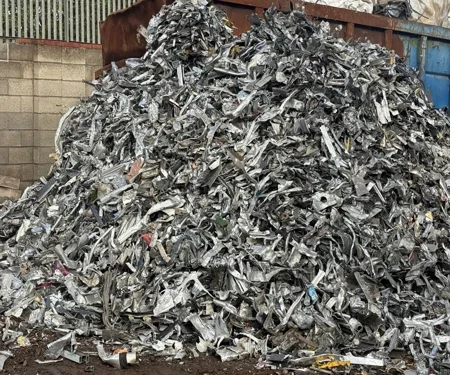
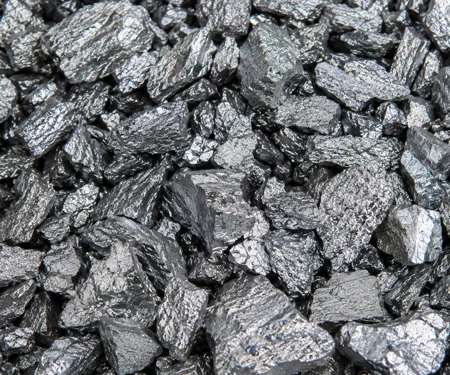
Zorba is a shredded non-ferrous scrap grade predominantly composed of aluminum. It is recovered through mechanical separation following automobile shredding and typically contains aluminum alongside copper, brass, zinc, magnesium, lead, and nickel-bearing stainless steel.
Commercial grades are designated according to their total non-ferrous metallic content. Zorba 90, for example, represents a material containing approximately 90% non-ferrous metals, with the balance consisting of moisture, fine particles, or non-metallic contaminants.
Zurik represents the heavier non-ferrous fraction recovered downstream of primary aluminum separation. It primarily contains nickel-bearing stainless steel, copper, brass, and other heavy alloy fragments.
Both grades require strict quality control, with contractual specifications governing metallic purity, particle sizing, moisture, and contamination.
As processing capabilities improve, traders are increasingly marketing upgraded sub-fractions derived from Zorba.
Twitch is a shredded aluminum grade produced through dry density separation or advanced optical sorting. It offers secondary aluminum smelters and die-casters a higher-purity feedstock with reduced concentrations of heavy metals.
Ginger is another specialized grade, consisting of mixed shredded cast aluminum mechanically segregated from Zorba and Twitch. Its specifications include limits on magnesium, zinc, iron, and non-metallic contaminants.
These upgraded grades allow processors to serve more specialized downstream markets rather than relying exclusively on exports of mixed scrap.
India and Southeast Asia remain key destinations for North American scrap
The international trade in North American Zorba and Zurik has undergone a major realignment following changes in China's solid waste import regulations and tighter purity requirements.
Historically, mainland China was a major destination for North American Zorba, with imported mixed scrap processed through labor-intensive sorting operations. Restrictions on solid waste imports redirected trade toward alternative Asian processing centers.
India has emerged as a major destination for North American Zorba exports, with port hubs such as Mundra and Nhava Sheva receiving substantial volumes of imported scrap.
Indian secondary aluminum refiners process imported Zorba into alloy ingots, including ADC12 and LM25, supplying automotive foundries and industrial casting operations.
Southeast Asian markets, including Malaysia, Vietnam, and Thailand, have also developed processing infrastructure to handle imported mixed non-ferrous scrap.
These markets use automated sorting systems and manual separation facilities to upgrade Zorba into higher-purity aluminum fractions or remelted secondary ingots. The resulting materials can subsequently enter manufacturing supply chains in China, Japan, and other markets.
Showcase your brand, aluminium recycling initiatives and sustainability vision in our upcoming magazine: Sustainability & Recycling: Aluminium’s Commitment 2026.
Domestic processing gains importance as scrap becomes a strategic resource
The growing emphasis on domestic scrap processing is closely linked to industrial decarbonization and the need to secure reliable supplies of secondary metals.
Secondary aluminum recycling consumes approximately 5% of the energy required for primary aluminum smelting, making recycled material an important resource for manufacturers seeking to reduce energy consumption and emissions.
The objective is to retain more recyclable aluminum within domestic supply chains while supporting the production of higher-value materials for manufacturing.
International regulatory requirements are also influencing trade decisions. India's Bureau of Indian Standards (BIS) requirements and Quality Control Orders place emphasis on the quality of imported aluminum scrap, while Southeast Asian markets enforce metallic purity thresholds and restrictions on non-metallic contamination.
Unlock full access – sign up for FREE.
Key benefits
Less carbon, more circularity: Trimet gives aluminium recycling a cleaner makeover
Next articleThe recycling blind spot: AI reveals why aluminium aerosols are harder to recover
Grow with
AL Circle












_md.webp)