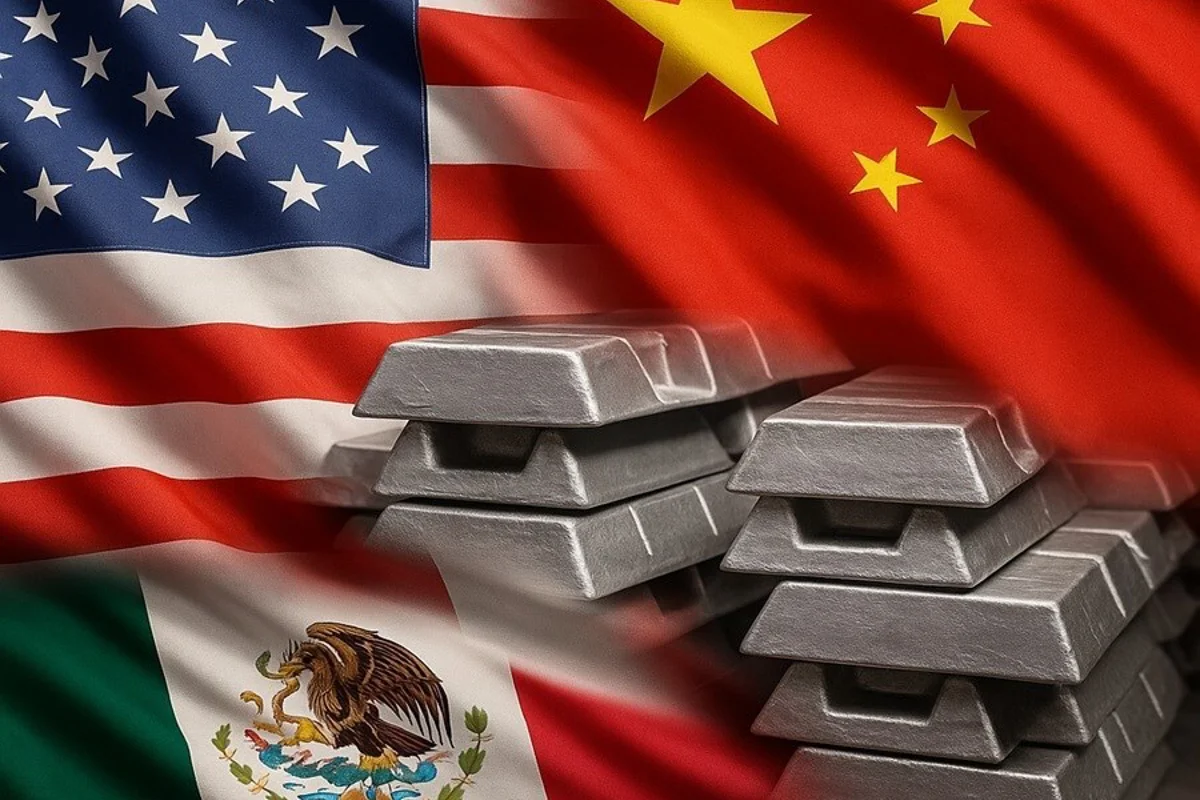
Mexico’s aluminium industry once leaned on China as a way to soften the blow of US trade barriers is now moving on the other side. When Washington imposed tariffs on Chinese goods in 2018, large volumes of aluminium were rerouted through Mexico, some of it processed locally before being shipped on to the US.
The opening came a year earlier, in 2017, when the US removed tariffs on Mexican aluminium. With duty-free access under USMCA, Mexico became an attractive route for Chinese producers to slip past American trade restrictions. Imports surged, raising concerns that the sector was becoming too dependent on Asian supply.
From the export data, we can see the change: in 2024, Mexico’s exports to China were about USD 9.08 billion, dominated by copper ores and concentrates (USD 5.17 billion), alongside other minerals and limited manufactured goods. In 2025, exports slipped to around USD 6 billion, still concentrated in copper and minerals and slightly below the previous year’s level.
Section 232 pressures bring Mexico closer to Washington
That trade dynamic is now shifting. With Section 232 duties on aluminium doubled from 25 per cent to 50 per cent this year, Mexico is being pulled back toward Washington and away from Beijing.
On September 11, the government announced tariffs of 10–50 per cent on around 1,400 products from countries without trade deals, including aluminium. Aimed largely at Asian imports, the move was widely read as Mexico signalling closer alignment with US trade policy. Industry voices said the decision reflects a deeper push to strengthen North American integration, even if it means cooling ties with China.
This theme dominated discussions at the AluMexico conference in Monterrey. Industry leaders argued that closer cooperation with the US and Canada is now unavoidable. Eugenio Clariond Rangel, president of IMEDAL and executive president of Cuprum, urged continued engagement with Washington despite the tariffs, warning that Mexico could not afford further reliance on Asia. He floated the idea of a trilateral body with the US and Canada to negotiate tariff exemptions, though he admitted results would take time.
Officials and analysts echoed the same point, framing the situation as a contest between North America and China. The consensus was clear: with most of Mexico’s aluminium headed to the US, the industry has little choice but to align more closely with Washington.
Scrap exports tighten supply at home
Another layer of pressure is coming from scrap flows. More Mexican scrap is being shipped to the US, entering duty-free under USMCA. This has left domestic producers short of feedstock, forcing greater use of P1020 primary aluminium in secondary production.
Rangel said restricting scrap exports could help, though Mexico’s first priority is maintaining dialogue with the US. Rising scrap exports have already pushed domestic prices higher, prompting Fastmarkets to launch local assessments for non-ferrous scrap and alloys in June.
Tariffs add volatility to the market
Mexico’s tougher trade stance has triggered debate. Alongside aluminium duties, the government plans a 50 per cent tariff on Chinese car imports from 2026. Some producers warned that applying tariffs to goods not made domestically — such as billets and primary aluminium — only adds costs and weakens competitiveness.
Traders described a market on hold, with companies delaying sales until Congress finalises the measures. The uncertainty recalls May 2024, when aluminium tariffs were briefly introduced and then rolled back to secure supply for industries like automotive and electronics. This time, however, participants expect the measures to stick.
Slow demand and softer premiums
Uncertainty has already slowed the market. Spot activity is subdued, and premiums have eased. One producer said a major automaker is scaling back operations in Mexico and shifting expansion plans to the US because of the tariffs.
On September 9, Fastmarkets assessed the aluminium 6063 extrusion billet premium, cif Mexico, at USD 370–420 per tonne, unchanged from late August but down nearly 5 per cent from earlier levels. The P1020A premium slipped to USD 300–340 per tonne, while the monthly low-carbon differential held steady at USD 0–38 per tonne.
Realignment out of necessity
Mexico’s pivot back to the US is as much about survival as strategy. Nearly 80 per cent of its exports already go north, making continued access to the American market essential for jobs and investment.
Under USMCA, duty-free trade requires high levels of regional content, and with enforcement tightening this year, manufacturers are sourcing more from the US and Canada while cutting back on Chinese inputs. Government programs such as “Plan Mexico” are reinforcing this nearshoring trend by promoting domestic manufacturing and supply chain integration.
Even with Section 232 tariffs now at 50 per cent, Mexico’s aluminium industry sees closer alignment with Washington as the most pragmatic option. Pulling away from China may be costly, but industry leaders argue it is the only way to protect competitiveness in the country’s most important market.












_md.webp)
_md.webp)
_md.webp)







