Scotland’s circular economy has been quantified in hard numbers for the first time, with a new economic study placing its contribution at GBP 7.11 billion in gross value added (GVA) in 2021. The valuation represents 4.7 per cent of Scotland’s total GVA, or 3.9 per cent of GDP when including offshore oil and gas extraction. Employment linked to circular activity stood at 81,447, accounting for 4.4 per cent of total Scottish jobs.
The figures, published by Zero Waste Scotland and produced by Eunomia Research & Consulting with University College London, establish a baseline for measuring circularity’s role in Scotland’s economy. They also highlight the scale of opportunity: circular activity already outpaces EU averages, but significant data limitations mean the true footprint may be larger than current estimates show.
The analysis followed the European Circular Economy Monitoring Framework (ECEMF), developed by Eurostat as the EU-wide standard for tracking circular activity. The framework identifies 127 circular activities across the “9Rs” hierarchy — reuse, repair, refurbish, remanufacture, recycle, recover and related functions — and maps them to NACE and CPA classifications for integration into economic statistics.
Applying this to Scotland required several adjustments. Input–Output tables provide Scottish GVA at the 2- or 3-digit SIC level, while ECEMF defines circular sectors at the more detailed 4-digit level. To bridge the gap, researchers used proportions from the UK Annual Business Survey and applied them to Scottish data, assuming that sectoral structures are similar across the UK. Where granular data was missing, an average EU27 circular share of 2.23 per cent was applied.
Employment was calculated using Scottish Annual Business Statistics, again mapped at broader sector levels and apportioned to circular shares. The results are headcount-based, not adjusted for full-time equivalents, which may overstate the labour intensity of part-time-heavy sectors.
The methodology, while aligned with European practice, carries limitations. Eurostat’s bespoke apportionment factors — the core tool for estimating circular activity within broad sectors — are not publicly available. Scotland’s figures therefore rest on proxy assumptions rather than the official factors used at the EU level.
Scotland vs the EU and UK
Even with conservative estimates, Scotland’s circular economy appears more embedded than in many European peers. Eurostat data suggests circular GVA typically accounts for between 1 and 3 per cent of GDP across EU member states, with circular employment averaging 2.1 per cent in 2021. Scotland’s 3.9 per cent GDP share and 4.4 per cent employment share, therefore, place it above the EU average on both measures.
The comparison with the wider UK is also notable. Prior to Brexit, the UK recorded 2.4 per cent of value added from circular sectors in 2019, but just 1.6 per cent of employment — an indication of higher labour productivity relative to the EU average. By contrast, Scotland’s 4.7 per cent GVA share and 4.4 per cent employment share suggest a more labour-intensive circular economy, consistent with the role of repair, reuse and recycling services in Scotland’s jobs base.
A 2023 study by Circle Economy and Zero Waste Scotland had placed Scotland’s circular employment at 8.1 per cent, almost double the estimate in the new analysis. The difference underlines how definitional choices — whether to include enabling jobs, voluntary roles or indirect activities — can swing the numbers. By sticking to the ECEMF’s narrower scope, the Eunomia/UCL study provides comparability with EU reporting but may understate Scotland’s broader circular activity.
Legislative and policy drivers
The publication came against the backdrop of Scotland’s ‘Circular Economy (Scotland) Act 2024’, which set a legal framework for reducing resource use and embedding circular practices across production, consumption and waste management. Zero Waste Scotland’s corporate plan for 2024–2030 commits to “rewiring” the economy by driving down resource consumption and waste generation.
The GBP 7.1 billion valuation provides policymakers with a quantifiable reference point for that transition. By attaching economic weight to repair, reuse, recycling and remanufacturing, it positions circularity as not just an environmental imperative but a strategic economic sector.
At the EU level, the ‘Circular Economy Action Plan’ frames circularity as central to climate neutrality, competitiveness and resilience. With Scotland’s baseline now established, its policymakers can track progress in line with EU methodologies even outside the bloc’s statistical system.
The study makes clear that Scotland’s headline figures are indicative rather than definitive. Several limitations stand out, such as GVA data being only available at aggregated SIC levels, masking the contribution of niche circular activities.
Simultaneously, without Eurostat’s apportionment factors, Scotland’s estimates rely on proxies that may over- or understate sectoral contributions. Headcount-based data inflates labour intensity in part-time-heavy sectors and lacks full-time equivalent precision. And lastly, innovative models such as digital sharing platforms or circular design consultancies are not fully captured in current classifications.
The result is a conservative estimate that captures inherently circular sectors but not the diffusion of circular practices across the wider economy. For instance, construction supply chains adopting reuse protocols or logistics operators introducing circular backhauling are invisible in current classifications.
To strengthen measurement, the report recommends four improvements: expanding definitions to capture emerging sectors such as textiles and digital platforms; securing access to Eurostat’s apportionment factors for methodological consistency; developing more granular Scottish GVA data at the 4-digit SIC level; and conducting sector-specific studies with industry partners to reveal circular practices masked by aggregate data.
Zero Waste Scotland is also developing a ‘Circular Economy Jobs Tracker’ to provide annual updates with greater detail. Once operational, it could address some of the gaps in employment measurement highlighted in the current study.
Implications for metals and recycling
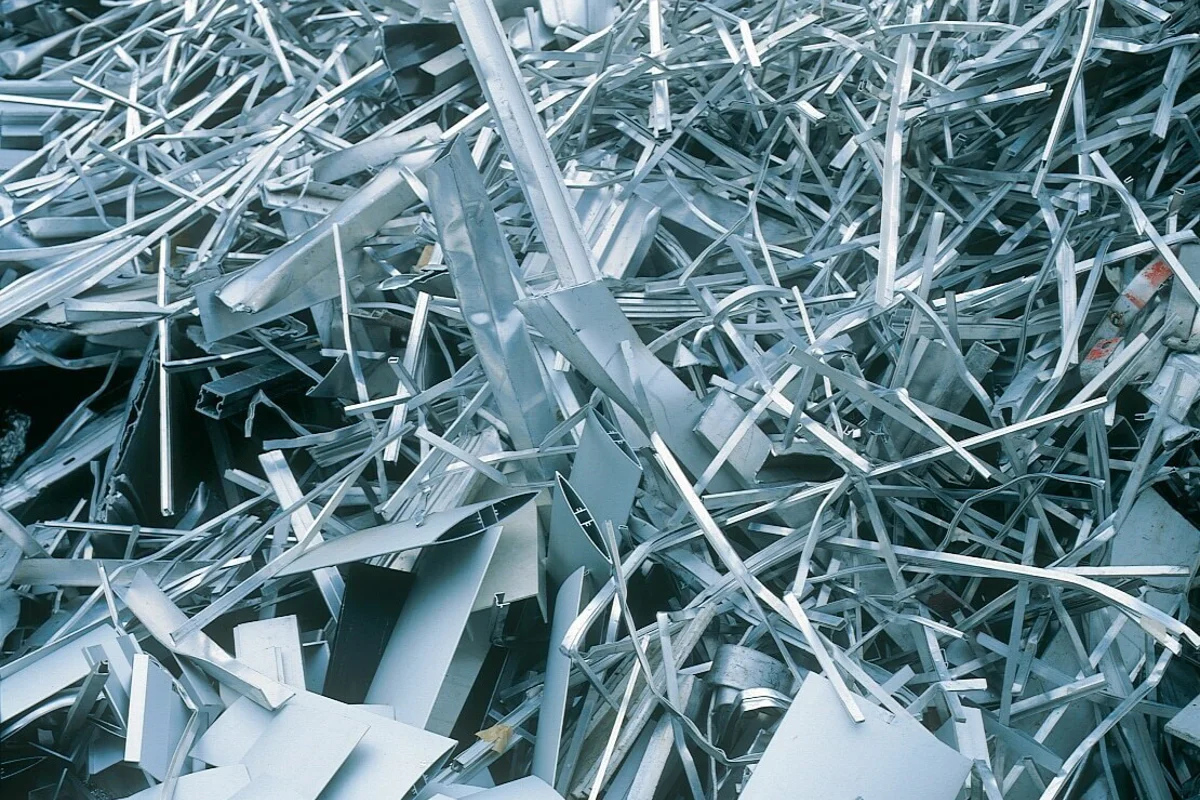
For materials-intensive industries such as aluminium, the findings carry direct weight. Recycling and secondary metals are embedded in the European Circular Economy Monitoring Framework and explicitly included in Scotland’s GBP 7.11 billion circular GVA. The mapping covers secondary aluminium production (NACE 24.42), meaning its contribution is fully recognised in the totals.
Evidence at the UK level underscores the sector’s weight: in 2021, the recycling industry generated over GBP 7 billion in value, with metals recycling alone accounting for £5 billion — the single largest component of recycling’s economic footprint. While Scotland’s figures are aggregated, the methodology ensures that aluminium and other non-ferrous metals are captured as core circular activities.
Given that recycled aluminium consumes up to 95 per cent less energy than primary smelting, the industry is positioned not only as an environmental solution but as a quantifiable economic driver. For policymakers and industry alike, the message is clear: metals recycling is not peripheral to the circular economy but central to Scotland’s measured value. Future refinements in data granularity could make this contribution more visible, offering clear evidence of aluminium’s role in jobs, GVA, and competitiveness in both domestic and export markets.













_md.webp)








