AL Circle Analysis: Inside aluminium’s global recycling reckoning with scrap, solar and smelters

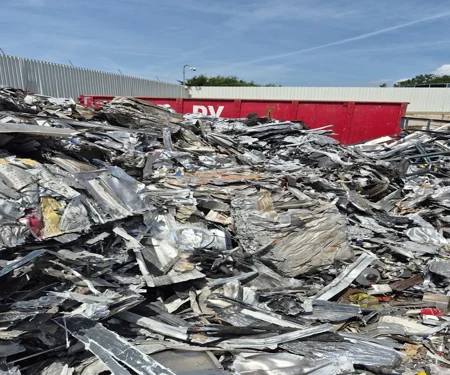
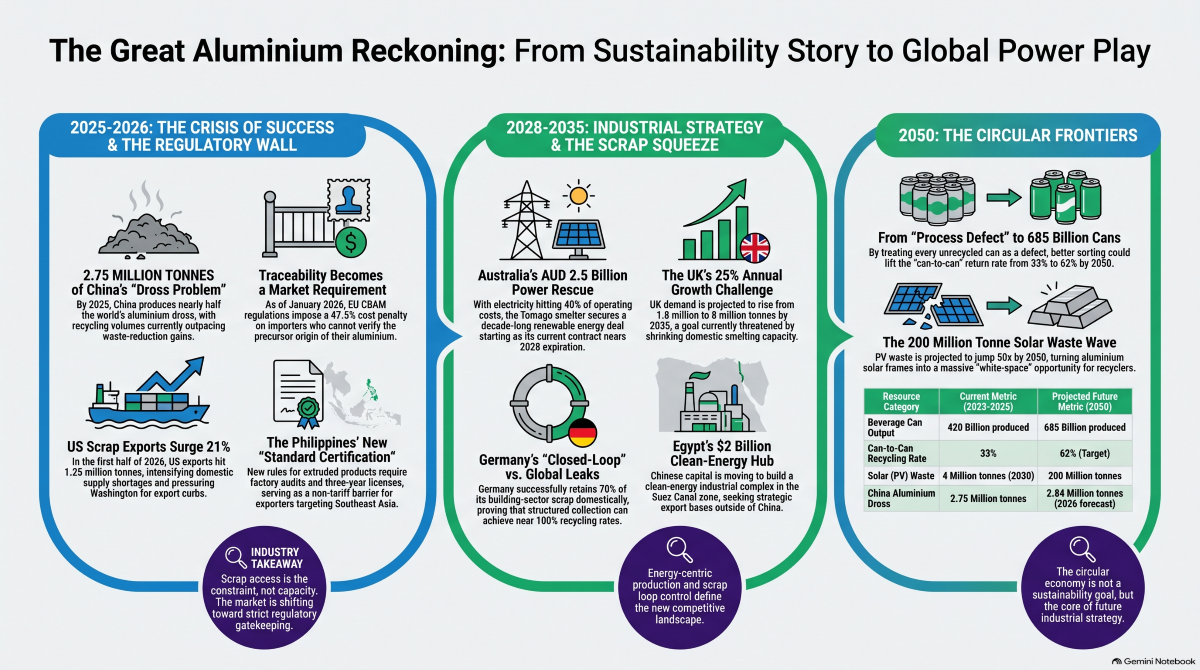
The image used in this article is generated with an AI tool and does not depict any real-time moment
Aluminium’s circular economy is no longer a sustainability side story — it is becoming a contest over who controls scrap, who sets the compliance bar, and who can afford the energy to keep smelting.
On one hand, recycled aluminium is being tested, as dross piles up in China, scrap ships out of the US faster than domestic recyclers can replace it, and only a third of the world’s beverage cans actually become cans again. On the other hand, governments are throwing real money at keeping primary production alive, from Canberra’s power-price rescue of an Australian smelter to Chinese capital scouting a new industrial base in Egypt.
These indicate that circularity is becoming as much a matter of industrial strategy and geopolitics as of technology.
To know the aluminium casting demand forecast in the transportation sector, explore our report “Global Aluminium Casting Market 2026-2032: Plant Economics, Alloy Segmentation, Pricing Intelligence, Supply Chain Analysis & Strategic Recommendations”
The global scrap squeeze: Recycling’s growth story hits a supply wall
While aluminium recycling is supposed to be the industry’s easy win — infinitely remeltable metal, lower energy cost than primary smelting, and a growing appetite from carbon-conscious buyers, the supply side appears strained under its own success.
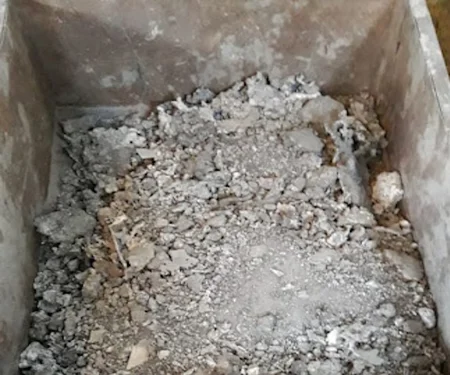
China produced roughly 2.75 million tonnes of aluminium dross in 2025, accounting for 47 per cent of the world total, with secondary aluminium recycling now the single biggest contributor. Beijing’s technology push, from rotary-furnace processing to hydrometallurgical recovery, is being matched by tighter hazardous-waste rules. However, output is still forecast to climb to 2.84 million tonnes in 2026 as recycling volumes outpace waste-reduction gains.
Access to scrap is proving just as decisive as the volume of it. Enicor Executive Chairman Tom Bird argues the UK’s recycling sector, needing to expand 25 per cent annually to meet demand rising from 1.8 million to 8 million tonnes by 2035, cannot do so in isolation. With just one domestic smelter and shrinking billet capacity, UK recyclers rely on overseas processing networks. Thus, protectionist scrap-retention policies could choke the very growth they’re meant to protect.
Germany, meanwhile, offers a working counterexample. Its AUF network shows Germany’s construction sector kept 75,000 tonnes or over half of its building-sector scrap in a closed domestic loop in 2023, with roughly 70 per cent remelted at home. It serves as proof that structured collection can hold recycling rates close to 100 per cent even as other markets leak scrap abroad.
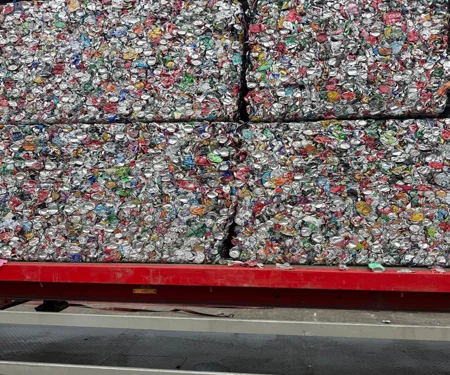
New IAI data shows only 33 per cent of the 420 billion cans produced annually return as new cans, even though better sorting alone could lift that to 62 per cent — nearly tripling future output to 685 billion cans by 2050. A 2006 Kentucky Six Sigma study, treating every unrecycled can as a process defect rather than a lost cause, is proving strikingly relevant at global scale.
The US aluminium scrap exports rose 21 per cent in the first half of 2026 to 1.25 million tonnes, with Thailand and India the biggest buyers. The Aluminum Association and the newly formed Secondary Aluminum Coalition for America both warn this is worsening a domestic supply shortage, intensifying pressure on Washington to consider export curbs.
Industry takeaways
For recyclers: Scrap access is becoming the constraint, not capacity
- Rising export competition and domestic retention pressure (US, China) mean recyclers dependent on imported feedstock should diversify sourcing and invest in domestic collection networks, following Germany’s AUF model.
- Sorting and alloy separation now matter more than raw collection volume. Closing the gap on can-to-can recycling rates offers more upside than chasing new tonnage.
For scrap traders and exporters: Expect more policy intervention in trade flows
- Export volumes are increasingly subject to national retention pressure rather than price signals alone — traders overly reliant on a single corridor (e.g., US-to-Asia) face growing disruption risk.
- Emerging waste volumes remain too scattered for dedicated investment today. Timing entry will be as important as spotting the opportunity.
Regulatory tightening: Compliance becomes a market gatekeeper
As trade flows get contested, regulators on both ends of the value chain are moving to formalise the rules, thereby adding cost and complexity that manufacturers and traders will need to price in.
The Philippines’ Department of Trade and Industry has drafted rules requiring Philippine Standard certification for extruded and cold-drawn aluminium products, backed by factory audits and three-year licences for both local and foreign manufacturers. It’s a fair-competition and safety measure on paper, but it also raises the compliance bar for exporters targeting Southeast Asia.
Brussels has moved in a similar direction from the carbon side. Its Implementing Regulation 2026/1740, retroactive to January 2026, lowered CBAM default values for select Tunisian aluminium products but raised unknown-origin precursor values by nearly 47.5 per cent. This thrusts a direct cost penalty for importers who cannot verify where their material came from. Between Manila and Brussels, the message is consistent: traceability and documentation are no longer back-office paperwork. They are becoming conditions of market entry.
Industry takeaways
For manufacturers and exporters: Certification and traceability gate market access
- Exporters into emerging Asian markets should track certification proposals early and build audit and licensing readiness into planning rather than reacting after rules take effect.
- Unverified origin now carries a real financial penalty under revised CBAM defaults; supply-chain traceability should be treated as a cost-control measure, not just a compliance formality.
For policymakers: Circularity targets need enforcement, not just intent
- Aligning trade policy, certification regimes and energy support, rather than treating them separately, would determine which markets retain higher-value aluminium processing domestically.
Explore downstream aluminium suppliers, product listings and trade opportunities on the AL Biz platform.
Capital flows to capacity: Smelters, solar and new frontiers
Even as recycling and compliance dominate headlines, fresh capital is still chasing primary and adjacent aluminium capacity, and the common thread is energy economics rather than raw material access.
With global solar capacity at 2.4TW and IRENA projecting PV waste to jump from 4 million tonnes in 2030 to over 200 million tonnes by 2050, aluminium frames are emerging as one of the most recoverable materials in the panel stream. But recyclers like PV CYCLE say today’s scattered, low volumes don’t yet justify dedicated investment – a capacity gap that’s still open for first movers.
Australia’s Tomago smelter, producing 40 per cent of the country’s aluminium, is set for a decade-long, government-backed power deal worth up to AUD 2.5 billion, tied to renewable supply from Snowy Hydro. With its AGL contract expiring in 2028 and electricity already over 40 per cent of operating costs, the deal underscores how energy pricing, not ore availability, now decides smelter survival.
Moreover, the Chinese aluminium capital continues to look outward. A Chinese aluminium group is in early discussions over a USD 2 billion, clean-energy-powered industrial complex in Egypt’s Suez Canal Economic Zone, potentially creating over 3,000 jobs. Still at the planning stage, it reflects Chinese capital’s continued search for strategically located, export-oriented manufacturing bases outside China.
Unlock key insights from industry experts on aluminium’s applications in end-user with our magazine - Sustainability & Recycling: Aluminium’s Dual Commitment.
Industry takeaways
For smelters and primary producers: Energy strategy is the competitiveness lever
- Tomago’s government-backed power deal shows long-term, renewable-linked energy contracts are becoming essential to survival in high-cost grids. Energy negotiation is to be treated as a strategic priority.
- Solar panel recycling is a genuine white-space opportunity, but investment will lag until collection volumes and geographic concentration improve — timing entry will matter as much as technology.
- Chinese aluminium capital is diversifying its manufacturing footprint toward strategic trade corridors (Egypt, Southeast Asia), a trend worth monitoring for competitive and supply-chain planning.

India’s aluminium recyclers face a scrap-supply bottleneck
Next articleTrimet builds 40,000-tpa aluminium scrap sorting hub as recycled metal demand rises
Grow with
AL Circle