India’s aluminium recyclers navigate supply constraints, quality and policy challenges - Aluminium Bharat 2026
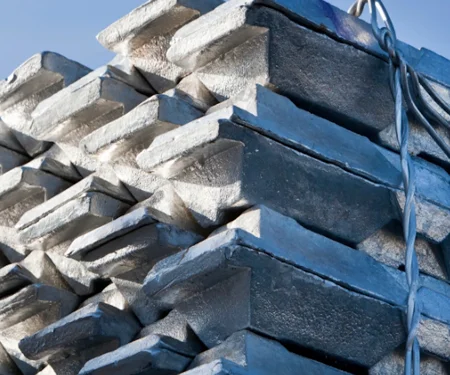
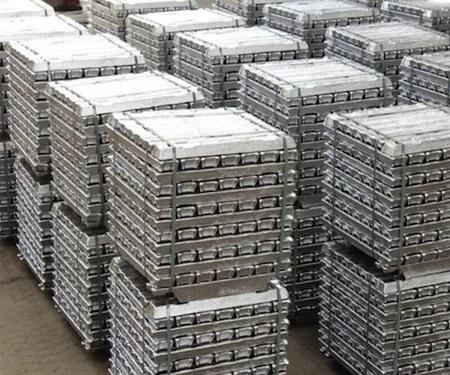
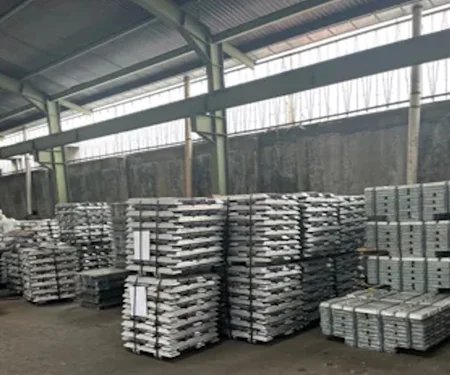
The image used in this article is from BIGMINT
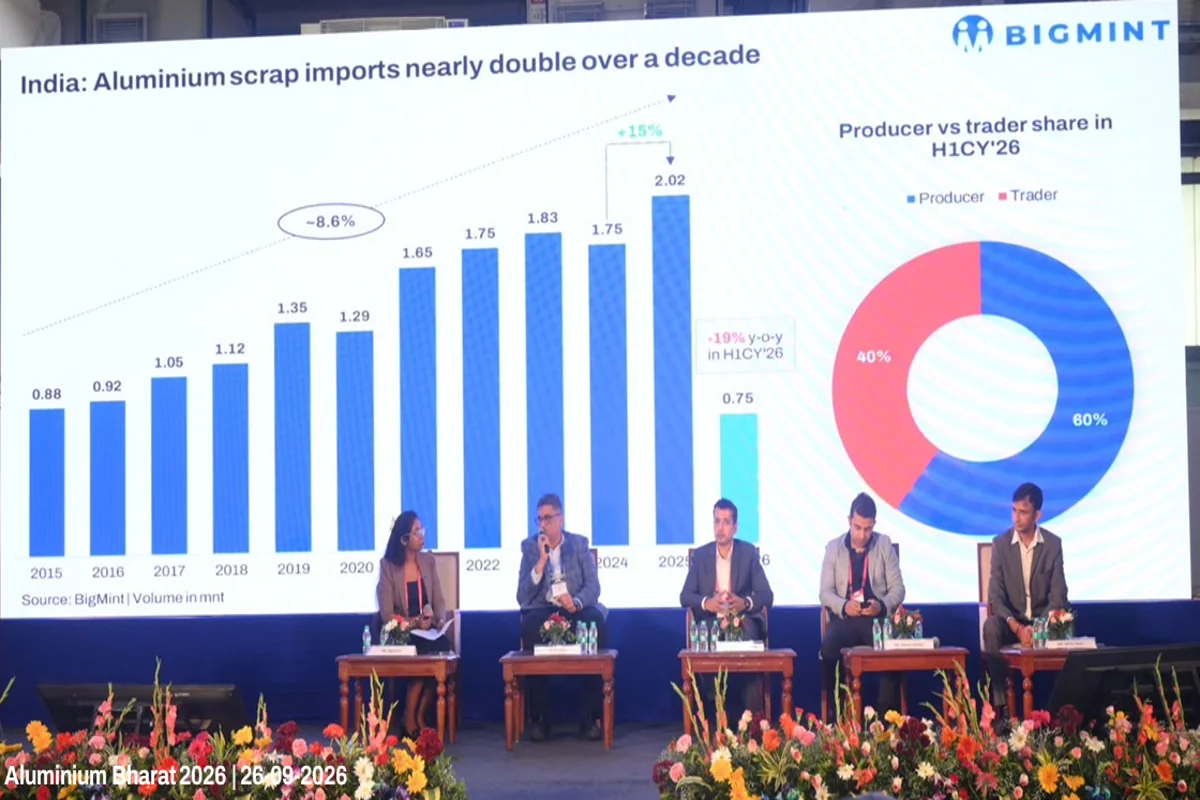
India’s circular aluminium industry is facing growing pressure from tightening global scrap availability, rising prices, export restrictions and higher logistics costs, even as demand for recycled aluminium continues to expand. These challenges were highlighted during the Circular Aluminium: Scrap, Recycled Billet & Alloy Quality session at Aluminium Bharat 2026, organised by the Aluminium Extrusion Manufacturers Association of India (ALEMAI) and co-hosted by BigMint, held on September 26 at the Helipad Exhibition Centre, Gandhinagar, Gujarat. Industry leaders discussed India’s dependence on imported scrap, rising sourcing costs, domestic collection challenges, alloy quality and the need for greater efficiency across the recycling value chain.
Middle East supply tightens as local demand rises.
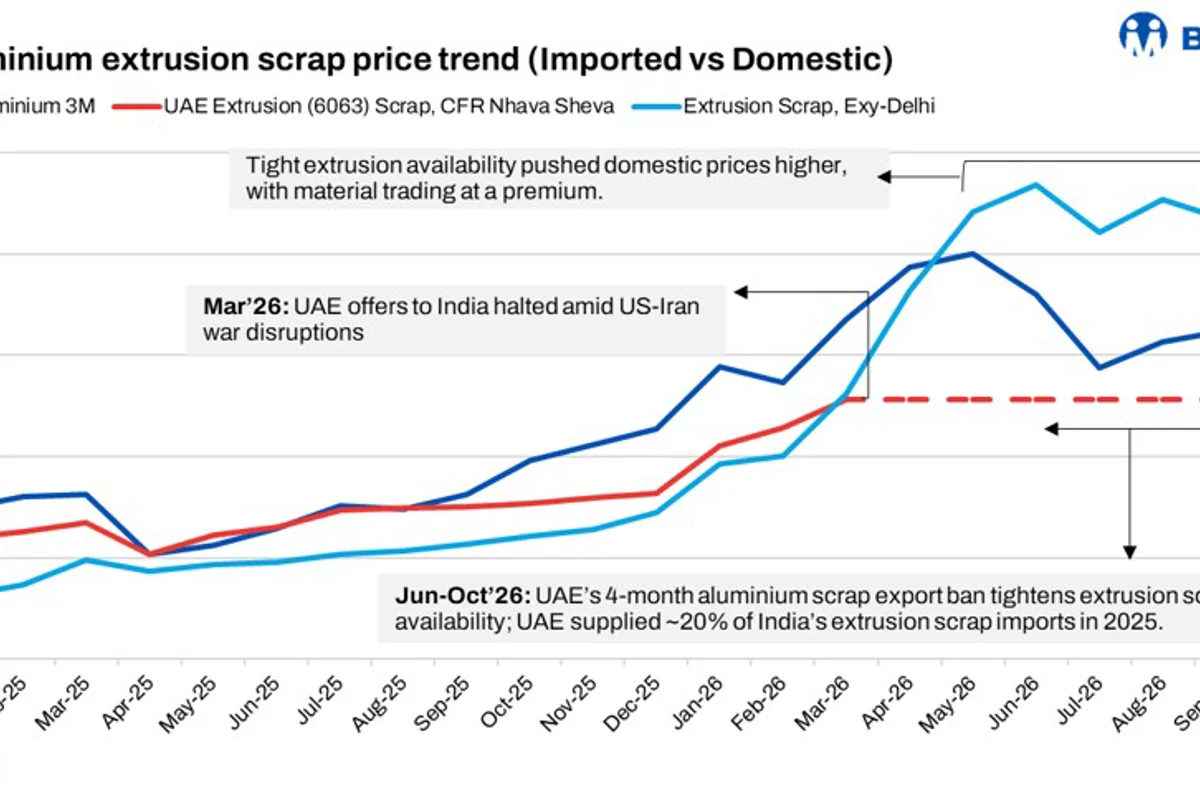
The Middle East remains an important sourcing region for Indian aluminium scrap, particularly extrusion scrap. However, Mr Muzammil Haji Amin Gadawala, President, Ala Group, Dubai, said the market has become tighter as local consumption increases and export restrictions affect material availability.
He noted that scrap prices in the region have continued to rise despite improvements in broader supply-chain conditions. Export restrictions and logistical disruptions, including challenges around the Red Sea, are adding further uncertainty.
Regarding the UAE’s temporary aluminium scrap export restriction, Mr Gadawala said the industry was hoping for a relaxation after October 8, but the outcome remained uncertain. He highlighted that material is accumulating within the UAE while local scrap consumption is declining, creating a mismatch between available supply and domestic requirements.
He suggested that restrictions should focus on scrap grades required by local industries, while other material should continue to be exported. Otherwise, excess material could ultimately turn into waste.
Higher scrap costs squeeze secondary billet margins
For Indian secondary aluminium producers, higher scrap prices are directly affecting production economics.
Mr Raghav Agarwal, Managing Director, CMR, said raw material accounts for around 85-90 per cent of billet production costs, making scrap prices a critical determinant of profitability. However, recyclers cannot always pass higher costs on to customers because recycled billets need to remain competitive against primary aluminium.
"Ultimately, our product has to remain cheaper than primary aluminium billets," he noted, highlighting the difficult balance between rising input costs and customer price sensitivity.
The situation is also affecting flat-rolled aluminium producers. Mr Nikhil Arora, Director, Virgo Group of Companies, said supply disruptions in the Middle East had forced his company to source more material from Europe, the US and Latin America.
However, longer transit times from these markets require companies to hold inventory for longer periods. According to Mr Arora, this has resulted in an increase of nearly 30 per cent in working-capital requirements compared with last year.
He also pointed to tightening scrap-export policies across several regions, including Europe, the Middle East and the US, saying that prices were rising rapidly while long-term contracts limited manufacturers' ability to pass higher costs on to customers.
Europe could become a more challenging sourcing market
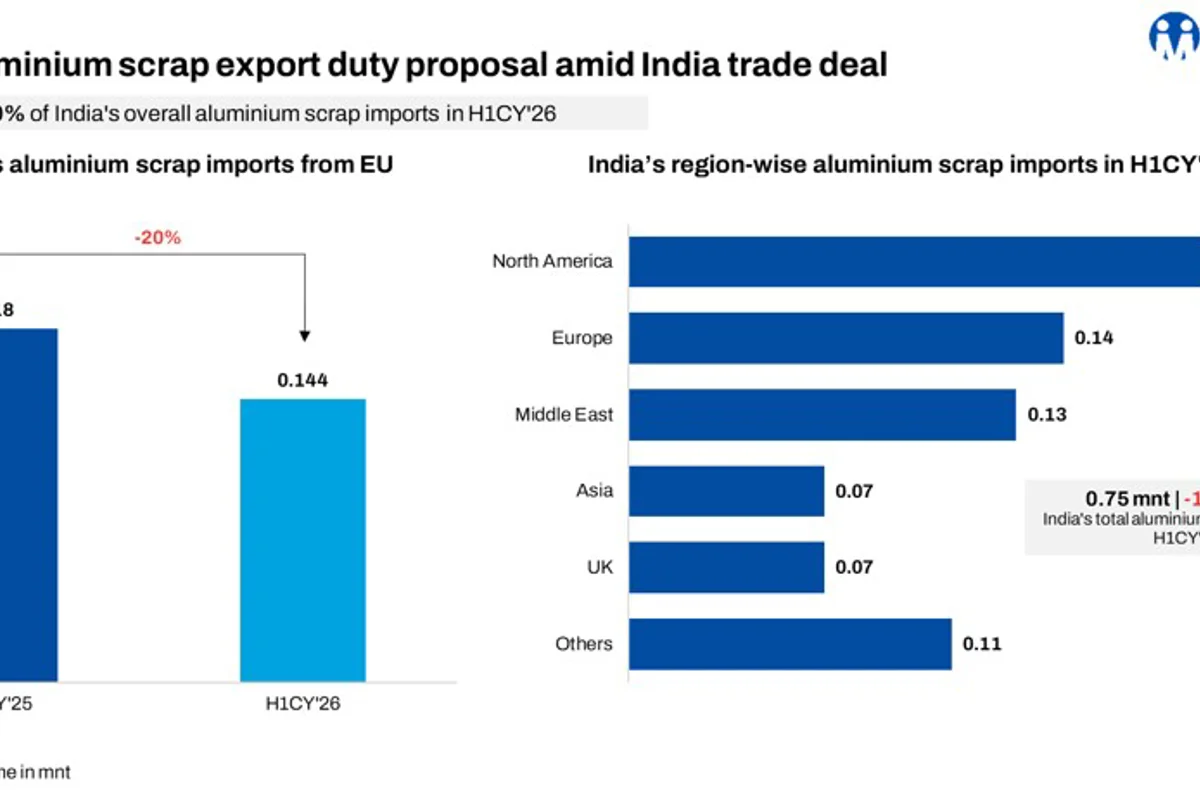
Mr Nitin Tyagi, Director, TSR, said the tightening regulatory environment in Europe could make the region a more challenging source of aluminium scrap for Indian buyers. While the EU’s decision to drop the proposed 15 per cent export duty is positive for trade, stricter waste-shipment regulations could create additional uncertainty around future scrap flows to India.
He noted that the challenge extends beyond Europe, with scrap availability tightening globally amid export restrictions and declining scrap generation. As a result, Indian buyers are increasingly looking to diversify sourcing across regions while maintaining established supply chains.
Mr Tyagi also stressed the need for India to become more organised in domestic scrap collection and processing. However, given the limited generation of scrap within the country, he said India would continue to depend significantly on imported material.
Domestic scrap cannot fully replace imports
The panel also discussed whether stronger domestic collection could reduce India's dependence on imported scrap.
Mr Agarwal said domestic generation remains insufficient to meet the industry's requirements because India has historically had relatively low per-capita aluminium consumption. Even if the country achieves very high recycling rates, the volume of scrap generated domestically would not be enough to completely replace imports.
India, therefore, will continue to depend on international scrap markets, while improving collection, segregation and processing domestically could help extract greater value from the material available within the country.
Better segregation critical for recycled aluminium quality
As recycled aluminium increasingly moves into demanding applications, maintaining alloy quality is becoming as important as securing scrap volumes.
Mr Agarwal said the most efficient recycling model is to ensure that material from a particular alloy series is appropriately processed and returned to applications where its chemistry can be maintained.
With scrap prices remaining elevated, there is little room for value loss caused by poor segregation or alloy degradation. Greater adoption of sorting and processing technologies will therefore be necessary to preserve the value of recovered aluminium.
For flat-rolled products, the challenge is even more complex. Mr. Arora said manufacturers need to combine primary aluminium with scrap to maintain the required alloy composition and chemistry. Scrap cannot simply be increased indefinitely, particularly when imported scrap can sometimes be more expensive than primary aluminium available in India.
He emphasised the need to balance technology, segregation and raw-material sourcing to ensure that Indian producers remain competitive in global markets.
Export restrictions add uncertainty to global supply
The possibility of additional scrap-export restrictions across the Middle East was also discussed.
Mr Gadawala cautioned against making broad assumptions about future policy decisions, noting that countries in the region have historically maintained different approaches to scrap trade. However, he said restrictions could eventually emerge for specific alloys or grades that are important for domestic industries, while other material may continue to remain available for export.
For Indian buyers, such policy shifts could further increase the importance of maintaining diversified supplier networks rather than relying heavily on any single geography.
Global scrap availability is becoming the bigger concern
The discussion highlighted that the current challenge is not simply about individual export bans. According to Mr Tyagi, global scrap availability itself is becoming tighter as scrap generation fails to keep pace with primary aluminium production.
He said recyclers therefore need to make better use of the scrap already available by improving sorting and processing efficiency.
This could become increasingly important as governments and industries seek higher recycled content and lower carbon intensity. Better segregation can reduce alloy contamination, improve recovery rates and allow recyclers to extract greater value from each tonne of available scrap.
PSIC disruption exposes supply-chain vulnerabilities
The panel also reflected on the recent Pre-Shipment Inspection Certificate (PSIC) disruption and its impact on international scrap trade.
Mr. Tyagi said the issue created significant uncertainty for buyers and suppliers. The cost of PSIC inspections represented an additional burden, while delays in documentation created operational and opportunity losses.
He added that changes in regulatory requirements after containers had already been loaded could undermine supplier confidence in the Indian market.
For an industry that already operates with tight margins and long international supply chains, such uncertainty can complicate shipment planning and increase the risk associated with sourcing from overseas markets.
Lower import duty could support recycling economics
The panel welcomed the Ministry of Mines’ recommendation to remove the 2.5 per cent Basic Customs Duty on imported aluminium scrap.
Mr Agarwal said lower import duties would directly benefit recyclers because margins in secondary aluminium production remain thin. A reduction in raw-material costs could improve the competitiveness of recycled aluminium against primary metal.
Mr Tyagi similarly viewed the proposed reduction as positive for the recycling industry, noting that a 2.5 per cent reduction could meaningfully lower input costs and improve the viability of secondary production.
From the supplier side, Mr Gadawala said removal of the duty could improve trade flows and make India a more attractive destination for international scrap.
India needs a stronger circular aluminium ecosystem
The discussion highlighted a structural challenge for India’s circular aluminium ambitions. While demand for recycled aluminium is increasing, the country remains heavily dependent on imported scrap at a time when global availability is tightening.
The challenges extend from sourcing and pricing to logistics, regulatory uncertainty, alloy segregation and processing efficiency. At the same time, limited domestic scrap generation means imports will remain an important part of India’s recycling ecosystem.
Improving domestic collection and segregation, investing in advanced sorting technologies, maintaining diversified international supply chains and creating a more predictable policy environment will be important to maximise the value of available scrap and strengthen Indias circular aluminium value chain.
Note: This article has been shared by BIGMINT and has been published by AL Circle with its original information without any modifications or edits to the core subject/data.
CMI targets 70% US aluminum can recycling by 2030 as MRF losses come under focus
Next articleAL Circle Analysis: Europe’s aluminium scrap curbs, India’s risk and US’s supply opportunity
Grow with
AL Circle