Aluminium cans take recycling lead at 76%: How far is industry’s 80% aim by 2030?
The image used in this article is generated with an AI tool and does not depict any real-time moment
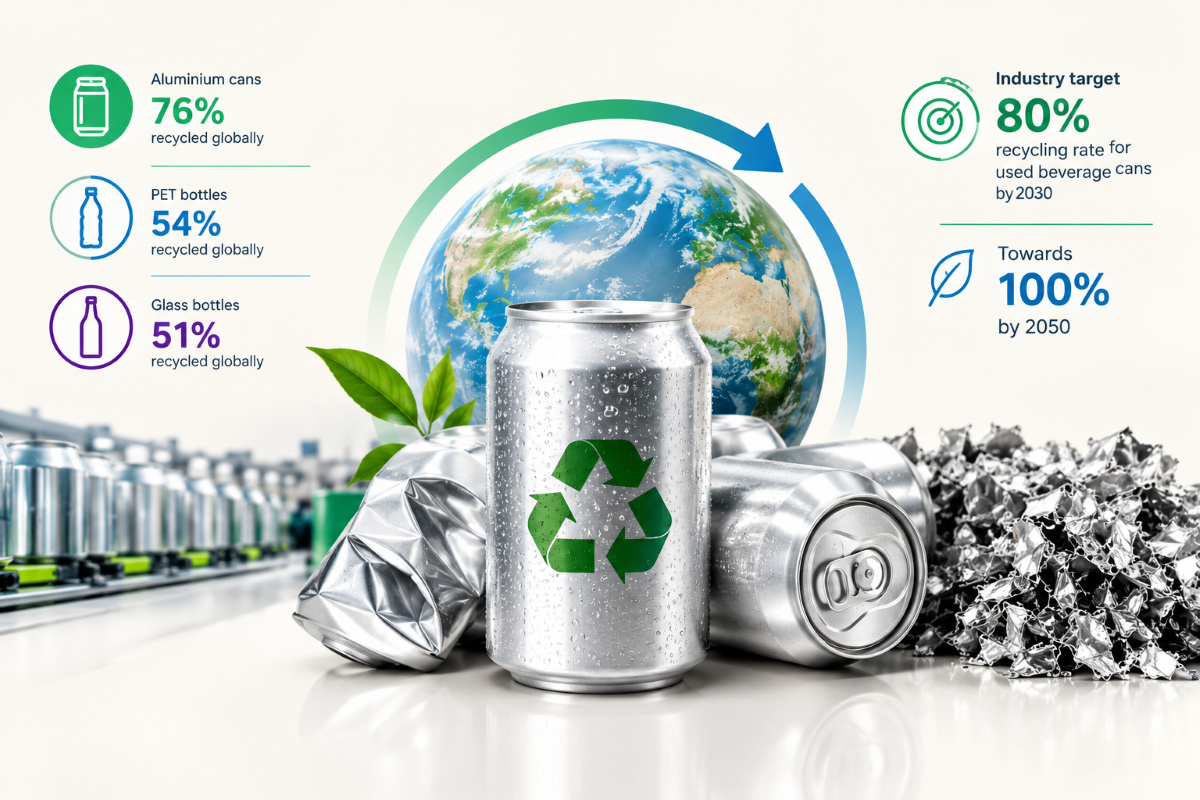
Aluminium cans are maintaining a clear lead in global beverage container recycling, with the latest 2026 data depicting a jump in aluminium can recycling rate from 74.8 per cent to 76 per cent. The figures place aluminium well ahead of PET bottles and glass bottles, highlighting the role of beverage cans in the global circular economy.
Aluminium cans with clear recycling edge
The 2026 Global Beverage Container Recycling Dataset, released by the Global Beverage Can Circularity Alliance (GBCCA), shows a significant gap between aluminium cans and other major beverage packaging formats.
Globally, 77 per cent of aluminium cans are collected for recycling and 76 per cent are recycled. By comparison, PET bottles record collection and recycling rates of 69 per cent and 54 per cent, respectively, while glass bottles stand at 56 per cent collected and 51 per cent recycled.
Join the fourth edition of the webinar “Hedging for recyclers - Become an expert in 6 hours” by Jorge Dyszel.
The dataset draws on markets representing at least 84 per cent of global sales for each packaging format, providing a broad picture rather than one based on a limited number of high-performing markets.
The higher recycling rate also carries an economic dimension. Each can returned to the recycling system signifies aluminium that does not have to be produced from scratch, helping save energy, reduce emissions and keep the material in circulation.
That is the case being highlighted during Climate Week NYC, with the latest figures providing measurable backing for the role of aluminium cans in circularity.
Tracking recycling improvements
To establish a comparable picture across beverage packaging, GBCCA commissioned Eunomia Research and Consulting to calculate collection and recycling rates for aluminium cans, PET bottles and glass bottles across major markets.
To explore trade opportunities of aluminium scrap, visit AL Biz
The 2026 dataset is the second instalment in a three-year study covering 2025, 2026 and 2027. Using the same methodology across the period is intended to make it easier to distinguish genuine progress from year-to-year fluctuations and compare the performance of different packaging materials.
The latest study also puts greater attention on five emerging beverage markets: Indonesia, Nigeria, Saudi Arabia, Turkey and India.
These markets are experiencing rapid growth in beverage consumption while their recycling systems are still developing. Therefore, they take part in the global opportunity to recover more recyclable aluminium, while also highlighting areas where collection and recycling systems still have room to fill the gaps.
The sector has set a target of achieving an 80 per cent recycling rate for used beverage cans by 2030, followed by a goal of approaching 100 per cent by 2050.
Reaching those levels will require continued investment in collection and sorting infrastructure across markets. Aluminium cans have established a strong recycling position, but the industry has not drawn the finish line here. Further gains will depend on expanding recovery systems globally.
Showcase your brand, aluminium recycling initiatives and sustainability vision in our upcoming magazine: Sustainability & Recycling: Aluminium’s Commitment 2026.
EU aluminium scrap export rules face BIR pushback over India, Malaysia, Thailand cut-off
Next articleHydro highlights need for stronger aluminium scrap safeguards under EU waste rules
Grow with
AL Circle





















