AL Circle Analysis: Import rise meets demand growth on aluminium extrusion chessboard

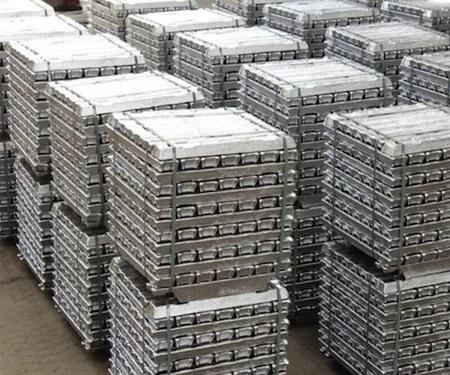
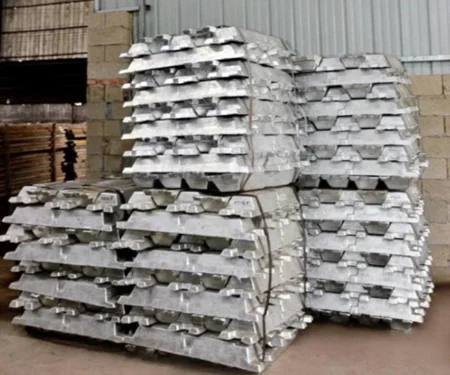
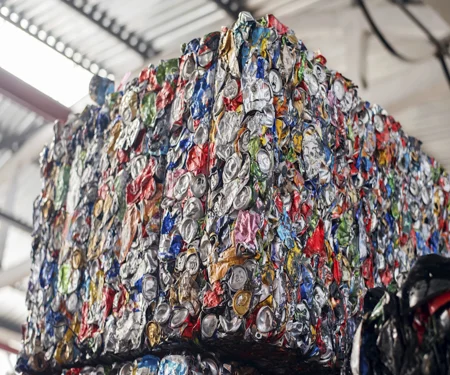
The image used in this article is generated with an AI tool and does not depict any real-time moment
Aluminium’s downstream trade network is getting more fragmented as import dependence, changing end-use demand and trade-policy interventions reshape regional markets. From North America and Europe to Asia-Pacific, the aluminium industry is navigating a market where access to supply, competitive pricing, origin and industrial demand are gaining equal traction as overall consumption growth. These developments offer a glimpse into how geopolitical and trade networks could influence aluminium’s downstream expansion.
North America: Import flows shift as downstream demand stays strong
The North American market provides the clearest starting point for understanding the changing aluminium trade network.
US imports of semi-fabricated aluminium products reached 423,000 tonnes in Q1 2026, up 30.56 per cent year-on-year. South Korea remained the leading supplier at 95,000 tonnes, while China’s shipments surged 207.05 per cent to 69,700 tonnes. Canada’s exports fell 46.08 per cent, showing how the US sourcing map is changing even as demand and limited domestic capacity sustain import requirements.
The changing US supplier mix also has implications beyond North America. A rise in Asian shipments with parallel decline in Canadian exports indicates that trade measures do not necessarily eliminate imports. Instead, they can redirect the routes through which aluminium enters a market.
Underlying demand itself is also moving geographically. Building and construction remains the largest end-use segment for aluminium extrusion, with 19.31 million tonnes consumed in 2025. However, its projected growth of 1.24 per cent CAGR through 2035 is relatively modest, with stronger expansion expected in regions such as the Middle East and Africa and parts of Asia and Oceania.
To know the global production, demand and consumption forecasts of aluminium extrusions, explore our report "The World of Aluminium Extrusions to 2035"
Takeaways for traders and exporters
- The US continues to offer substantial downstream demand despite a more complicated trade environment.
- Origin, tariff exposure and supplier competitiveness are becoming increasingly important for assessing US-bound products.
- Supplier rankings can shift rapidly as tariffs, pricing and sourcing strategies change.
- Diversifying customer markets can reduce exposure to sudden policy-driven changes in one destination.
Europe: Traditional trade links weaken, alternative supply routes emerge
Europe presents a different stage of the same transformation. Here, the issue is less about a sudden surge in total import demand and more about which suppliers are able to retain access as industrial conditions, end-use demand and trade measures change.
Germany’s aluminium extrusion imports from Italy declined 41.83 per cent between YTD 2022 and YTD 2026, reaching 25,303 tonnes. Higher energy costs, weaker construction activity, automotive pressures and stronger competition from third-country suppliers reshaped the trade flow. Yet the automotive transition is opening new extrusion opportunities in battery enclosures, structural components and thermal management, suggesting changing demand rather than simple market contraction.
That broader European picture becomes clearer when the European Union (EU) as a whole is considered.
The European Union (EU) is demonstrating how supply chains can adapt once trade barriers alter the competitive landscape. EU aluminium extrusion imports peaked at 591,845 tonnes in 2022 and had fallen nearly 30 per cent to 417,488 tonnes in 2025, with January-May 2026 volumes down 7.3 per cent year-on-year. Chinese imports fell to just 11,308 tonnes in the first five months of 2026, while Turkey has strengthened its position, shipping 222,501 tonnes in 2025.
Yet, imports remain higher than exports, suggesting that European downstream demand continues even as the supplier mix changes.

Key takeaways
For European producers and exporters
- A decline in one bilateral trade flow does not necessarily signal an equivalent fall in end-use demand.
- Changing automotive requirements could shift extrusion demand towards more specialised applications.
- Energy costs and third-country competition remain important factors in supplier competitiveness.
For exporters and European decision-makers
- Trade measures can redirect supply without removing the underlying requirement for extrusions.
- Turkey’s growing role demonstrates how alternative suppliers can benefit from changing trade conditions.
- European buyers still require external supply even as the region seeks greater control over sourcing.
Asia: Trade remedies and domestic capacity collide
Asia brings together contrasting developments in the aluminium extrusion network. Thailand is tightening scrutiny of Chinese supply, while India faces a rapidly growing downstream demand despite substantial domestic aluminium and extrusion capacity.
These markets depict how the regional supply chain can move towards greater protection in one market and greater downstream expansion in another.
Thailand has opened a new exporter review covering Chinese aluminium extrusions and imposed a provisional 21.94 per cent cash deposit rate on the applicant, Guangdong Shengyu Xingda Aluminum Profile Co. The action follows definitive anti-dumping duties introduced in November 2025, ranging from 5.12 per cent to 21.94 per cent. The review adds another layer of trade scrutiny around Chinese extrusion flows into Southeast Asia.
India offers a different response to the same broader challenge.
India’s aluminium demand from electronics is projected to grow at a 10.18 per cent CAGR from 2025 to 2030, reaching around 0.95 million tonnes. Yet downstream processing capacity has expanded only 2.0–3.5 per cent annually since 2020, while extrusion capacity of about 3 million tonnes is producing just 1.2–1.3 million tonnes. Imports of extruded products remain around 1.5 million tonnes annually.
Connect with verified aluminium extrusion buyers and suppliers through the AL Biz marketplace.
Key takeaways
For Chinese exporters and regional buyers:
- Exporter-specific reviews can alter the economics of established supply routes.
- Duty exposure needs to be incorporated into pricing and contract decisions.
- Regional buyers may increasingly assess alternative sources where trade-remedy risks persist.
For Indian policymakers and decision-makers:
- Strong primary aluminium production does not automatically translate into downstream competitiveness.
- Improving existing capacity utilisation could help narrow the gap between domestic production and demand.
- Electronics represents an important opportunity to deepen India’s domestic aluminium value chain.
For downstream manufacturers:
- Rising electronics demand creates room for higher-value, application-specific extrusion.
- Better utilisation of existing extrusion capacity could strengthen domestic supply.
- Reducing the mismatch between domestic production and imported extrusions could become increasingly important as demand expands.
Pacific: Import surge exposes domestic extrusion vulnerabilities
New Zealand is grappling with import competition and uncertainty over protection. The situation highlights the difficult balance smaller aluminium-consuming economies must maintain between affordable imports and domestic manufacturing resilience.
New Zealand declined to impose an emergency provisional duty on aluminium extrusion imports, despite a reported 38 per cent annual increase in imports and reduced working hours at some domestic plants. New Zealand’s extrusion industry raised concerns over a sharp increase in imports, particularly from China. Comparable imports exceeded 25 per cent of the domestic market in the first seven months of 2026, while hollow extrusion imports jumped 109 per cent and Chinese shipments 143 per cent. The wider safeguard investigation remains active and will examine production, sales, market share, profitability, employment and capacity utilisation.
Unlock key insights from leading companies and experts across the aluminium ecosystem with our e-Magazine - Mine to Market: ALuminium Producers & Manufacturers 2026
Key takeaways
For traders and exporters:
- Smaller open markets can become highly sensitive to shifts in import pricing and volumes.
- China-origin extrusion flows remain an important factor in regional supply competition.
- Exporters need to assess the likelihood of trade intervention alongside market demand.
For policymakers and decision-makers:
- Protecting domestic extrusion capacity needs to be balanced against costs for downstream users.
- Trade-remedy decisions can influence sourcing and investment even before a final measure is introduced.
- Policy uncertainty can itself complicate production and procurement planning.

GM invests $40m in US aluminium casting operations for truck, SUV transmissions
Next articleApex Aluminum Extrusions rejects US relocation as tariffs threaten exports
Grow with
AL Circle