India’s electronics aluminium demand to grow 7.6-9.2 % CAGR: Why aren’t makers benefiting from strong domestic production?

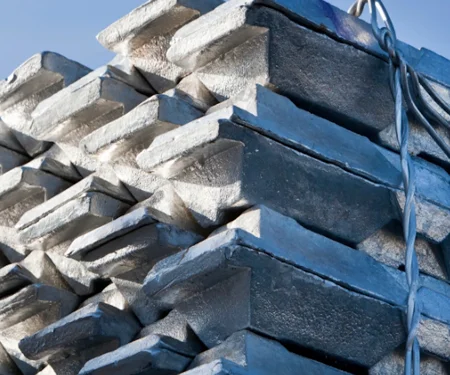
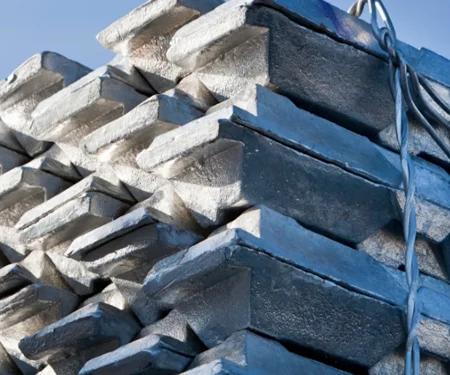
The image used in this article is generated with an AI tool and does not depict any real-time moment
India’s aluminium smelters operate with some of the highest margins in the value chain, at around 10 per cent, but this profitability is not reflected among downstream manufacturers, where margins are closer to 5 per cent. These companies convert the metal into finished products such as heat sinks, enclosures, connectors, frames and other aluminium components for electronics manufacturers, but are finding it increasingly difficult to compete with imports.
This matters because India's electronics industry is growing rapidly, creating a much larger market for aluminium components. Electronics production has increased nearly six-fold to around INR 147 billion in 2024-25, from about INR 24.7 billion in 2014-15, while the sector has created around 2.5 million jobs over the past decade. The government is targeting a USD 500 billion domestic electronics manufacturing ecosystem by 2030-31. Yet the very aluminium processors that could supply that expansion are facing high input costs, thin margins and growing competition from imported products.
Aluminium demand in this sector is also rising. India's aluminium consumption in electronics stood estimated at 90,000 tonnes in 2025, then the estimated demand for 2026 is100,000 tonnes in 2026, according to AL Circle Research. By 2030, demand is expected to reach around 130,000 - 140,000 tonnes, with estimates ranging from 0.9 million to 1 million tonnes, representing a CAGR of about 7.6-9.2 per cent between 2025 and 2030.
The question, therefore, is not whether India will need more aluminium for electronics. It will. The bigger question is whether Indian manufacturers will be able to supply that growing demand - or whether imports will capture the opportunity.
Where the advantage starts to disappear
India has around 4.7 million tonnes of primary aluminium capacity, giving its smelting industry considerable scale. But once the metal moves beyond the smelter, the economics change.
Around 3,500 MSMEs operate in aluminium downstream processing, with approximately 4.4 - 4.8 million tonnes of processing capacity. These companies account for roughly 90 per cent of employment in the aluminium value chain, making the downstream sector important not just for manufacturing but also for jobs.
But the capacity is not growing fast enough to keep pace with the emerging demand. India's downstream aluminium processing capacity grew at a CAGR of only around 2.0-3.5 per cent between 2020 and 2025, compared with an estimated 7.6-9.2 per cent CAGR in aluminium demand from the electronics sector between 2025 and 2030.
Yet much of that capacity is underused. The Aluminium Extrusion Manufacturers Association of India (ALEMAI) has highlighted a 40-50 per cent contraction in production across the midstream and downstream aluminium industry. The association has launched Aluminium Bharat 2026 to push for measures to strengthen the sector.
Extrusions show the problem clearly. India has around 3 million tonnes of extrusion capacity, but produces only about 1.2-1.3 million tonnes. At the same time, imports of extruded aluminium products are estimated at around 1.5 million tonnes a year. To know the global production, demand and consumption forecasts of aluminium extrusions, explore our updated report “The World of Aluminium Extrusions to 2035 - Demand Forecast | Price Benchmarking | Plant Economics | Strategic Growth Sectors".
That is a striking imbalance. India has the capacity to make far more aluminium extrusions, yet imports are supplying a large part of the market.
For electronics manufacturers, those extrusions are not just another aluminium product. They go into heat sinks, frames, housings and other components where aluminium's strength, light weight and ability to conduct heat make it particularly useful.
The raw-material cost is at the heart of the problem
For downstream manufacturers, aluminium is often the single largest cost component, accounting for as much as 80 per cent of total production costs. This leaves processors highly exposed to changes in the price of primary metal.
India imposes a 7.5 per cent Basic Customs Duty on primary aluminium, along with a 0.75 per cent Social Welfare Surcharge, taking the effective duty to around 8.25 per cent.
The concern among downstream manufacturers is that the impact of this duty extends beyond imported aluminium. Domestic prices are also influenced by international benchmarks and import-parity pricing.
In simple terms, domestic aluminium can be priced with reference to what an imported tonne would cost in India after accounting for duties and other import-related costs. As a result, a company buying aluminium from an Indian producer does not necessarily pay a price that reflects only the producer’s domestic cost of making the metal.
For a manufacturer where aluminium represents 80 per cent of total costs, even a relatively small increase in the raw-material price can have a significant impact. An 8.25 per cent increase in the aluminium cost would add roughly 6.6 percentage points to total production costs.
For a manufacturer operating with a margin of around 5 per cent, that increase could effectively wipe out its profit.
This creates a central paradox in India’s aluminium industry: the country can produce primary aluminium at strong margins, while the manufacturers processing that metal do not necessarily receive a corresponding cost advantage.
Connect with verified aluminium extrusion buyers and suppliers through the AL Biz marketplace.
When importing becomes easier than manufacturing
The disadvantage becomes clearer when the comparison shifts from raw material to finished products.
An Indian manufacturer must purchase aluminium and then bear the costs of processing, power, labour, financing and logistics. An overseas producer can undertake those activities in its own market and export the finished component to India.
The competitive balance can shift further when the imported product qualifies for preferential treatment under a free-trade agreement and enters India at a lower or zero customs duty. The Indian manufacturer may therefore face a relatively high input cost while competing against a finished product that receives more favourable trade treatment.
For electronics manufacturers, the calculation can ultimately be straightforward: whether a heat sink, enclosure, frame, connector or other component can be sourced more cheaply from an Indian processor or from an overseas supplier.
What the industry is asking for
The downstream aluminium industry wants the government to address this cost imbalance.
Industry bodies have called for a reduction in the import duty on primary aluminium, arguing that the 7.5 per cent basic duty plus 0.75 per cent surcharge adds to the cost faced by processors.
ALEMAI has also sought changes to the treatment of downstream aluminium products under FTAs. The association's argument is that domestic manufacturers should not have to compete with finished products entering India on preferential terms while paying a duty-influenced price for their main raw material.
The issue is therefore not simply about protecting aluminium processors from imports. It is about making the economics of manufacturing in India work across the entire value chain.
AL Circle is coming up with a new Magazine “ALuminium’s Frontline: OEM Edition 2026.” Feature your brand and opinion in the edition
Note: This is exclusive coverage by AL Circle and may not be reproduced, republished or shared without prior permission.
September purchases take Eskay Aluminium’s Sacheta Metals holding to 132,310 shares
Next articleMexico and Argentina take different AD actions on Chinese aluminium products
Grow with
AL Circle