Aluminium Electronics
Potline and rolling mill uptime: The electrical layer behind the price
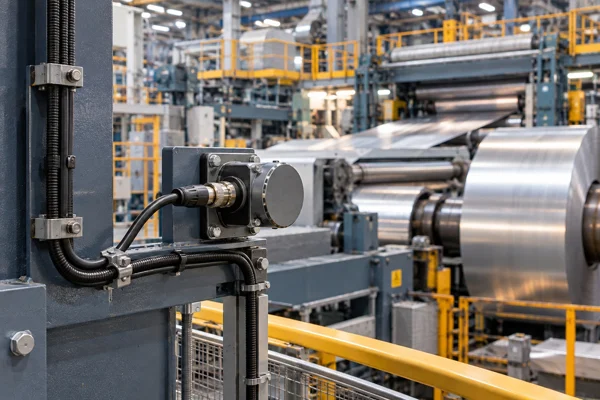
A rolling-mill drive can trip even when its encoder passes a bench test. A refinery instrument can report erratic readings with no obvious process upset. Engineers may suspect the devices first, but the installed cables, mating interfaces and routing deserve the same scrutiny. Intermittent faults sometimes disappear the moment an assembly is touched. That uncertainty has an economic cost: investigation consumes maintenance time, and a missed control signal may delay equipment availability. This article concerns sensor, instrumentation, encoder, fieldbus and appropriately rated low-power auxiliary interfaces, typically carrying signals or modest loads—not power feeders. Main motor circuits, plant distribution, rectifier outputs and potline busbars are outside its scope. No connector type...
BIS Chennai puts aluminium alloy conductor standard under industry review
The Bureau of Indian Standards (BIS) Chennai Branch Office held a ‘Manak Manthan’ on September 18, 2026, to discuss Draft IS 398 (Part 4):2026, which sets specifications for aluminium-magnesium-silicon alloy stranded conductors used in overhead transmission applications. The session brought together stakeholders involved in the manufacture, testing and use of aluminium alloy stranded conductors. The discussion focused on the proposed fourth revision of the standard and gave manufacturers and users an opportunity to provide technical feedback to BIS. S.D. Dayanand, Scientist-F and Senior Director & Head of BIS Chennai Branch Office, said stakeholder participation is important to the standardisation process. He invited comments on the draft, noting that feedback would help ensure the...
Grow with
AL Circle
Price
→Events

15th International Bauxite, Alumina & Aluminium Conference & Exhibition - IBAAS–VFMSTA 2026
ICSOBA 2026 - 44th International Conference and Exhibition
SMM AICE 2026 Southeast Asia Aluminum Conference
15th International Bauxite, Alumina & Aluminium Conference & Exhibition - IBAAS–VFMSTA 2026
ICSOBA 2026 - 44th International Conference and Exhibition
SMM AICE 2026 Southeast Asia Aluminum Conference
Business Cards
A report that reveals where the aluminium casting industry is heading and how businesses can act.
LEARN MORE
A report that reveals where the aluminium casting industry is heading and how businesses can act.
LEARN MOREGlobal EV sales to hit 35.4 million by 2030, with aluminium usage forecast to rise 38% in North America & 79% in China
AL Circle analysis: How do Germany’s 32.8% automotive aluminium share, 40% Diet Coke can price rise & 3.54Mt North American extrusion demand matter?
AL Circle Analysis: Guinea’s 150Mt bauxite cap, China’s import swings, US tariffs draw aluminium Q4’26
EU approves Germany’s power relief instrument: Could aluminium producers save €459m annually?
North America’s aluminum extrusion demand set to reach 3.54Mt by 2035: The end-use sectors behind the climb
News
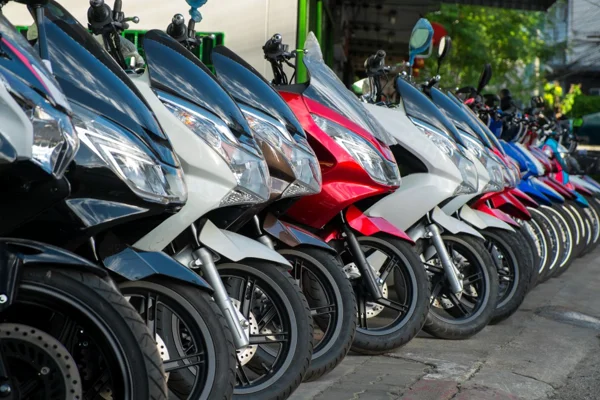
Yadea finds a new route into Africa’s electric two-wheeler market, partnering with Spiro
Expanding across Africa may no longer require building an electric mobility network from scratch. The Chinese electric two-wheeler maker, Yadea, has partnered with African electric mobility company Spiro, giving it access to an established fleet of electric motorcycles and battery-swapping infrastructure across the continent. Signed in Dubai on September 11, 2026, the strategic partnership will see Yadea supply electric two-wheelers and related products for Spiro’s African markets. The scale of Spiro’s existing network is significant. The company operates more than 130,000 electric motorcycles and around 2,500 battery-swap stations across West and East Africa. For Yadea, that network could provide a ready-made route into markets where electric two-wheelers are gaining ground. Yadea has...
Uno Minda plans INR 14.15bn capex as aluminium casting capacity jumps 162%
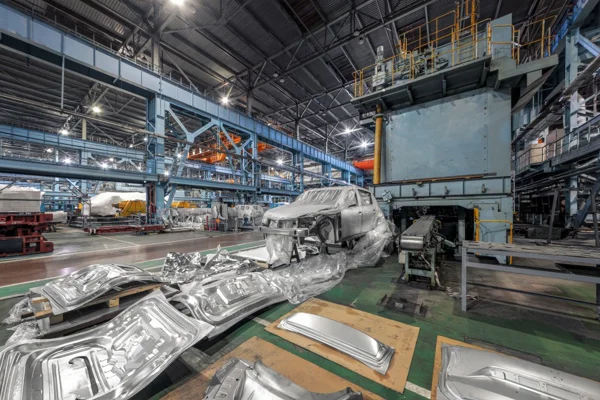
Uno Minda is set to invest around INR 14.15 billion (USD 147.51 million) across four manufacturing expansion and consolidation projects, with a major portion of the spending directed towards increasing its aluminium casting capacity in Hosur, Tamil Nadu. The automotive components maker plans to lift aluminium casting capacity at Hosur from around 13,000 tonnes to 34,000 tonnes at peak, representing an increase of about 162 per cent. The expansion will add 21,000 tonnes of capacity and serve demand across two-wheelers, passenger vehicles and commercial vehicles. The broader investment programme will be implemented over the next two to three years and spans aluminium casting, alloy wheels, moulding, and interior, exterior and sealing components. Uno Minda Managing Director Ravi Mehra said...

Aluminium unibody marks a major design upgrade in iPhone 18 Pro Max
Apple’s iPhone 18 Pro Max has moved from a titanium frame to an aluminium unibody, marking one of the biggest material changes. The new phone uses an aluminium unibody alongside 40 per cent recycled content, while adding a larger display, upgraded cameras and longer battery life. The iPhone 15 Pro Max, launched in 2023, featured a titanium frame with a textured matte glass back. Now the iPhone 18 Pro Max has an aluminium unibody, Ceramic Shield 2 on the front and Ceramic Shield on the back. It is also larger and heavier, measuring 163.4 x 78.0 x 8.75 mm and weighing 249 grams. In terms of the camera setup, the 18 Pro Max uses a 48MP tetraprism telephoto at 100 mm with 4x optical zoom and a 12MP 8x crop at 200 mm. Battery life has increased to 45 hours. The newer model also supports faster...

Vedanta's ₹210b metals push targets India's EV and critical minerals demand
Vedanta is expanding aluminium, copper and other metals capacity as electric mobility and India's demand for critical minerals reshape the domestic materials market. Vedanta Group is putting INR 210 billion (USD 2.21 billion) into metals production and capacity through FY2026, building a broader materials portfolio aimed at sectors such as electric vehicles, batteries and charging infrastructure. The investment spans aluminium, zinc, copper, steel, nickel, ferrochrome and value-added alloys, while the group has also secured 10 critical mineral blocks covering commodities including copper, nickel-chromium-PGE, tungsten, graphite, vanadium, rare earth elements and potash. The expansion comes as India seeks to reduce its reliance on overseas supplies of critical minerals. Vedanta estimates...

India’s electronics aluminium demand to grow 7.6-9.2 % CAGR: Why aren’t makers benefiting from strong domestic production?
India’s aluminium smelters operate with some of the highest margins in the value chain, at around 10 per cent, but this profitability is not reflected among downstream manufacturers, where margins are closer to 5 per cent. These companies convert the metal into finished products such as heat sinks, enclosures, connectors, frames and other aluminium components for electronics manufacturers, but are finding it increasingly difficult to compete with imports. This matters because India's electronics industry is growing rapidly, creating a much larger market for aluminium components. Electronics production has increased nearly six-fold to around INR 147 billion in 2024-25, from about INR 24.7 billion in 2014-15, while the sector has created around 2.5 million jobs over the past decade. The...

India's ₹9,150b power grid push could drive new aluminium demand
India's planned transmission investment and renewable-energy expansion could lift aluminium consumption in electrical applications to 4 million tonnes by FY30. India's push to expand its electricity transmission network is emerging as a major potential growth driver for aluminium, with the country's electrical-sector consumption of the metal projected to rise sharply as renewable generation and power demand expand. The Ministry of Mines Aluminium Vision Document projects aluminium consumption in electrical applications to increase from around 2.4 million tonnes in FY24 to 4 million tonnes by FY30, before reaching 12.9 million tonnes by FY47. Transmission and distribution already represent a major source of domestic aluminium demand. Around 48 per cent of aluminium consumed in India is...














Blog
LATEST POSTS





Turn marketplace visibility into more relevant buyer enquiries.
View Priority Plans
Turn marketplace visibility into more relevant buyer enquiries.
View Priority Plans
