Can aluminium make EVs lighter and cheaper? Stellantis study cuts body mass by 41%
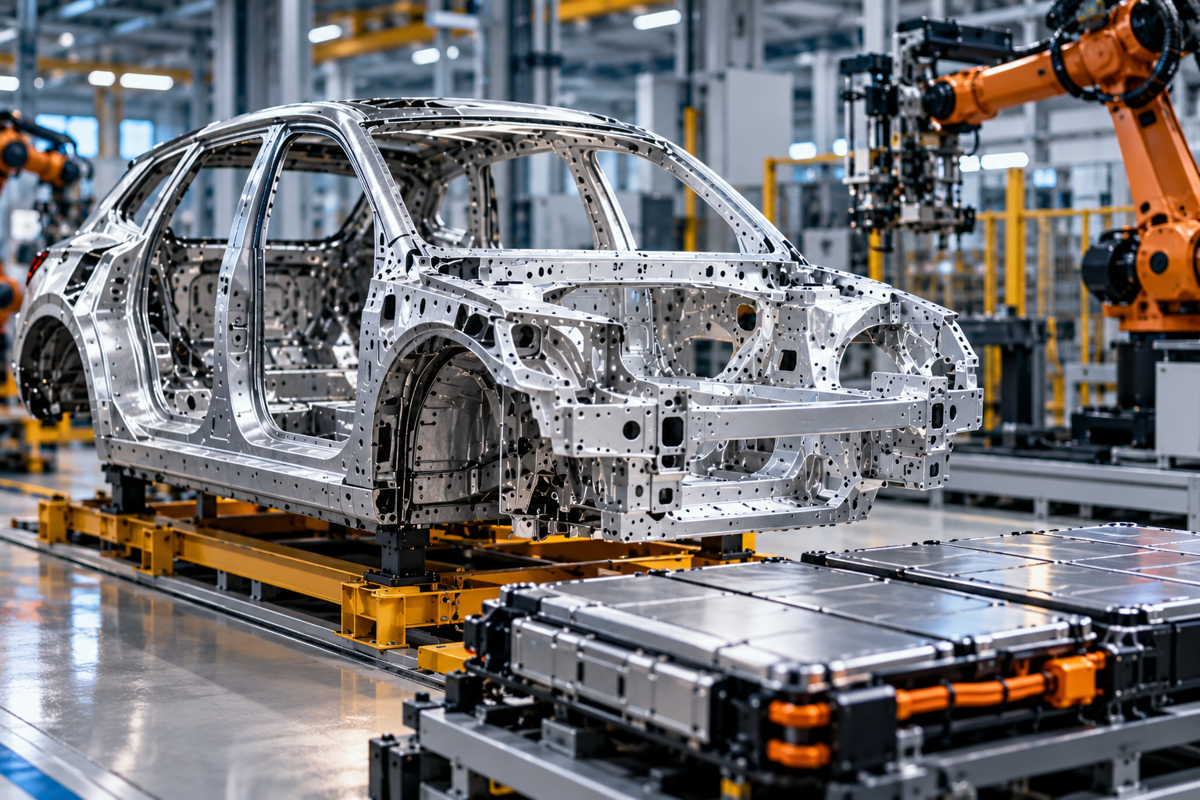
The image used in this article is generated with an AI tool and does not depict any real-time moment.
Aluminium-intensive vehicle design could reduce electric vehicle (EV) weight, battery requirements and manufacturing complexity, according to a joint theoretical study by Stellantis and Alumobility. Using Stellantis’ STLA Medium platform as its reference, the study found that an optimised aluminium-based architecture could cut total vehicle mass by around 20 per cent and create the potential to reduce battery capacity by 15 per cent while maintaining equivalent range.
Presented at EuroCarBody 2026 in Bad Nauheim, Germany, on October 22, the study examined how aluminium could be incorporated across the vehicle structure rather than simply replacing steel components on a like-for-like basis.
The concept reduced body-in-white mass - the vehicle’s structural body before components such as closures and other systems are added - from 652 kg to 405 kg, a 41 per cent reduction. When the effects of this initial weight saving on other vehicle systems were included, total vehicle mass fell from 2,103 kg to 1,682 kg, representing a reduction of 421 kg.
The study suggests that lowering structural weight could enable further reductions across the vehicle, including its battery, electric drive, brakes and suspension. However, the findings reflect a theoretical design exercise and do not establish actual production costs or retail price savings.
Lighter body, smaller battery
The potential to reduce battery capacity is a key finding because the study links structural lightweighting with lower battery requirements while maintaining comparable driving range under its assumptions.
The aluminium-intensive concept indicated that battery capacity could be reduced by 15 per cent compared with the reference EV configuration. The study said this could lead to a similar reduction in battery-related costs and a smaller battery-production carbon footprint, although these outcomes have not been demonstrated in commercial production.
Vehicle energy consumption also decreased in the study, falling from 140 Wh/km to 122 Wh/km while maintaining comparable range.
Stellantis senior vice-president and global head of body, safety and quality Christophe Patois said the benefits of lightweighting extended beyond the mass removed from the body structure.
“The study shows that the greatest value of lightweighting is not limited to the mass removed from the body structure. It lies in what that lower mass enables engineers to optimise across the complete vehicle, from the battery and electric drive to the chassis and suspension,” Patois mentioned.
The findings point to a system-level approach in which reduced vehicle mass creates opportunities to reconsider the size and design of other components, rather than treating lightweighting as an isolated body-engineering exercise.
To know the aluminium casting demand forecast in the transportation sector, explore our report "Global Aluminium Casting Market 2026-2032: Plant Economics, Alloy Segmentation, Pricing Intelligence, Supply Chain Analysis & Strategic Recommendations"
Aluminium design cuts components and joints
The study applied a design strategy based on part integration and the use of aluminium sheet, castings and extrusions, alongside optimised joining methods.
The concept reduced the body-in-white part count by 27 per cent while also lowering the number of joints and simplifying the range of material gauges and grades required. The battery enclosure was reduced from 53 parts to 29, with further reductions in joints and fixings.
The concept’s Lightweight Index also fell from 2.2 to 1.4, which the study described as a 36 per cent improvement compared with the reference body. Alumobility technical director Mark White said aluminium could deliver greater benefits when considered early in vehicle architecture development.
“This approach allows engineering teams to capture benefits across the entire system, rather than evaluating the body structure in isolation,” White said.
The approach could be relevant beyond premium EVs if its engineering benefits can be translated into commercially viable vehicle designs. The study also noted potential weight-related benefits for combustion-engine and plug-in hybrid vehicles, including possible reductions in CO₂-related penalties and weight-based taxation, depending on the market and applicable regulations.
Structural performance and manufacturing feasibility
The assessment covered body-in-white structures, closures, chassis subframes and the battery enclosure. It also considered manufacturing processes for aluminium sheets, extrusions and castings, including cold and hot forming and established joining technologies.
According to the study, crash targets were fulfilled or exceeded, while torsional stiffness, fatigue, noise, vibration and harshness, and overall structural performance remained competitive or improved.
The assessment also found technically feasible manufacturing pathways for the evaluated aluminium components, with limited geometry changes required in the specific parts assessed.
These findings address some of the engineering considerations involved in replacing a steel-intensive architecture with an aluminium-intensive design. However, they relate to the components and assumptions examined in the study rather than a production vehicle already validated for commercial launch.
Commercial potential remains to be established
The study’s results suggest that aluminium-intensive vehicle design could offer benefits beyond reducing body weight, including opportunities to right-size batteries, lower energy consumption and simplify structures.
Those potential gains could help manufacturers evaluate aluminium architectures for a wider range of EVs, including mainstream models where cost and efficiency are important design considerations.
However, the study is theoretical, and its conclusions depend on the specific design parameters and assumptions used. It does not confirm that the proposed architecture will enter production or deliver a particular reduction in vehicle prices. Any commercial cost and carbon benefits would need to be established through further development and implementation.
The joint work by Stellantis and Alumobility therefore presents a case for assessing aluminium at the level of the complete vehicle system, with the potential value extending from the body structure to battery sizing and wider vehicle performance.
Browse through top global suppliers for automobile components on AL Biz.
Grow with
AL Circle