Copper’s $16,000 target contrasts with a cautious aluminium outlook, says Navneet Damani
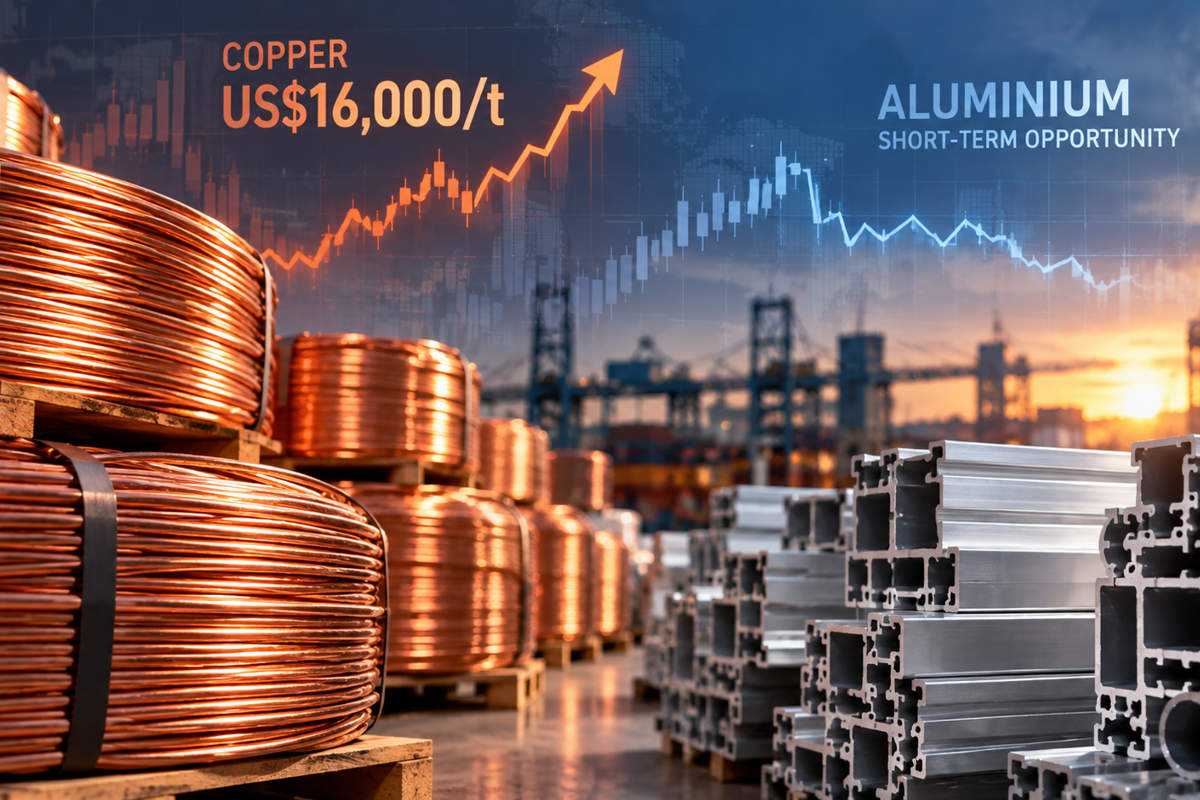
The image used in this article is generated with an AI tool and does not depict any real-time moment.
Copper could climb towards USD 16,000 per tonne over the next six to 12 months, while aluminium may offer a shorter-term trading opportunity following its recent correction, according to Navneet Damani, senior group vice-president and head of research for commodities and currency.
Speaking on BusinessLine’s Trending Commodity Picks programme, Damani said copper continued to benefit from supply constraints and demand from emerging industries, while aluminium’s price trajectory had been influenced by fluctuations in energy costs and changing supply conditions.
Damani said aluminium had climbed from around USD 3,100 to USD 3,600 per tonne earlier in 2026, supported by increases in electricity, crude oil and coal prices. The metal subsequently corrected towards USD 3,300 per tonne, although Damani suggested that the decline could create scope for a short-term rebound.
Copper, meanwhile, had followed a stronger trajectory, rising from around USD 11,000 per tonne to nearly USD 14,800 per tonne, according to the interview. Damani attributed its performance to a prolonged supply deficit and robust demand, arguing that the market remained more supportive of copper than aluminium.
Copper demand gains support from data centres and EVs
Data centres require extensive electrical infrastructure, including wiring, cables and cooling systems, while semiconductor manufacturing adds to the need for copper-bearing components. The expansion of EV charging networks could provide another source of demand as charging stations and fast-charging facilities are installed across commercial and public locations.
However, Damani cautioned that stronger structural demand did not necessarily translate into an immediate increase in Indian consumption. He pointed to currency volatility, elevated freight costs and uncertain macroeconomic conditions as factors that could restrain demand over the following quarter.
He also highlighted the importance of domestic manufacturing activity and currency stability in determining the pace of future copper consumption.
Explore the production, demand and consumption forecasts of bauxite and alumina in our report: "Global Bauxite & Alumina Market Forecast to 2036: Supply–Demand, Trade Flows & Price Outlook"
Festive-season sales may support manufacturing
India’s festive season typically brings increased sales of automobiles and consumer durables, supporting manufacturing activity across several industries. These products use copper in wiring, cabling and electrical components, while aluminium is used in vehicle structures and other applications.
Damani said festive-season demand could remain robust in the coming quarter, although manufacturers generally build inventories and increase production well before the main shopping period.
The extent of any additional metals demand would therefore depend partly on whether vehicle sales significantly exceeded previous levels. He also noted that annual automobile price increases and changes in commodity costs could complicate the outlook for manufacturers.
The interview additionally highlighted the growing adoption of electric vehicles and charging infrastructure as a longer-term source of demand for copper.
New mines remain a key risk to copper prices
On the supply side, Damani said the absence of major new copper mines in recent years had supported prices. The development of a large mine, together with an easing of refinery bottlenecks, could trigger a correction, he said.
He nevertheless maintained that the broader market could remain supply-constrained over the next couple of years, with relatively small surpluses unlikely to fundamentally alter the outlook.
Damani also pointed to geopolitical tensions and increased investment in defence-related technologies as potential influences on demand for copper, aluminium and steel.
His outlook remains a market forecast rather than a confirmed price trajectory. Recent trading data show that copper has continued to fluctuate, while aluminium prices in late October were below the approximately USD 3,300-per-tonne level cited for the metal’s earlier correction.
The contrasting outlook underlines the different market drivers facing the two metals: copper’s prospects are closely linked to supply availability and electrification-related demand, while aluminium remains sensitive to energy costs and changes in supply.
Find the right unwrought aluminium for your business. Browse a comprehensive list of primary aluminium products on AL Biz.
Grow with
AL Circle