




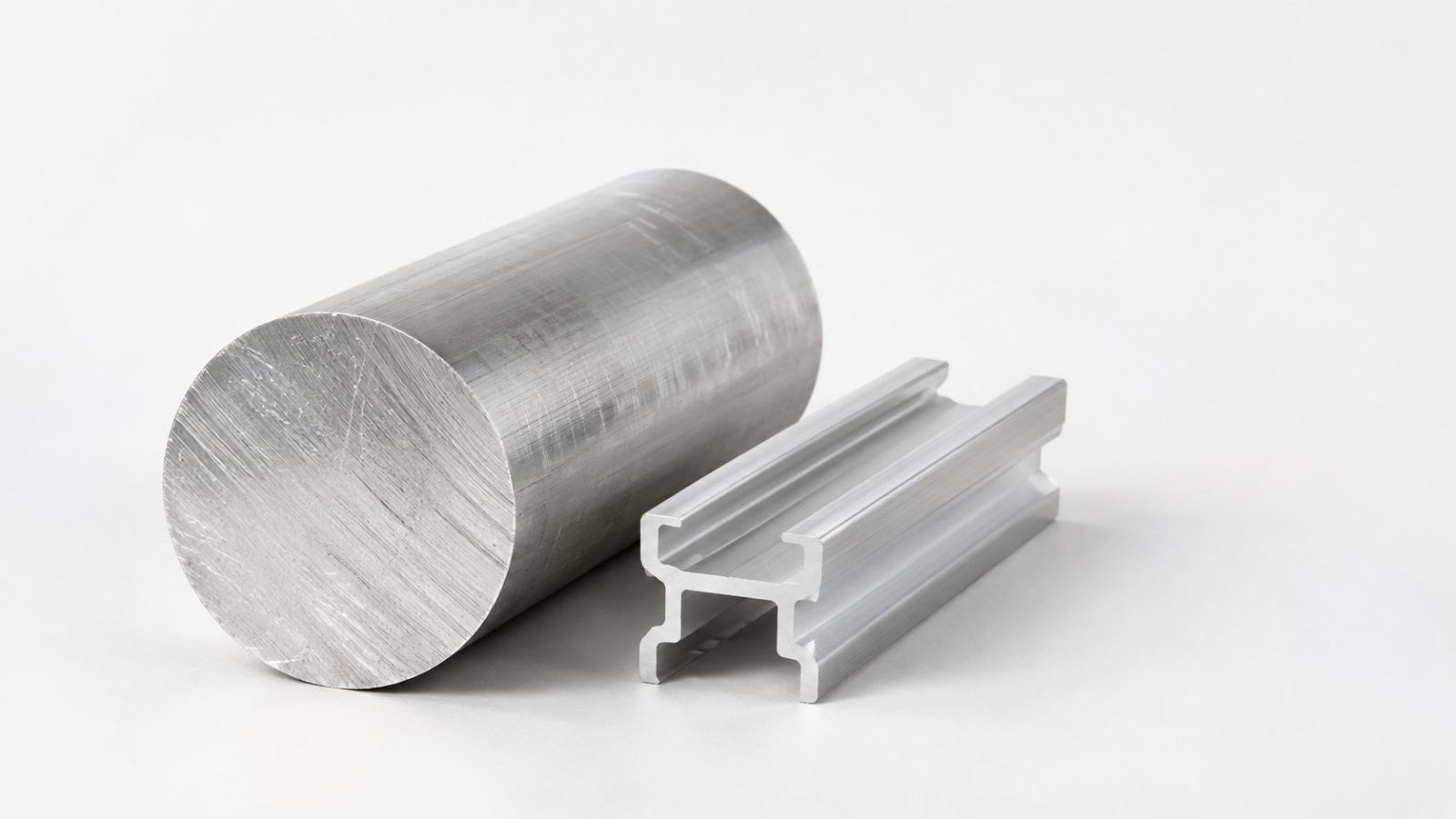
A 6xxx extrusion batch meets its alloy specification, yet the press needs higher breakthrough pressure, output speed falls and some profiles show streaks after anodising. The first checks often cover billet chemistry, press settings and ageing conditions. There is another process step worth investigating: billet homogenization.
A correct chemical analysis does not guarantee that alloying elements and intermetallic phases are distributed in a way that supports consistent metal flow. In 6xxx alloys, the billet’s heat treatment after casting can influence extrudability, surface response and final mechanical properties. If a plant is troubleshooting inconsistent extrusion, homogenization belongs on the diagnostic list.
Where homogenization fits in the 6xxx process
A typical 6xxx extrusion route is:
Cast billet → homogenize → preheat → extrude → quench → age
Homogenization is a heat-treatment process applied to the cast billet. The billet is heated to a controlled temperature, held for a specified time, then cooled according to the alloy and process requirements. The aim is to reduce chemical and microstructural variations left by solidification, and to change the size, distribution or form of phases that affect extrusion.
The exact temperature and time depend on alloy composition, billet diameter, casting conditions and furnace design. The cycle used for one alloy or billet size should not be copied automatically to another.
Why the as-cast microstructure can cause trouble
During casting, alloying elements do not necessarily remain evenly distributed throughout the billet. In 6xxx alloys, magnesium and silicon can form relatively coarse Mg₂Si particles. Iron-bearing intermetallics can also form as large, angular β-phase particles.
These features matter because the billet has only a short time at high temperature during extrusion. Coarse particles and uneven distribution can make it harder for the material to deform consistently. That may show up as unstable press behaviour, surface defects or variable properties, even when the chemistry is within specification. Homogenization addresses two important parts of this microstructure: the distribution of magnesium and silicon, and the form of iron-bearing intermetallics.
What homogenization changes
Magnesium and silicon: preparing for strength
In 6xxx alloys, magnesium and silicon contribute to the hardening response developed through quenching and ageing. Their availability in solid solution after extrusion affects the formation of strengthening precipitates during subsequent ageing.
Innoval notes that Mg₂Si dissolves above roughly 530°C. A sufficiently controlled homogenization hold allows the coarse particles to dissolve; during cooling, they can re-form in a finer distribution. These finer particles can dissolve more readily during the brief high-temperature period at the press than coarse as-cast particles. After extrusion and quenching, the alloy can then develop its intended precipitation-hardening response during ageing.
As an illustration, Innoval gives a typical cycle for 6060 billet of about 560°C for two hours. This is an example, not a universal recipe. Temperature, time and cooling practice should be established for the specific alloy and billet dimensions, with appropriate process controls.
If the homogenization temperature is too low, the hold is too short or the billet does not reach the intended conditions throughout, coarse Mg₂Si may remain. Less magnesium and silicon may then be available in solution after extrusion, limiting the density of strengthening precipitates that can form during ageing. The result can be lower mechanical properties than expected.
Iron-bearing phases: changing shape and distribution
Homogenization also affects iron-bearing intermetallics. In 6xxx billets, angular β-phase particles formed during casting can transform into smaller, rounder α-phase particles during the heat-treatment cycle. The transformation and resulting particle population depend on alloy chemistry and process conditions.
The change matters because large, sharp particles can interfere with deformation as the billet passes through the die. Examining the microstructure before and after homogenization can help determine whether the billet has received an effective treatment. Visual inspection alone may not identify or quantify each phase reliably, but a comparison with as-cast and known-good material can make differences easier to assess.
How an inadequate cycle shows up at the press
Poor homogenization can contribute to several symptoms:
- Higher breakthrough pressure or unstable pressure behaviour
- Lower extrusion speed or difficulty maintaining a consistent speed
- More frequent surface defects or process adjustments
- Streaking or uneven appearance after anodizing
- Mechanical properties below the expected level
These symptoms are not proof that homogenization is the cause. Billet preheating, die condition, extrusion parameters, quenching and ageing can also affect results. But if alloy chemistry is acceptable and defects vary by billet batch or supplier, the homogenization history deserves a closer look.
Other industry explainers, including Vedanta Metal Bazaar’s guide to why aluminium billets are homogenized and Minh Dung Aluminum’s discussion of billet quality and alloy grade, also describe the relationship between microstructure and downstream extrusion behaviour. The useful takeaway is to assess billet processing and consistency alongside the grade designation and chemical certificate.
The furnace is part of the material specification
A furnace setpoint is not the same as a uniform billet temperature. Load arrangement, furnace condition, circulation and heat transfer can affect how quickly different areas reach the target temperature and how long they remain there. If one part of a load receives a different effective cycle from another, the resulting billets may not perform alike.
Innoval describes using differences in the proportion of α-phase across a poorly performing furnace load to identify non-uniform heating and possible failure to reach setpoint. Its example reinforces a practical point: furnace uniformity should be checked across the load, not inferred from one controller reading. Comparing the affected material with as-cast billet and a known-good reference helps establish a useful baseline.
Furnaces designed for homogenizing and ageing are among the equipment used to deliver controlled cycles. SECO/WARWICK’s AL Circle profile lists aluminium homogenizing and ageing-related furnace products. Ageing remains a separate downstream heat-treatment step: a well-controlled billet homogenization cycle supports the process, but cannot compensate for an unsuitable quench or ageing schedule.
How to investigate a billet problem
Start with the defect pattern and trace it back to the material and process conditions. Compare the affected batch with a known-good batch, then check whether the difference follows a particular billet supplier, casting lot, furnace load or press line.
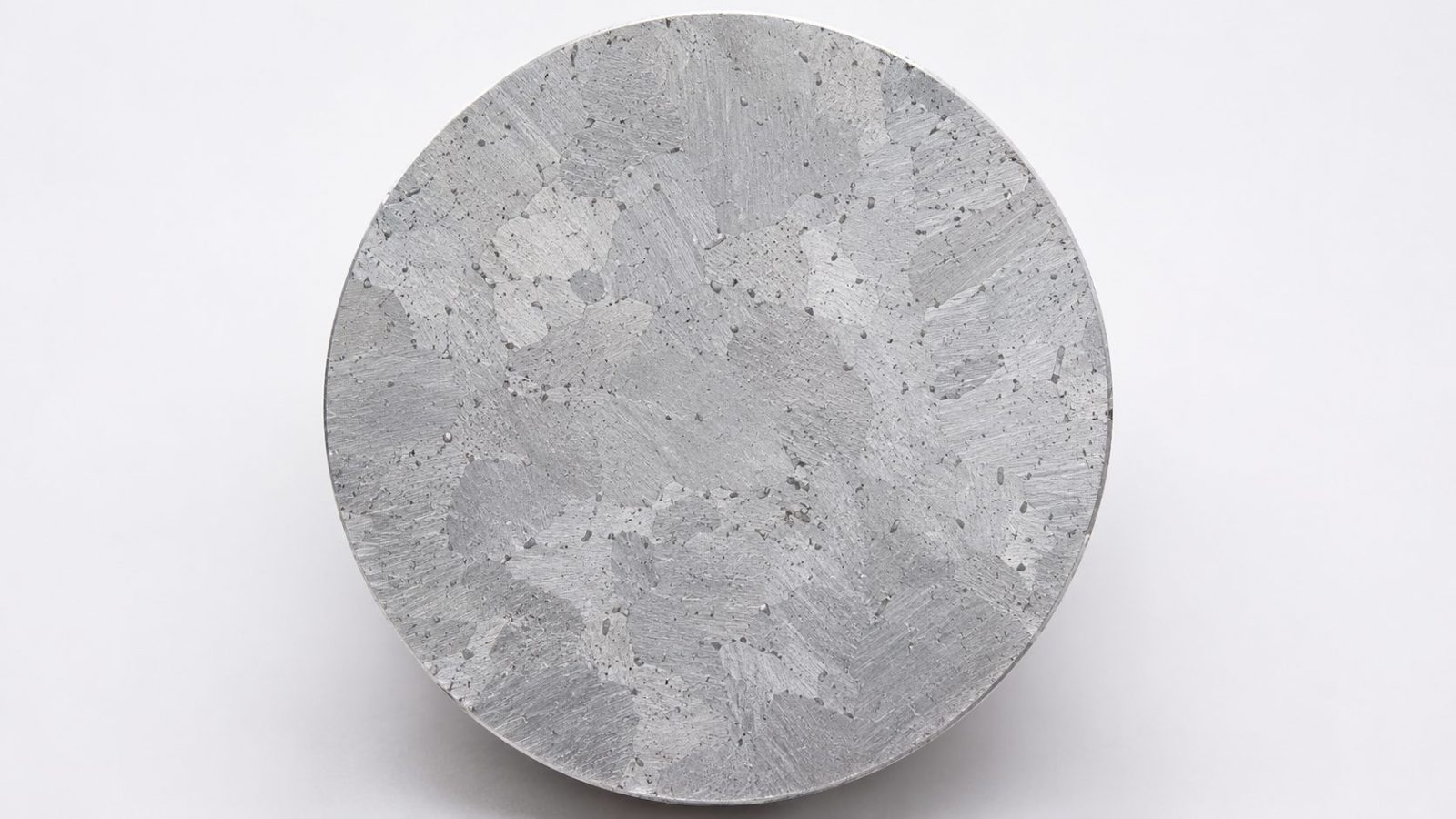
The above image is AI-generated and is for representational purpose only
Useful checks include:
- Review traceability records. Link extrusion outcomes to billet supplier, cast lot, billet diameter and homogenization load where records allow.
- Compare microstructures. Examine affected billets against as-cast material and a known-good reference. Ask a qualified laboratory to assess relevant phases if routine optical inspection is inconclusive.
- Check furnace uniformity. Verify temperature measurement and control across the load, including whether billets reach the required conditions for the full hold.
- Review the complete cycle. Confirm actual temperature, soak time and cooling practice against the approved cycle for that alloy and billet size.
- Compare suppliers on performance. When sourcing from multiple suppliers, compare press behaviour and finishing outcomes by batch as well as chemistry certificates.
This approach helps separate a homogenization issue from other causes. A microstructure difference is evidence to investigate, not by itself a complete diagnosis; it needs to be read alongside process records and production results.
Billet quality and die condition are connected through the process
A consistent billet can help the press run more predictably, but extrusion quality also depends on the condition of the die. If the die surface or its heat treatment is inconsistent, it can affect performance and surface results independently of billet quality.
For extrusion plants reviewing die treatment, Jagannath Company’s AL Circle profile lists nitriding salts, heat-treatment salts and nitriding plant equipment for extrusion dies. It also lists magnesium master alloy ingots, which are relevant to alloying and melt preparation; they do not replace control of billet homogenization.
Keep the two investigations distinct: assess billet microstructure and furnace history for homogenization questions, and assess die condition and treatment records for die-related issues.
A short homogenization audit checklist
Before changing press settings or rejecting a billet supplier, ask:
- Is the alloy and billet diameter covered by an approved homogenization cycle?
- Do recorded billet temperatures, hold times and cooling conditions meet that cycle?
- Has furnace uniformity been checked across the full load?
- Do microstructures from affected and known-good billets differ?
- Do extrusion or anodizing problems track specific suppliers, lots or furnace loads?
- Have preheating, quenching, ageing and die condition also been reviewed?
Homogenization is easy to overlook because it happens before the billet reaches the press. Yet in 6xxx extrusion, it helps shape the microstructure that the press and downstream heat treatment must work with. When strength, speed or surface quality falls short despite acceptable chemistry, checking the billet’s homogenization history is a practical next step.