Aluminium Chassis

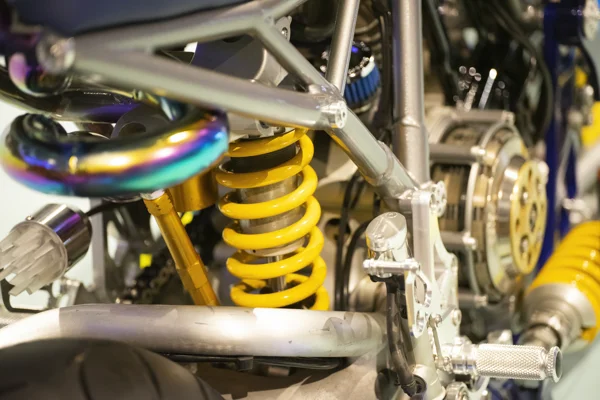
Ducati Desmo450 SM pairs aluminium frame with 63.5hp racing performance
Ducati has unveiled the Desmo450 SM, a new production supermoto developed from its Desmo450 MX platform, featuring an aluminium twin-spar frame. This is designed to combine low weight, rigidity and strength. The motorcycle made its debut during World Ducati Week and is aimed at competition use. The Desmo450 SM uses the same aluminium frame architecture as the motocross model. Ducati says the frame has also been designed to allow a straighter intake route while maintaining the strength and rigidity needed for high-performance riding. The bike has a fuel capacity of 7.2 litres. The company has also focused on reducing weight in other areas. Its Bartubeless wheel system, for example, removes inner tubes and cuts rotating and unsprung mass by 1.2kg. The motorcycle also features a cast...
7075 aluminium chassis and heatsink support BotBlox’s 40g SwitchCore module
BotBlox has introduced SwitchCore, a compact 40-gram Layer 2 networking module featuring a 7075 aluminium enclosure that serves as both the structural chassis and heatsink. Measuring 27.6 × 27.6 × 10.7 mm, the module provides eight-port Fast Ethernet functionality for space- and power-constrained platforms while using 1 W of power. The 7075 aluminium enclosure eliminates the need for additional cooling hardware and also helps protect the internal electronics from shock, vibration and environmental ingress. The module is designed for applications including unmanned aerial vehicles (UAVs), unmanned surface vessels (USVs), ground robotics, industrial systems and defence payloads. Explore aluminium casting demand forecast in the transporation sector, explore our report " Global Aluminium...
Grow with
AL Circle
Price
→Events

Business Cards
A report that reveals where the aluminium casting industry is heading and how businesses can act.
LEARN MORE
A report that reveals where the aluminium casting industry is heading and how businesses can act.
LEARN MOREAL Circle Analysis: Scrap in EU, Thailand, 25%Trimet CO₂ cut, India’s 16.3tCO2 gap draw aluminium supply chain
AL Circle Analysis: 278% China-US FRP rise, $692m Germany-France FRP trade, India’s 300m-can gap draw aluminium map
AL Circle Analysis: Alumina prices fall 22%, Ghana advances bauxite projects & global aluminium production rises 2.1%
Global alumina production remains below 2025 levels despite a Q3 rebound, reaching 114 million tonnes in 9M2026
Germany-France aluminium FRP trade 2026 at $692m: Two-way exchange of coil, sheet, foil and high-value products
News

Toyota GR GT’s aluminium chassis is built to be driven hard
Toyota has opened up the GR GT’s chassis, and the most interesting part may be what happens if owners push the supercar too far on a racetrack. The GR GT is Toyota’s first vehicle with an all-aluminium body frame. It uses nine large aluminium castings connected to aluminium tubes and extrusions, creating a structure designed to be light, strong and rigid. The chassis was shown alongside the GR GT3 racing car at the 2026 Rolex Monterey Motorsports Reunion, giving spectators a rare look at the cars’ underlying structure. Why the chassis matters Most people notice a supercar’s shape, engine or badge first. But the chassis determines how the car behaves when it accelerates, turns and brakes. Toyota’s GR GT chassis uses large aluminium castings in important parts of the structure. These are...

Aluminium margin squeeze in smartphones driven by AI Demand, Memory Costs and Titanium Shift
Executive Summary: The component cost crisis: Driven by the explosive demands of Artificial Intelligence data centres, global smartphone memory prices skyrocketed. This pushed flagship Bill of Materials (BOM) costs up by nearly USD 300, forcing smartphone OEMs to cut costs in their structural chassis. The Titanium Reversal: Apple and Samsung abandoned titanium's thermal constraints for their latest flagships. Next-generation AI processors run dangerously hot, and titanium acts as a thermal insulator. The industry was forced to revert to hot-forged 7000-series aluminium to prevent catastrophic thermal throttling. The Upstream Threat: While switching back to aluminium solved the thermal crisis, downstream manufacturers walked into a global supply chain trap. Geopolitical conflicts in the...

Lightweighting the future: How material innovation is reshaping automotive manufacturing mobility
India’s automotive industry is coming into a phase in which vehicles are expected to provide more while consuming less. Consumers want a better range, greater safety, powerful performance and more features, but they also expect vehicles to remain affordable and reasonable. This creates a difficult engineering challenge. Every additional battery module, sensor, safety element or electronic system adds weight. A heavier vehicle requires more energy to move, reducing efficiency and increasing operating costs. In electric vehicles, it may also require a larger battery, which further increases both weight and price. For India, lightweighting is therefore not simply a design trend. It is a significant path to making mobility more efficient, affordable and sustainable. India produced more than...

SilverStone unveils premium aluminium ALTA T1 super-tower PC case
SilverStone has introduced the ALTA T1, a premium HPTX super-tower computer case built with an aluminium unibody chassis and anodised aluminium panels. The case is for enthusiast PCs, professional workstations and AI inference systems. It’s made from aluminium sheet metal 4.3-8 mm thick. The ALTA T1 fits many motherboard sizes (SSI‑EEB, SSI‑CEB, EATX, ATX and smaller). It has eight expansion slots and can hold up to four dual‑slot graphics cards, making it suitable for high‑performance computing. The case supports two power supplies, either two standard ATX PSUs or one ATX plus a 2U CRPS redundant unit for flexible workstation or server setups. The upper compartment provides space for graphics cards up to 55 cm long and CPU coolers up to 18.8 cm high. When an expansion card support...

If India's aluminium volume is booked for the next 5 years, will planned expansions change the scenario?
India's aluminium producers are building smelters, expanding refineries, opening mines and writing investment cheques worth more than INR 640 billion. Yet despite all that activity, the industry faces a rather uncomfortable question: what happens when demand grows faster than capacity can be built? The timing of that question is hard to ignore as domestic aluminium demand is projected to climb from 4.5 million tonnes to 8.3 million tonnes by 2030, while the country is already importing close to 3 million tonnes of aluminium products every year to bridge supply gaps. Industry projections suggest imports could account for nearly 55 per cent of India's requirements in FY2025-26, contributing to a metals trade deficit of roughly USD 3.4 billion, or about INR 300 billion. At first glance, the...

ROLEC launches aluminium enclosures for in-cab vehicle control systems
ROLEC has launched a new line of diecast aluminium enclosures aimed at protecting in-cab control systems used in sectors such as agriculture, construction and heavy engineering. The new profiCASE range is designed for human-machine interface systems, commonly known as HMIs, which are increasingly used for touchscreen controls and electronic operations inside off-highway vehicles. Although these systems are installed inside enclosed cabins, the company said they still need protection against dust, moisture and vibration because of the harsh environments in which the vehicles operate. Explore our report World Recycled ALuminium Market Analysis Industry forecast to 2032 for detailed analyses and projections The enclosures come with IP65, IP66 and IP67 protection ratings and are built to...















Interviews
→
_md.webp)
Blog
LATEST POSTS





Turn marketplace visibility into more relevant buyer enquiries.
View Priority Plans
Turn marketplace visibility into more relevant buyer enquiries.
View Priority Plans
