"Lotus has been producing cars with aluminum riv-bonded chassis for several decades", GREGORY E. PETERSON, Senior Technical Specialist, LOTUS ENGINEERING
- Category
- Interview
- Date
- Source
- AlCircle.com
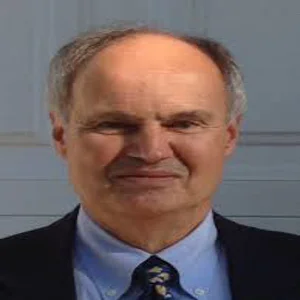
GREGORY E. PETERSON is a Senior Technical Specialist in LOTUS ENGINEERING. Gregg's responsibilities include lightweight structures, transferring emerging technologies into commercial opportunities and program management. He has led numerous lightweighting programs for both automotive and non-automotive applications, including aerospace, commercial vehicles and agriculture. He is one of the expert OEM led speaker faculties in the Global Automotive Lightweight Materials Detroit 2015 to be held on August 18 - 20.
An excerpt from his Pre-Conference Interview:
What do you see as being the primary barriers to the wider application of lightweight materials in the automotive industry at the moment?
The primary barriers that I see are cost, infrastructure and experience with the specific materials. The increased cost for lightweight materials can be significantly offset by utilizing alternative manufacturing and joining methods. These ancillary processes can contribute to reduced parts count, improved vehicle structure and require less material.
What materials/technologies do you see having the most potential with enabling high volume lightweight vehicle production?
Lotus has been producing cars with aluminum riv-bonded chassis for several decades, including the new Evora 400 engineered for the North American market. Lotus cars employ a high level of extruded components; the result is significant tooling savings due to the high level of component integration into a single die as well as the low cost of the tool itself. I think structural adhesives will play an increasingly important role in assembling lightweight structures. They provide 100% joint bonding, do not degrade the parent material and can be used to join dissimilar materials making them a very effective solution for joining multi-material structures. I also think low energy joining processes such as Friction Spot Joining can play an important role in joining non-ferrous materials economically. The use of technologies that utilize air to replace denser materials will become more widespread and contribute to reducing the cost of lightweight vehicles. Active noise control systems can replace very dense mastic materials using the vehicle’s audio system.
Replacing expensive plastic material with co-injected air, results in less expensive and lighter parts that require less energy to mould. I think ablation casting has the potential to reduce the weight of aluminum wheels and structural components, providing forged properties using inexpensive sand castings. Carbon fiber pultrusions have the potential to replace key BIW structural elements such as rockers and cross car beams saving substantial weight while greatly reducing tooling costs. Based on our work in the aerospace industry, I strongly believe that carbon fiber based structural instrument panels can replace conventional IPs and their complex internal structure as well as the cross car beam connecting the lower A pillars. This could be a “Customer Delight” feature where the carbon fiber isn’t just an expensive add on trim option but a standard, complete instrument panel with local soft trim.
What role does the comprehensive design philosophy play in an overall lightweighting strategy development in lotus and what is its future potential?
Lotus uses a holistic, total vehicle approach to design an automobile. This process is an essential and critical element of lightweight design and starts at program kick-off. It means that all components are assessed simultaneously for their mass, cost and performance requirements. It also includes a review of all materials (Lotus uses steel in every vehicle) and processes. The result is a systematic analysis of the contribution of every system and sub-system to the overall vehicle objectives. It means that one system may have to get heavier and more expensive to make the total vehicle lighter and less costly. Reducing individual system mass and cost without considering the total vehicle impact can potentially make the vehicle heavier and more expensive. At the very least, it is much less efficient to reduce system mass on a component by component basis rather than utilizing a total vehicle approach. The Lotus process results in lightweight, cost effective and robust designs; we will continue to utilize this philosophy on every new vehicle.
What are you looking to carry out of your participation at Global Automotive Lightweight Materials US this year?
I am looking forward to seeing innovative new technologies and design approaches being developed to support the urgent need for engineering lightweight, cost effective vehicles.
Disclaimer: “The information presented herein is neither intended nor implied to be a substitute for professional advice. The views and opinions shared in the interview section of www.alcircle.com are unique to the interviewees and do not necessarily reflect the viewpoint of www.alcircle.com.”

